

Crisp noodles with topping 两面黄
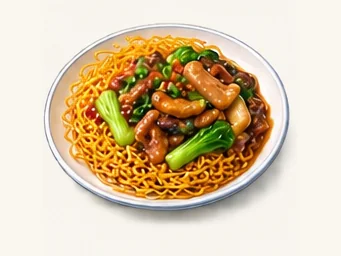
Liangmianhuang (两面黄) is a Shanghai-associated noodle dish built around a golden, crisped noodle cake and a hot, savoury topping. Its defining pleasure is the change in texture: edges stay crunchy while the centre softens where the sauce lands. Shrimp, pork and vegetable toppings vary by kitchen, so order the version that appeals and eat it while the contrast is fresh.
Tap any red Chinese text to hear it in Mandarin.
What the name describes
Say liǎngmiànhuáng and show 两面黄 liǎngmiànhuáng when ordering. The name means “golden on both sides”: cooked noodles are pressed or gathered into a cake and browned on each face. They are not simply stir-fried through a wok sauce. A hot, usually lightly thickened topping is spooned over the crisped noodles, making this a dish between a dry noodle plate and a sauced one rather than a bowl of soup.
Liangmianhuang is associated with Shanghai, but it is not useful to present it as an exclusively Shanghai invention. A Michelin Guide account traces the dish to both Shanghai and Suzhou, and describes it as a dry pan-fried noodle style of the lower Yangtze region. Regional histories and versions overlap; the secure point for a visitor is that it belongs to the Shanghai–Suzhou food tradition and remains a recognisable item in Shanghai menus and food writing.
Noodles, topping and the pan
The base is usually wheat noodles. One detailed Wang Jia Sha teaching recipe uses egg noodles: they are boiled only until they float, cooled to keep them springy, then shaped and pan-fried in oil until both faces turn golden. The chef stresses patience so the outside crisps without making the centre dry or tough. That is one named restaurant’s recipe, not a fixed rule for every shop.
The topping, or jiāotóu (浇头), supplies moisture and savoury flavour. In that Wang Jia Sha recipe, shrimp, diced bamboo shoots, peas and red bell pepper are cooked in a lightly seasoned, starch-thickened sauce, with salt, sugar and Shaoxing wine among the seasonings. A separate report on a Shendacheng serving describes a broader topping with seafood and pork, peas, shiitake mushrooms and onion; it also records a home-style pork-and-shrimp version with yellow chives. These examples show why a menu’s named topping matters: the dish has no single mandatory meat or vegetable combination.
The cooking route also differs. Noodles may be slowly pan-fried on each side, or shaped and deep-fried in a basket until crisp. In either case the goal is a browned, crisp surface with some tenderness inside. When the topping arrives, its glossy sauce seeps into the strands beneath it. The exposed rim stays audibly crisp longer; the centre turns soft and savoury sooner.
How it tastes and how to eat it
Look for straw-gold to deeper amber noodles under a pale, glossy sauce. The browned wheat smells toasted and lightly oily; a seafood topping can bring sweetness and a clean ocean aroma, while pork, mushrooms or bamboo shoots shift the savoury notes. The first bite may crackle at the edge, then give way to a yielding, chewy centre. The sauce makes the covered portion tender rather than uniformly crunchy.
Eat soon after it is served. Break off a crisp edge with chopsticks, then take a bite from the sauced centre to compare them. As the topping settles, more of the base absorbs sauce, so a dish left standing loses some of its crisp-soft contrast. This is a practical eating suggestion based on the dish’s construction, not a service rule. If you want shellfish, meat or a particular vegetable, ask which jiāotóu is available; the reported recipes demonstrate real variation, not a guaranteed menu.
Useful ordering questions
- 请问今天两面黄是什么浇头? Qǐngwèn jīntiān liǎngmiànhuáng shì shénme jiāotou? — What topping comes with the liangmianhuang today?
- 有虾仁两面黄吗? Yǒu xiārén liǎngmiànhuáng ma? — Do you have a shrimp version?
- 面底是煎的还是炸的? Miàndǐ shì jiān de háishi zhá de? — Is the noodle base pan-fried or deep-fried?
- 浇头里有猪肉、虾或其他海鲜吗? Jiāotou lǐ yǒu zhūròu, xiā huò qítā hǎixiān ma? — Does the topping contain pork, shrimp or other seafood?
Wheat is fundamental to the noodles, and some versions use egg noodles. Shrimp and other seafood, pork, soy-containing seasonings, and starch thickeners may occur in the topping or kitchen. Ask the restaurant about the specific portion and cross-contact if you have an allergy or strict dietary requirement; the dish name alone is not an ingredient or allergen guarantee.
More dishes to compare
Explore related local specialties and compare their names, preparation notes and ordering guidance.
Butterfly pastry 蝴蝶酥 →
Laminated pastry is folded into a double spiral, cut into slices and baked so the layers open into a butterfly shape. Sugar on the surface caramelizes during baking. The pastry breaks into thin, crisp flakes with a buttery aroma and sweet, toasted edges. Humidity quickly softens that delicate structure.
Crab-shell-shaped sesame pastries 蟹壳黄 →
Small wheat pastries are layered with fat, filled and baked under a sesame-covered crust. Sweet and savory fillings coexist, so appearance alone may not identify the contents. The shell is crisp and flaky, with toasted sesame fragrance and a softer center. Savory versions may taste richer than their small size suggests.
Sources & reading
Recipes and servings vary between kitchens.