

Cream-fried cakes 奶油炸糕
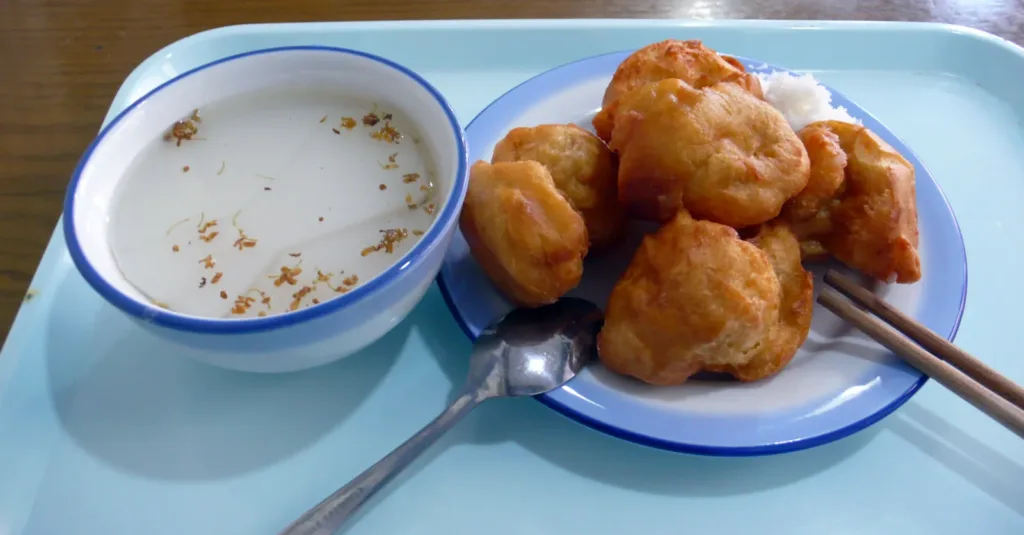
Nǎiyóu zhágāo (奶油炸糕), or Beijing cream-fried cakes, are small, golden wheat-flour pastries fried in portions and often finished with sugar. The hot-water dough is mixed with eggs; some documented versions also add cream or other dairy. Expect a crisp exterior and a soft, lightly chewy, mildly sweet centre. Recipes differ, and “cream” does not guarantee a cream-filled centre.
Tap any red Chinese text to hear it in Mandarin.
A Beijing-style fried sweet
Nǎiyóu zhágāo is a well-established Beijing snack, listed among the best-known traditional Beijing small foods and included in the commonly cited “Thirteen Old Beijing Snacks.” One Beijing tourism account links its popularity to local tastes and describes it as adapted after contact with Western food around the early twentieth century. That is a reported origin story, not a firmly documented single point of invention.
Do not confuse it with jiāngmǐ zhágāo (江米炸糕), a different fried cake made with glutinous rice dough and often filled with red-bean paste. Beijing food writing describes the rice version as associated with Tianjin, while nǎiyóu zhágāo is the wheat-dough Beijing style.
What goes into it
The foundation is wheat flour scalded with hot water to make a pliable dough. The Beijing tourism recipe describes adding egg, sugar, vanilla and cream; a 2023 report quoting pastry chef Zhang Lihua gives a version made by gradually mixing hot water into flour, then kneading in eggs. It does not prescribe a universal dairy ingredient or fixed formula. Some cooks use cream, butter or another dairy enrichment, while the name alone is not proof that a cake is filled with cream.
The dough is shaped into small portions and fried in hot oil until golden. A Beijing pastry chef’s published method describes turning the pieces as they fry, then serving them with granulated sugar. The source gives about 150°C for that recipe, not a mandatory temperature for every kitchen. Peanut or vegetable oil is mentioned as typical frying fat, with beef tallow as another possible choice; the frying fat is distinct from any dairy in the dough.
Colour, aroma and texture
A good example is golden to deep gold, with a lightly crisp, sometimes uneven shell. Inside, the scalded wheat dough stays tender and can have a little chew rather than the sticky, elastic bite of a glutinous-rice cake. Egg and any dairy enrichment give the interior a richer, gently eggy character; sugar added at the end makes the sweetness more noticeable. Beijing descriptions call the cakes fragrant and crisp outside, soft inside, and often show them dusted with white sugar.
They are eaten as individual pastries, commonly with sugar, rather than cut from a large baked cake. The word “cake” in the English name can suggest a baked or cream-filled dessert; this is a deep-fried wheat-dough snack. Accounts differ over whether cream is mixed into a particular dough or used as a filling, so ask the vendor how that shop makes it if dairy content matters.
Ordering and dietary notes
Show the name 奶油炸糕 or say nǎiyóu zhágāo. Useful questions are 现炸的吗? Xiàn zhá de ma? (“Are these freshly fried?”) and 里面有奶油或黄油吗? Lǐmiàn yǒu nǎiyóu huò huángyóu ma? (“Does the dough or filling contain cream or butter?”).
Wheat is central to the dough, and eggs appear in the documented Beijing recipes. Dairy is used in some versions, while the frying fat can also vary. Ask about the individual recipe and shared-fryer practices if these ingredients matter to you.
Where to eat it
You can find Nǎiyóu zhágāo all over Beijing, so there is no need to seek out one particular restaurant. To find one near you, search for “奶油炸糕” in Meituan (美团) or Amap (高德地图) and check recent reviews, distance and opening hours.
More dishes to compare
Explore related local specialties and compare their names, preparation notes and ordering guidance.
Sweet yam-and-date rolls 糖卷果 →
Chinese yam and dates are combined into a substantial roll, cooked, sliced and finished with a sweet glaze. Additional nuts or other ingredients depend on the maker. The yam supplies a dense, soft body, while dates give deeper fruit sweetness and the glaze makes the surface sticky.
Soybean-dusted rice rolls 驴打滚 →
Sticky-rice dough is steamed, rolled around sweet bean paste and coated in toasted soybean powder before being sliced. The powder also helps keep the sticky surface manageable. Each piece combines a soft, elastic wrapper, smooth filling and dry, nutty coating.
Sources & reading
Recipes and servings vary between kitchens.
Image credits & notes (1)
- 奶油炸糕 served with almond jelly at 奶酪魏, as identified by the photographer. The photographed cakes are golden and puffed; this particular serving shows no powdered-sugar coating. Photo: 三猎Photo: CC BY-SA 4.0