

Soybean-dusted rice rolls 驴打滚
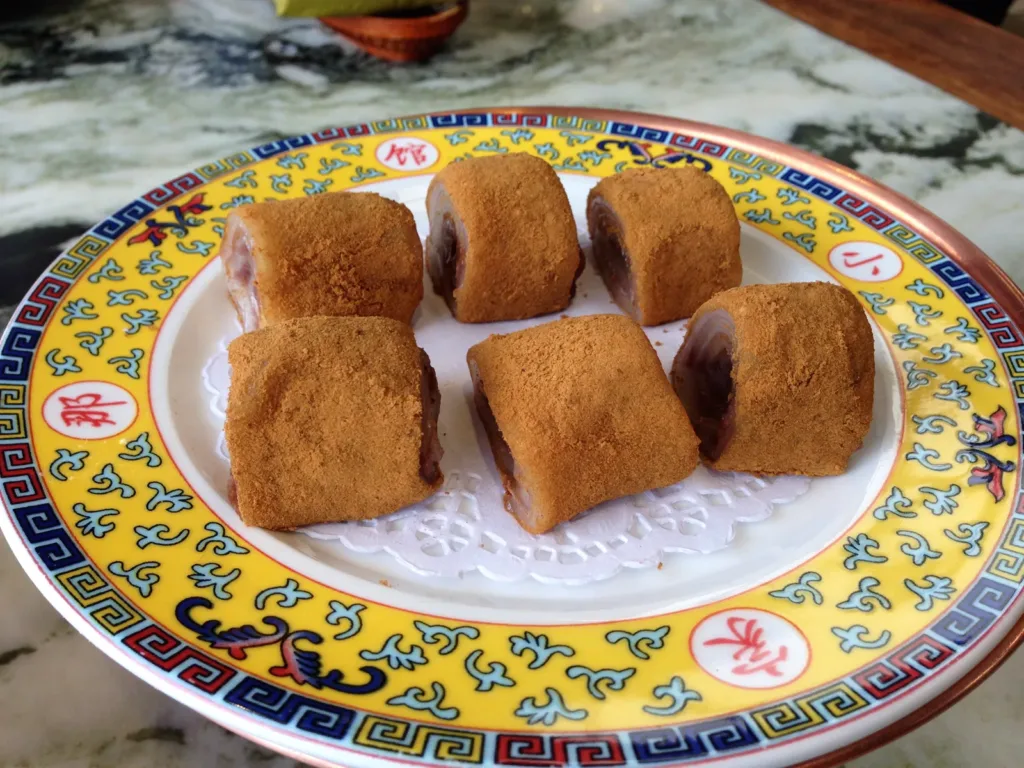
Ludagun (驴打滚) is a Beijing-associated sweet roll made by wrapping red-bean filling in steamed sticky-grain dough, then coating the roll in toasted soybean flour and cutting it into pieces. Its signature contrast is a fragrant, lightly dry soybean coating around a soft, chewy wrapper and smooth, sweet filling.
Tap any red Chinese text to hear it in Mandarin.
What it is
Ludagun, also called doumiangao (豆面糕), is a sweet northern Chinese snack strongly associated with old Beijing. The name evokes a donkey rolling in dusty earth: the resemblance comes from the yellow-brown flour coating, not from an animal-derived ingredient. It is also found beyond Beijing, so it is best described as a Beijing favorite rather than a dish exclusive to the city.
How the roll is made
The key components are a sticky grain wrapper, sweet red-bean filling, and cooked soybean flour on the outside. Sources describe more than one wrapper: older-style accounts use yellow-millet flour, while many contemporary Beijing versions use glutinous rice flour or jiangmi (江米) dough. Recipes and shops differ, so neither grain should be treated as the only authentic choice.
For the familiar roll, the dough is steamed until cooked and pliable, dusted with soybean flour so it will not cling to the work surface, then flattened. Sweet bean paste is spread across it and the sheet is rolled into a log. More flour is sifted or rolled over the outside before the log is cut crosswise into short pieces. Toasting the soybean flour first brings out its aroma; it also gives the sticky surface a dry, manageable coating.
What to expect in the bite
Look for a golden to ochre exterior, with a spiral of reddish-brown bean filling visible at each cut end. The cooked soybean flour smells warm, nutty and distinctly beany. Inside, the steamed wrapper is moist, elastic and chewy; the smooth bean paste brings a mellow sweetness. The contrast is between the powdery outside and the soft, tacky center, with the red filling giving each bite a more concentrated sweetness than the wrapper itself.
The proportions vary: some pieces have a thin, nearly translucent wrapper around a generous filling, while others are doughier. The filling may be a smooth bean paste or a less finely worked mash. A historical description records brown-sugar syrup as a filling, while modern recipes and shop examples commonly show red-bean paste; this is another reason not to assume one fixed formula.
Ordering and eating
Show the name 驴打滚 or say lǘdagǔn. It is usually sold already cut into bite-size pieces, often at room temperature or cool rather than hot. Pick up a piece by its sides to keep the loose flour from falling, then eat it in one or two bites; the sticky middle is easier to manage over a plate or wrapper. If you are choosing among counter snacks, it pairs naturally with unsweetened tea or another plain drink.
The soybean coating contains soy, and the wrapper is made from sticky grain, commonly rice or millet. Sweet fillings vary by maker; ask about ingredients if you need to avoid a particular food.
More dishes to compare
Explore related local specialties and compare their names, preparation notes and ordering guidance.
Aiwowo rice balls 艾窝窝 →
Cooked glutinous rice is worked into soft wrappers around sweet filling, then finished with a light dusting of cooked flour. Sesame, nuts and other fillings vary between makers. The white exterior is moist and chewy, while the center adds concentrated sweetness and a finer or crunchier texture.
Pea-flour pudding 豌豆黄 →
Peeled peas are cooked until soft, worked into a smooth sweetened paste and set before being cut into neat yellow pieces. The texture depends on careful cooking and straining rather than a heavy pastry crust. Each square is tender, fine-textured and gently sweet, with a recognizable pea flavor. It should feel smooth rather than sticky like a glutinous-rice cake.
Sources & reading
Recipes and servings vary between kitchens.
Image credits & notes (1)
- Cut pieces of Beijing-style ludagun coated in toasted soybean flour. Photo: ZhengZhouPhoto: CC BY-SA 4.0