

Dalian huoshao pan-fried parcels 褡裢火烧
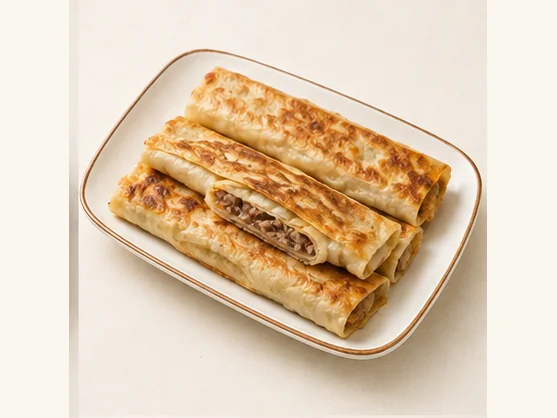
Dalian huoshao (褡裢火烧) is a Beijing-associated wheat parcel folded into a long, narrow shape and pan-fried in oil until golden. A common traditional filling combines pork with scallion and ginger; the crisp browned wrapper contrasts with a hot, savoury centre. The name refers to an old shoulder-carried pouch, not the northeastern city of Dalian.
Tap any red Chinese text to hear it in Mandarin.
A long folded parcel, not a city dish
Say dā lián huǒ shāo and show the characters 褡裢火烧 Dālian huǒshao when ordering. The first two characters refer to a long cloth pouch once carried over the shoulder; the parcel’s shape is the reason for the name. It is a familiar Beijing snack, though that does not make it exclusive to Beijing.
A thin wheat-dough sheet wraps a savoury filling into a long, flat parcel. The fold may leave the ends open or seal them, depending on the version. It is cooked in oil on a flat pan or griddle until the wrapper is golden. Beijing tourism describes the flavor as similar to pot stickers, while the long shape sets it apart.
What is inside and how it tastes
A documented traditional Beijing filling uses chopped pork with scallion and ginger, with stock worked into the mixture. Recipes and shop versions vary, so ask which filling is available rather than assume one fixed formula.
Look for a thin wrapper with a crisp, browned surface and a centre that stays tender and moist. The hot oil browns the wheat skin and gives it a toasted aroma; pork, ginger and scallion make the filling savoury and aromatic. The contrast is the point: browned and crisp outside, soft and juicy inside.
The name can be confusing in English: Dalian here transliterates 褡裢 Dālian, the pouch, and does not identify the city of Dalian. Nor is this the same shape as a round stuffed bun. Its long fold and pan-fried faces are the useful cues on a menu.
A Beijing food tradition
Beijing food accounts connect the snack with a couple from Shunyi and the late Qing period. One Beijing Tourism profile gives 1876 as the date, while an older cultural-food account places the story in the Guangxu era. Treat this as a repeated origin tradition rather than a precisely documented founding date.
Ordering and dietary notes
Show 褡裢火烧 Dālian huǒshao and ask 什么馅? (What filling is this?). If you avoid meat, ask 有素馅吗? (Is there a vegetable filling?) rather than judging by appearance. Wheat dough is integral, and the documented traditional filling contains pork and stock; ask about the specific batch if those ingredients matter to you.
Where to eat it
You can find Dalian huoshao all over Beijing, so there is no need to seek out one particular restaurant. To find one near you, search for “褡裢火烧” in Meituan (美团) or Amap (高德地图) and check recent reviews, distance and opening hours.
More dishes to compare
Explore related local specialties and compare their names, preparation notes and ordering guidance.
Fried starch sausage slices 炸灌肠 →
A firm, starch-based roll is cooled, sliced and fried until the exposed surfaces brown. The slices are finished with a garlicky, salty dressing rather than enclosed in a conventional meat-sausage casing at serving time. The browned edges can be crisp while the center remains resilient and slightly sticky. Raw garlic gives the mild starch its strongest flavor.
Honey-dipped ear pastries 糖耳朵 →
Thin pieces of sweetened dough are folded into ear-like shapes, fried and dipped in syrup. The syrup penetrates the folds rather than simply forming a dry sugar coating. Fresh pieces combine a lightly firm surface with a dense, chewy interior. Their lasting sweetness makes plain tea a useful accompaniment.
Sources & reading
Recipes and servings vary between kitchens.