

Honey-dipped ear pastries 糖耳朵
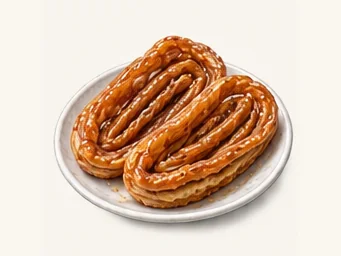
Sugar-ear pastry (糖耳朵), also called 蜜麻花, is a Beijing-associated, ear-shaped fried pastry made from layered fermented wheat dough and a brown-sugar layer, then soaked in warm malt syrup until glossy, soft and sweet. Its name means “sugar ear”; the shape, rather than a crisp shell or a honey-only glaze, is the defining cue.
Tap any red Chinese text to hear it in Mandarin.
What it is
糖耳朵 is a folded, leavened wheat pastry whose ridged shape resembles an ear. It is also known as 蜜麻花. Beijing food writing and the city tourism listings identify it as a familiar traditional Beijing snack; a 2023 report on Beijing snack businesses also names 糖耳朵 among the enduring local varieties. It is a regional association, not a claim that no similar fried sweets are made elsewhere.
The English label “honey-dipped ear pastry” can mislead: honey is not the only documented syrup. A Beijing tourism recipe lists flour, brown sugar, peanut oil, alkali, maltose syrup and honey, and its method specifically soaks the fried pastry in warmed malt syrup. Another listing describes a sugar or malt syrup soak. So expect a sticky, sweet glaze, while recognizing that the exact syrup and dough recipe vary by maker.
How it is made and what to expect
A documented Beijing method uses fermented dough adjusted with alkali and a separate brown-sugar dough. The maker rolls the dough in layers, with the sweet layer between fermented layers, cuts and folds the strip into an ear-like piece, then fries it until golden. While still warm, the pastry is immersed in warm syrup so the folded layers take it in. The rising, shaping, frying and syrup-soaking all matter: a well-made piece is evenly glazed rather than dry or left with a hard, under-soaked center. These are documented techniques, not a single compulsory formula for every shop.
Look for an amber-to-brown, glossy surface and a tender, moist, softly layered bite. The syrup brings the main sweetness; the fried wheat dough gives it a fuller pastry-like base. This is a syrup-rich snack rather than a crisp, dry cookie. The name comes from the finished ear-like form, not from an animal ingredient.
Ordering and eating
Show the name 糖耳朵 Táng’ěrduo when ordering; 蜜麻花 Mì máhuā is another name you may see. Start with one piece if you are sampling several Beijing sweets: its syrupy sweetness is concentrated. Unsweetened tea is a useful optional contrast, though serving customs differ by shop.
Wheat flour is intrinsic to the pastry. A documented recipe uses peanut oil, but oil choices can differ, so ask the individual shop about ingredients if that matters to you.
Where to eat it
You can find Sugar-ear pastry all over Beijing, so there is no need to seek out one particular restaurant. To find one near you, search for “糖耳朵” in Meituan (美团) or Amap (高德地图) and check recent reviews, distance and opening hours.
More dishes to compare
Explore related local specialties and compare their names, preparation notes and ordering guidance.
Bean-filled sesame pastries 蛤蟆吐蜜 →
Sweet bean paste is enclosed in sesame-coated wheat pastry and baked until the crust cracks, exposing some of the filling. The visible seam is part of its recognizable appearance. The shell is dry and crisp around a dense, sweet center, with toasted sesame adding fragrance.
Sweet grain-flour pudding 茶汤 →
Fine grain flour is whisked with boiling water into a thick pudding, then topped with sugar and small nuts or preserved-fruit pieces. The flour and toppings differ between Beijing and Tianjin shops. The base is smooth and spoonable, with a gentle grain aroma; crunchy toppings interrupt its soft texture.
Sources & reading
Recipes and servings vary between kitchens.