

Fish-fragrant pork slivers 鱼香肉丝
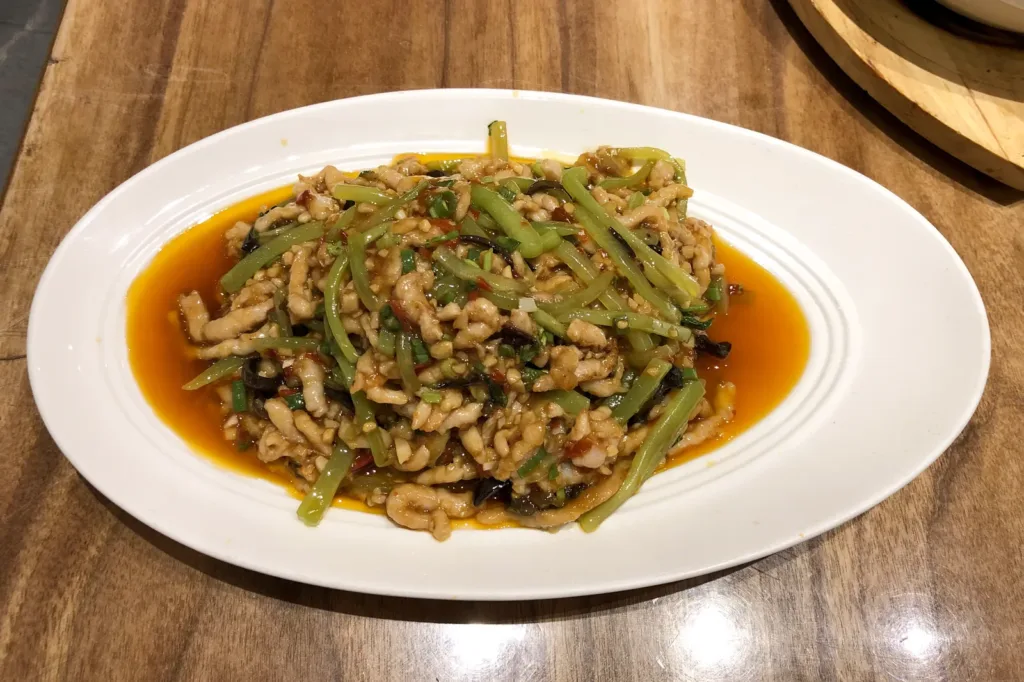
Thin strips of pork are quickly stir-fried in Sichuan’s fish-fragrant seasoning: pickled-chilli warmth, garlic and ginger, and a sweet-sour-savoury sauce. Chengdu-style versions often add crisp vegetables, although recipes vary by cook and restaurant.
Tap any red Chinese text to hear it in Mandarin.
What to expect
“Fish-fragrant” (鱼香, yúxiāng) names a Sichuan seasoning style, not a promise of fish pieces in the dish. Many familiar present-day versions use pork with pickled chilli, aromatics and a balanced sauce, without fish meat. The name’s history is not settled: a Sichuan cultural-history account says an early form used chillies fermented with fish, while a 2017 report records competing explanations. Treat those as historical accounts, not proof of one universally agreed origin or recipe.
A common version starts with thin pork strips, seasoned and lightly coated with starch so they stay tender in a brief, hot stir-fry. Pickled red chilli provides savoury heat; cooks add ginger, garlic and spring onion, then toss the pork with a sauce commonly balancing soy, vinegar, sugar and a little starch. Some kitchens add doubanjiang; others rely on pickled chilli. As the sauce thickens, it clings in a glossy red-brown coating. The intended effect is a layered taste—salty and savoury first, with sweetness, vinegar tang, chilli warmth and a clear ginger-garlic aroma—rather than a single blunt “spicy” note.
Vegetables and regional variation
Vegetables are not a fixed checklist. A recipe writer describing the Chengdu and upper-river style notes combinations such as julienned lettuce stem (莴笋), wood-ear mushroom and carrot; that same source describes simpler Chongqing-area versions that may use mainly spring onion. The recipe on that page uses spring onion alone, showing why one restaurant’s plate should not be presented as a citywide standard. Doubanjiang, the degree of sweetness and sourness, and the vegetable mix can also vary by kitchen.
How to order and eat it
Ask for 鱼香肉丝 (yúxiāng ròusī). It is a main dish, usually easiest to enjoy with steamed rice: take a little pork, sauce and vegetable together so the tender meat, bright seasoning and any crisp vegetable stay in balance. If you have a fish allergy or need to avoid a particular ingredient, ask the restaurant directly; seasoning and kitchen handling are not uniform, and the traditional fish-brined-chilli account makes the name alone an unreliable guide to ingredients.
Where to eat it
You can find Fish-fragrant pork slivers all over Chengdu, so there is no need to seek out one particular restaurant. To find one near you, search for “鱼香肉丝” in Meituan (美团) or Amap (高德地图) and check recent reviews, distance and opening hours.
More dishes to compare
Explore related local specialties and compare their names, preparation notes and ordering guidance.
Kung pao chicken 宫保鸡丁 →
Diced chicken is quickly stir-fried with dried chilies, peanuts and a carefully balanced sauce. The sauce reduces to a light coating rather than pooling heavily around the ingredients. Tender chicken contrasts with crunchy peanuts, while savory seasoning, sweetness and acidity sit beneath chili fragrance. Peppercorn may add a mild numbing note.
Twice-cooked pork 回锅肉 →
Pork is first simmered, cooled enough to slice and returned to the wok with chili-bean paste and aromatics. Garlic shoots or leeks are common partners, though cuts and vegetables vary. The slices develop browned edges while retaining soft fat, with a savory fermented-bean aroma and gentle-to-strong heat.
Sources & reading
Recipes and servings vary between kitchens.
Image credits & notes (1)
- One restaurant’s serving of fish-fragrant shredded pork; an example, not a fixed Chengdu recipe. Photo: N509FZPhoto: CC BY-SA 4.0