

Fried fermented mung-bean pulp 麻豆腐
Fried fermented mung-bean pulp is featured among the local specialties of Beijing.
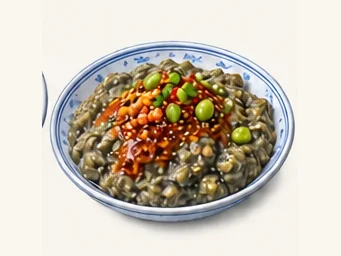
Fermented mung-bean pulp cooks into a thick, tangy paste. Try a small shared plate because its sour aroma is distinctive.
How it is made
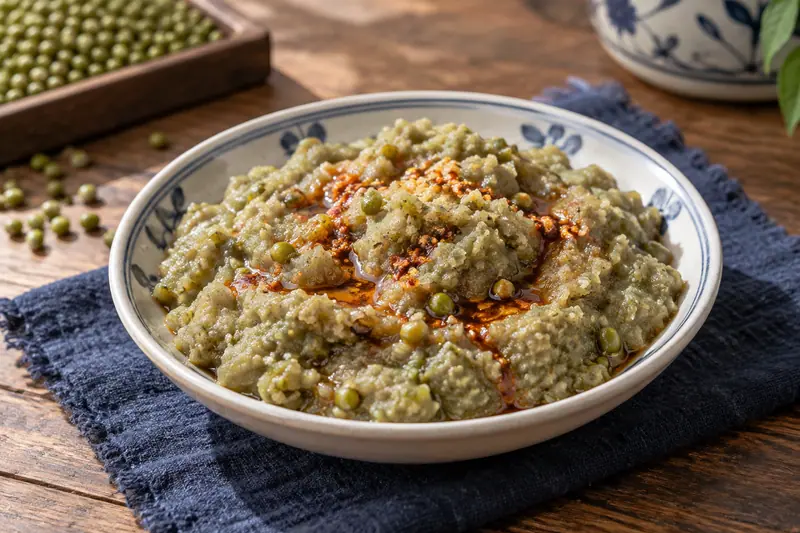
The fermented mung-bean residue associated with making bean starch and douzhi is cooked down with oil or fat and seasonings. Some preparations add green beans or finish the paste with chili oil.
Flavour & texture
Its sharp fermented aroma and tangy, grainy softness are the defining qualities. This is a savory dish with more complexity than its plain appearance suggests.
Local roots & traditions
Madoufu belongs to Beijing's tradition of using different products from bean processing.
How to order Fried fermented mung-bean pulp
Share a small plate first and ask which cooking fat is used.
More dishes to compare
Explore related local specialties and compare their names, preparation notes and ordering guidance.
Douzhi 豆汁儿 →
Mung-bean processing produces a liquid that is fermented and heated to make douzhi. It is commonly served with crisp fried rings called jiaoquan and finely shredded pickles. Expect a distinctly sour, earthy aroma and a thin texture, quite different from sweet soy milk. The pickles and fried dough change the balance of each mouthful.
Pea-flour pudding 豌豆黄 →
Peeled peas are cooked until soft, worked into a smooth sweetened paste and set before being cut into neat yellow pieces. The texture depends on careful cooking and straining rather than a heavy pastry crust. Each square is tender, fine-textured and gently sweet, with a recognizable pea flavor. It should feel smooth rather than sticky like a glutinous-rice cake.
Questions before you order
What name should I show when ordering?
Show 麻豆腐 for Fried fermented mung-bean pulp. Share a small plate first and ask which cooking fat is used.
Sources & reading
Recipes and servings vary between kitchens.