

Pea-flour pudding 豌豆黄
Wandouhuang (豌豆黄) is a pale-yellow Beijing snack made by cooking peas until soft, working them into a fine paste, sweetening and setting the mixture, then cutting it into small pieces. It is known for a gentle sweetness and a cool, smooth, delicate texture; folk and refined court-style versions differ in finish and additions.
Tap any red Chinese text to hear it in Mandarin.
What it is
Wandouhuang is best understood as a sweet pea cake or set pea pudding, not a pastry made from pea flour. Beijing food descriptions name white peas as the main ingredient and describe cooking them until soft, then grinding or straining the peas into a smooth base that can be sweetened and set. The exact texture, sweetness and additions vary by cook and shop; there is no single required ratio.
It is part of Beijing’s traditional snack repertoire. Beijing accounts describe a coarser folk style, sometimes made with dates and associated with spring fairs, alongside a finer court-style version made with white peas and finished as small, smooth squares. Treat those as documented variations rather than a fixed recipe.
How it is made and tastes
A common method is to soften peeled peas with water, work them into a puree, and cook the puree with sugar until it thickens. It is then cooled or otherwise allowed to set before being cut. Some folk-style descriptions include cooked dates; accounts of the finer style describe passing the peas through a sieve. These differences explain why one piece can be more rustic and softly textured while another is notably fine and uniform.
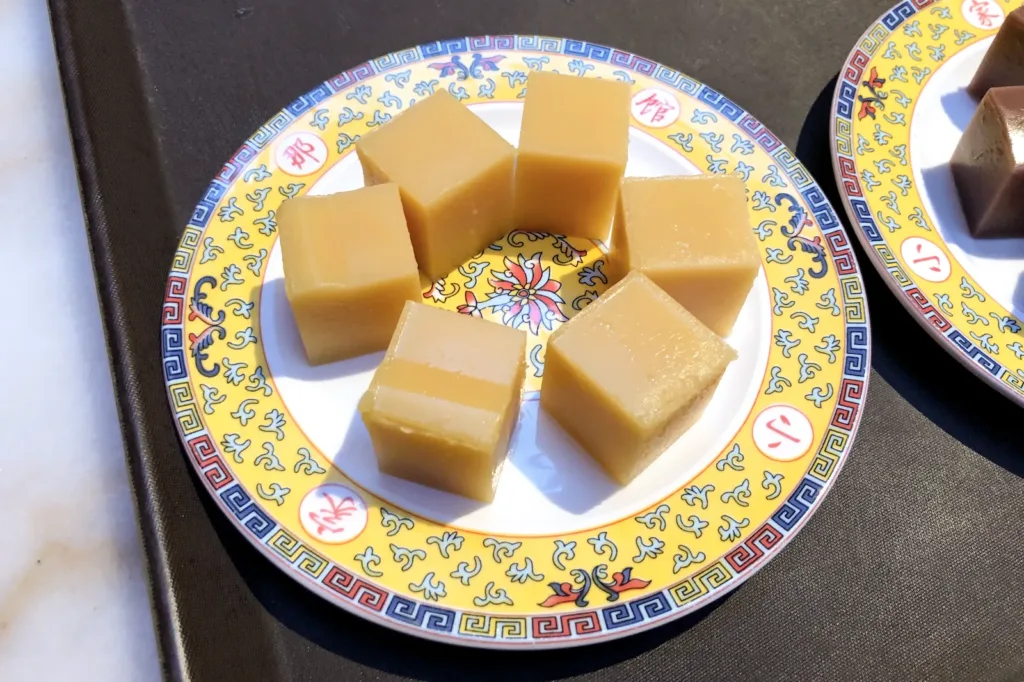
The finished snack is typically pale yellow, with a clean, close-grained surface. Expect gentle sweetness and a mild pea aroma rather than the strong fragrance of a spiced dessert. Its appeal is in the tender, smooth, almost melting bite when served cool, not in a chewy or crisp crust.
How to order and eat it
Show 豌豆黄 or say wǎndòuhuáng. It is usually cut into small squares or blocks and eaten as a cool, ready-to-eat sweet; a plain, unsweetened tea is a good optional contrast. A refined presentation may include a small piece of honey cake, while a folk-style piece may include or be served with dates. Ask which version is available if you want one style in particular.
Beijing sources associate the snack with spring and report a custom of eating it around the third day of the third lunar month. A 2023 report also said it was being sold throughout the year at that time, but a particular shop’s stock is not guaranteed.
A basic version centers on peas and sugar, but added dates or other ingredients depend on the maker. If you need to avoid a particular ingredient, check the recipe of the specific serving rather than relying on the dish name alone.
Where to eat it
You can find Wandouhuang all over Beijing, so there is no need to seek out one particular restaurant. To find one near you, search for “豌豆黄” in Meituan (美团) or Amap (高德地图) and check recent reviews, distance and opening hours.
More dishes to compare
Explore related local specialties and compare their names, preparation notes and ordering guidance.
White-bean rolls 芸豆卷 →
Cooked white beans are mashed into a smooth paste and shaped around a darker sweet filling, then cut into small rolls. This produces a delicate bean-based sweet rather than a baked pastry. The texture is tender and fine, with little chew; the filling adds a concentrated sweetness against the mild outer layer.
Douzhi 豆汁儿 →
Mung-bean processing produces a liquid that is fermented and heated to make douzhi. It is commonly served with crisp fried rings called jiaoquan and finely shredded pickles. Expect a distinctly sour, earthy aroma and a thin texture, quite different from sweet soy milk. The pickles and fried dough change the balance of each mouthful.
Sources & reading
Recipes and servings vary between kitchens.
Image credits & notes (1)
- Cut squares of Beijing-style wandouhuang. Photo: N509FZPhoto: CC BY-SA 4.0