

Fuzhou filled fish balls 福州鱼丸
Fuzhou filled fish balls is featured among the local specialties of Fujian.
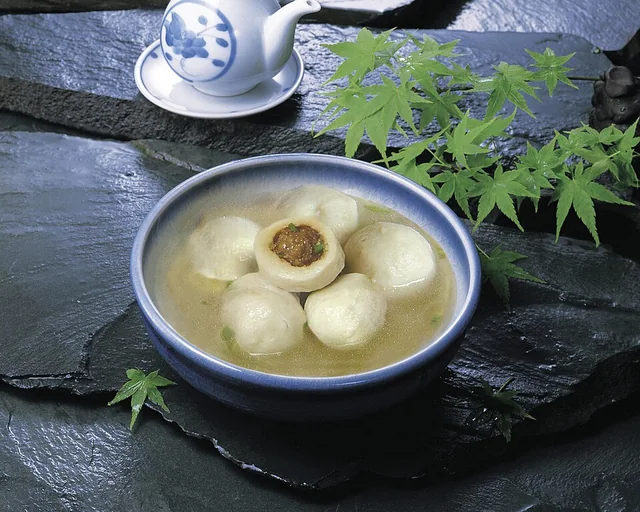

Photo adjustments
EXIF orientation applied where present; resized proportionally to at most 640 px on the long edge and encoded as WebP. No crop, retouching, recoloring or subject changes.
Fish paste encloses a filling that may include pork or shrimp. A bowl of broth highlights their springy exterior and softer center.
How it is made
Fish flesh is beaten into a sticky paste, formed around a seasoned filling and cooked into smooth balls. The filling commonly includes pork, with other additions depending on the shop.
Flavour & texture
A springy fish exterior gives way to a softer, savory center. The contrast is easiest to appreciate in a simple hot broth.
Local roots & traditions
Filled fish balls are a recognizable Fuzhou snack and a different preparation from unfilled fish-paste balls elsewhere.
Ingredients & dietary needs
Fish paste forms the outer layer, while pork is a common centre in Fuzhou-style filled fish balls. Starch, egg, stock and seasonings depend on the maker. The word fish ball does not mean the complete dish is pork-free, and the soup can contain additional meat or seafood ingredients.
How to order Fuzhou filled fish balls
Ask what is inside and bite carefully, because the filling and broth can be very hot. Ask whether the balls contain pork and how many are included. If the menu offers a mixed soup, confirm which other dumplings or seafood are in it. A smooth white surface hides the filling, so a photograph alone cannot resolve ingredient questions.
How to eat it & plan a meal
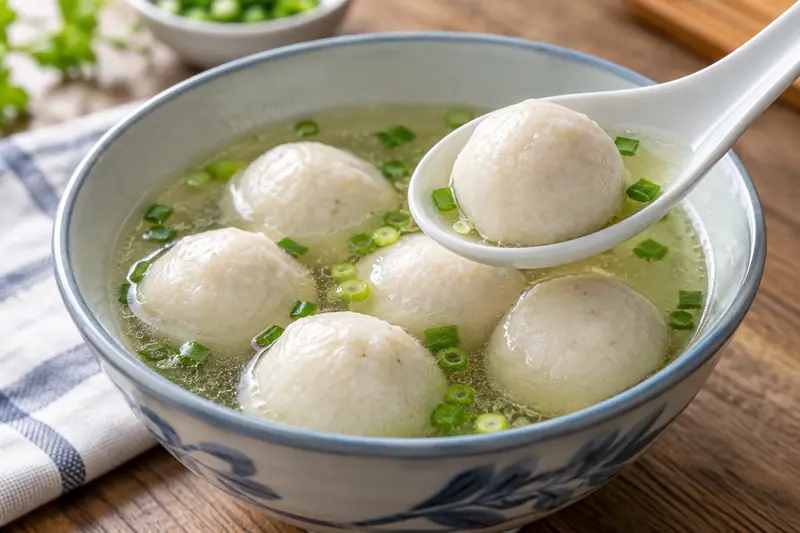
Order a small soup bowl if you want to focus on the fish-ball texture. Place one on a spoon, open it carefully and let the filling cool before eating. The broth offers a gentler mouthful between the springy shell and rich centre, while a few balls can complement a separate noodle order.
Names & local variations
Filled Fuzhou fish balls differ from unfilled fish balls used in hotpot or street-snack skewers. They also differ from 肉燕, whose wrapper incorporates meat in a different way. English menus can shorten both to dumplings, so keeping 福州鱼丸 visible helps readers identify the correct dish.
More dishes to compare
Explore related local specialties and compare their names, preparation notes and ordering guidance.
Dingbian rice-flake soup 鼎边糊 →
Rice batter is poured around the hot inner wall of a wok above a simmering soup. Once set into a thin sheet, it is scraped into the broth in soft flakes. The rice pieces are delicate and slippery, absorbing the savory liquid. Seafood, mushrooms or other additions can give the broth depth without making the flakes chewy like noodles.
Fuzhou thin-wrapped wontons 福州扁肉 →
Small amounts of minced filling are enclosed in very thin wrappers and cooked in a light broth. The specific wrapper matters: ordinary wheat-skinned bianrou should not be confused with Fuzhou rouyan made with a meat-based skin. The wrappers are delicate and slippery, with a small savory center rather than a heavy dumpling bite.
Questions before you order
What name should I show when ordering?
Show 福州鱼丸 for Fuzhou filled fish balls. Ask what is inside and bite carefully, because the filling and broth can be very hot. Ask whether the balls contain pork and how many are included. If the menu offers a mixed soup, confirm which other dumplings or seafood are in it. A smooth white surface hides the filling, so a photograph alone cannot resolve ingredient questions.
Sources & reading
Recipes and servings vary between kitchens.