

Fuzhou peanut-sauce noodles 福州拌面
Fuzhou ban mian (福州拌面) is a dry, mixed-noodle dish associated with Fuzhou and the Shanggan area of Minhou: chewy alkaline wheat noodles are tossed with a nutty sauce and commonly eaten with a separate clear soup.
Tap any red Chinese text to hear it in Mandarin.
What it is
Fuzhou ban mian is defined by the final toss rather than by a bowl of broth. A Minhou local account places the well-known Shanggan version in Minhou and describes high-gluten flour with egg white used for alkaline noodles, then peanut sauce, pork lard, soy sauce and scallion as the main seasonings. The local government also lists “Shanggan snacks (mixed noodles and bianrou)” as a county-level traditional cultural heritage item. These records establish the dish’s local association without making one shop’s recipe a universal standard.
How it is made and what to notice
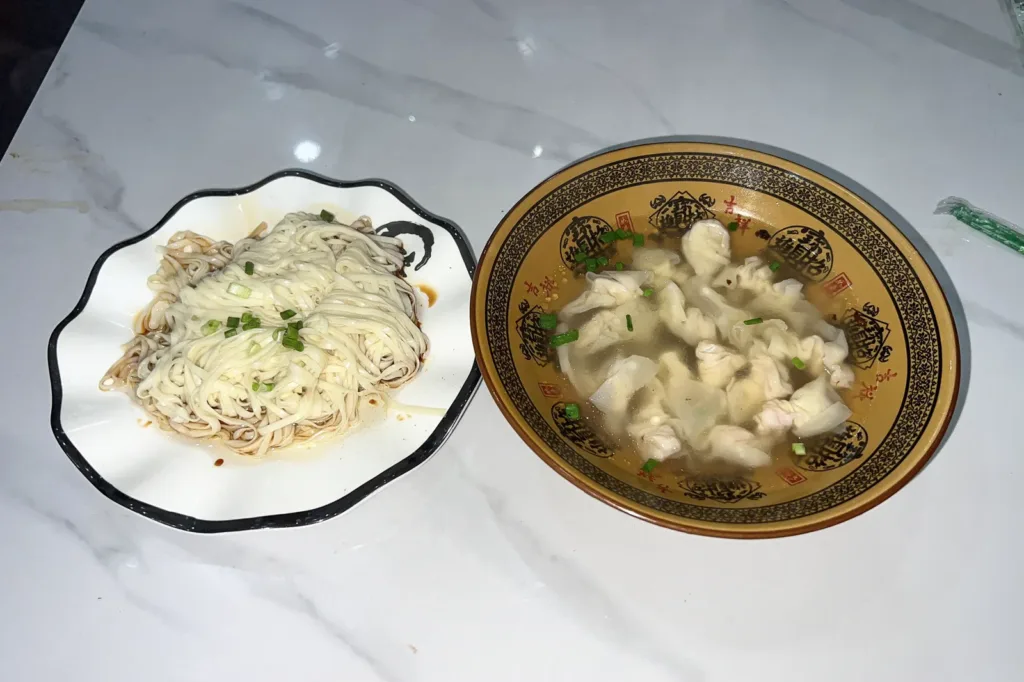
The noodles are boiled and drained, while a little cooking water is kept to loosen the sauce. Peanut butter or another nut-based mixture is combined with seasonings, then mixed vigorously with the hot noodles so the sauce becomes smooth and clings to each strand. When the bowl arrives, look for strands that are tender but still lightly springy, a glossy coating rather than a thick soup, and a savory, nutty aroma. The key observation is the balance between chew and coating: too little liquid leaves a stiff paste, while too much turns the dish watery.
There is real variation. A Fuzhou-focused account describes pork lard, garlic oil, dark soy sauce and sesame oil in its version, while noting that noodle shapes and widths also differ. A Fujian family recipe uses peanut butter, soy sauce and sesame oil, with sesame sauce, oyster sauce, garlic or chili as optional additions. Treat these as documented variations, not a fixed ingredient list or a guarantee that every bowl contains the same additions.
How to eat it
Mix from the bottom immediately before eating so the seasoning reaches the noodles underneath. Fuzhou accounts commonly pair the dry noodles with a separate clear soup; in some settings the companion is 扁肉汤 (bianrou soup), and small dumplings or other snacks may arrive alongside it. Ask what is in the sauce if you avoid peanuts, pork, oyster sauce or other additions. Do not assume that a plain-looking bowl is vegetarian or free of allergens.
Finding it in Fuzhou
This is a dish, not a fixed venue, address or transport hub. Search 福州拌面 Fúzhōu Bànmiàn on Meituan (美团) or Amap / Gaode Maps (高德地图); add 福州 Fúzhōu or your current neighborhood if the results are ambiguous. Compare the menu, recent reviews, opening information and same-day availability before choosing. Because supply changes by shop, this guide does not name a single restaurant or invent a unique last-mile route. Once you select a current listing, use that listing’s address, entrance and return-transport information rather than treating Shanggan as the required destination.
More dishes to compare
Explore related local specialties and compare their names, preparation notes and ordering guidance.
Fuzhou sweet peanut soup 花生汤 →
Skinned peanuts are slowly simmered until tender and served in a sweet, pale liquid. Some shops offer additions, but the basic bowl highlights the peanuts themselves. The nuts become soft and creamy while still holding their shape, giving a gentle earthy flavor against the sweet soup.
Shacha noodles 沙茶面 →
A shacha paste is blended into broth, then noodles and individually chosen toppings are added. The sauce commonly draws on nuts, spices and dried seafood, with recipes differing between makers. The bowl is thickly aromatic, nutty and savory, sometimes gently sweet or spicy rather than simply chili-hot.
Sources & reading
Recipes and servings vary between kitchens.
Image credits & notes (1)
- Fuzhou ban mian and bianrou served as separate dishes at a restaurant in Jingxi Houyu, Fuzhou; the noodles are the relevant dish and the soup shows the documented pairing. Photo: N509FZPhoto: CC BY-SA 4.0