

Gaosan Soy-Braised Pork 高三酱肉
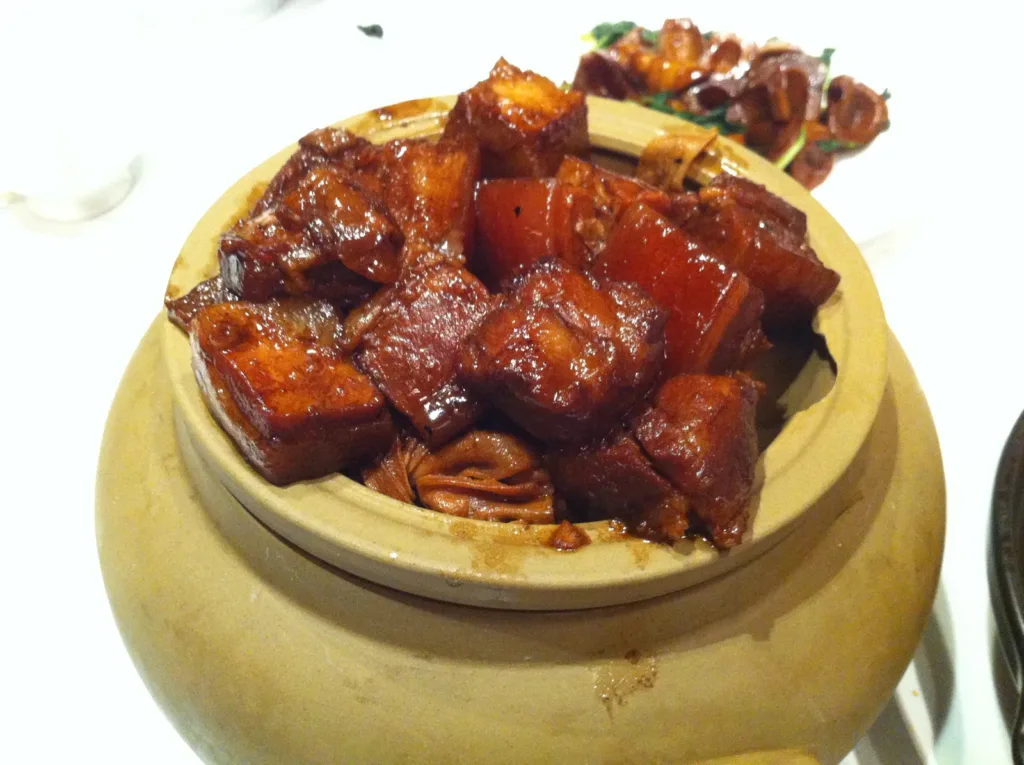
Gaosan Soy-Braised Pork (高三酱肉) is a Lanzhou-associated Gansu braised-pork specialty. Pork with a balanced lean-to-fat ratio is browned, tied into long pieces and cooked first over high heat and then gently; spices, rock sugar, Shaoxing wine, salt and a bean-paste base give the finished meat a glossy surface, a firm-tender texture and a deep aroma.
Why this dish belongs on a Lanzhou food list
Gaosan Soy-Braised Pork is described in local Gansu food material as a traditional Lanzhou specialty rather than as a generic name for every soy-braised pork dish. The name is linked to its creator, Gao Binwu, who was the third among his brothers. Accounts differ on the exact founding decade—some place it in the 1920s and others in the 1930s—so it is more accurate to describe it as an old Lanzhou food tradition without forcing a single year.
What to notice in the meat
The reference description allows several cuts: a suitably balanced lean-and-fat cut from a large pig, shoulder meat, or boneless, skin-on hard ribs. The meat is first browned or scorched to a red-gold color, cut into long pieces, and tied with malian cord. It is then cooked in the soaking liquid, with a spice bundle that can include tsaoko, cinnamon, Sichuan pepper, cloves and other aromatics. Salt, Shaoxing wine, rock sugar and a bean-paste base are added to the pot. High heat brings the meat partway to doneness; a slow finish over low heat leaves it tender without making it collapse.
That sequence explains the dish’s characteristic contrast: a polished red-gold exterior, slightly translucent edges and a slice that is soft but still holds together. The local description emphasizes fragrance, a full savory taste and fat that should not feel cloying. Recipes can differ between kitchens, especially in the cut, spice balance and how much sauce is retained, so a different-looking serving is not automatically a different dish.
Ordering it in Lanzhou
Gaosan Soy-Braised Pork is a dish, not a fixed attraction with one visitor entrance. Availability depends on a kitchen’s current menu, and older references to a particular shop or address should not be treated as a current recommendation without checking. Search for “高三酱肉” on Meituan (美团) or Amap / Gaode Maps (高德地图) to find nearby places serving this dish. Check menus, recent reviews, opening information and today’s availability before choosing.
Keep the Chinese name handy when asking. If a menu does not explain whether the portion is served warm or sliced for immediate eating, ask before ordering; the name identifies the braised specialty, not one universal serving format. It is reasonable to compare the cut and texture described by the kitchen rather than rely on a ranking or a claim of being the “most authentic.”
Dietary notes
The documented preparation uses pork and may include Shaoxing wine and a bean-paste base, along with several spices, salt and sugar. Anyone avoiding pork, alcohol or soy/bean ingredients should ask the kitchen about the exact batch. Do not infer that the dish is vegetarian, halal, alcohol-free or free of allergens from its glossy appearance or from a brief reheating step; the cited descriptions do not establish those guarantees.
Image credits & notes (1)
- A plate of glossy red-braised pork cubes in brown sauce, shown as an illustrative reference rather than a verified Gaosan Soy-Braised Pork servingPhoto: N509FZ · CC BY-SA 4.0