

Hele Pressed Noodles 饸饹面
Hele Pressed Noodles is featured among the local specialties of Gansu.
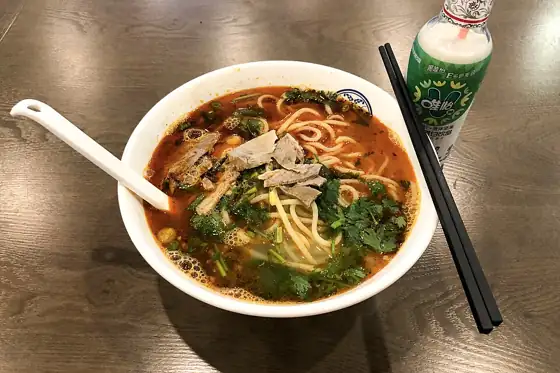
Hele Pressed Noodles (饸饹面) are round noodles pressed through a wooden press with round holes, and Gansu Daily calls them a traditional speciality of Pingliang (平凉). The version named in Pingliang's local legend and in a China Gansu Net visitor itinerary is buckwheat hele (荞面饸饹).
How it is made
Hele suits flours that will not hold together as ordinary noodles the way wheat does, such as buckwheat, naked oat, sorghum or maize. A soft dough of one of them is pushed through a hele press (饸饹床子), a wooden tool pierced with round holes, and comes out as thin round strands; flour ground from elm inner bark is sometimes added to bind it. The result is thicker than an ordinary noodle but softer.
Where it comes from
A story told in Pingliang ties the dish to Mount Kongtong (崆峒山), the Taoist mountain in the city. When the Yellow Emperor came to Kongtong to ask the sage Guangchengzi (广成子) about the Way, Guangchengzi is said to have told him that buckwheat hele could 'harmonise the five elements and loosen the sinews' (活筋通络); the name hele is taken as a pun on huoluo (活络), 'loosening'. Reporting the opening of a Pingliang hele noodle industry project in July 2020, China Gansu Net called the dish a potential second noodle calling card for Gansu after Lanzhou beef noodles. In July 2023 Pingliang held its first hele noodle festival at Kongtong Ancient Town (崆峒古镇), with 22 hele noodle businesses taking part and dishes such as mutton paomo (羊肉泡馍), Zhuanglang (庄浪) hotpot and Jingning (静宁) roast chicken on show.
Sources & reading
Written from the linked sources and fact-checked against them on 2026-09-26. Recipes and servings vary between kitchens.
Image credits & notes (1)
- Serving example. CNY29 for this "pressed noodles".Photo: N509FZ · CC BY-SA 4.0Resized for the web; the photo itself has not been edited.
