

Thick Broth with Fried Dough Twists 糊饽
Thick Broth with Fried Dough Twists is featured among the local specialties of Gansu.
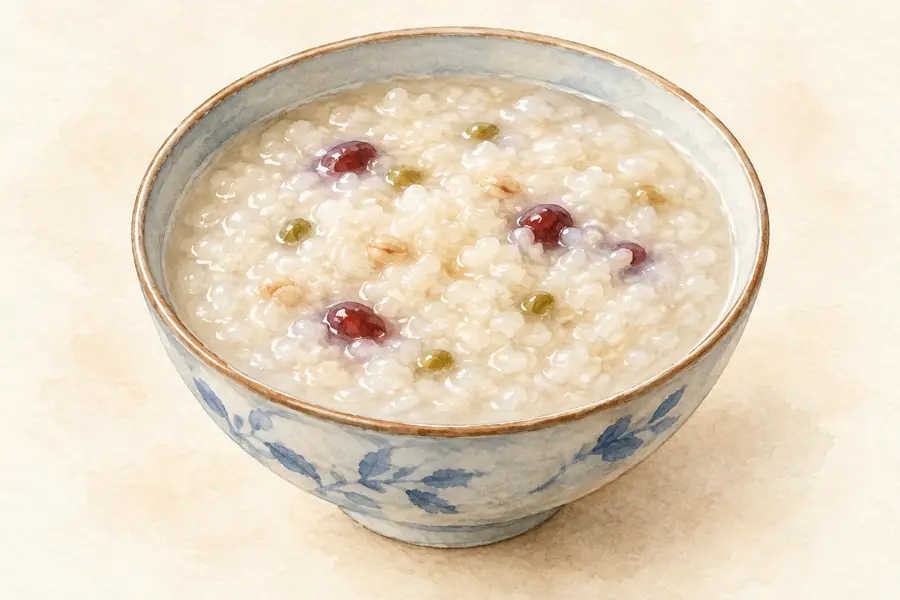
Thick Broth with Fried Dough Twists (糊饽) is a Zhangye breakfast bowl of meat broth thickened with starch sheets and fried dough twists, eaten in 张掖 in central Gansu and listed among the city's representative foods.
How it is made
A food feature compiled in 张掖 describes 糊饽 as close in method to 面筋勾汤, the local gluten-and-soup dish, and lists what goes into the pot: 肉汤 (meat broth), 麻花 (fried dough twists), 粉皮 (starch sheets), 肉片 (sliced meat) and 包菜 (cabbage). The starch in the 粉皮 thickens the broth as it cooks, which is what makes the bowl 糊 — thick rather than clear.
The seasoning holds it together: 葱 and 蒜苗 for lift, plus 花椒、草果 and 胡椒 for a warm, slightly numbing depth. The source adds no chilli and no soy. Making it is mostly about timing — the dough twists should soften without dissolving, and the cabbage should stay green against the pale sauce.
Flavour and texture
Three phrases in the source describe the result: 醇香柔韧, mellow and chewy; 色泽晶润, glossy in the bowl; and 口感顺滑, smooth going down. Because the broth carries pepper and cardamom rather than chilli, the heat is aromatic rather than hot.
Texture is the part to notice. The 麻花 gives a soft, faintly sweet chew once soaked, the 粉皮 keeps some resistance, and the cabbage stays crisp. If you dislike soft fried bread this may not be your bowl; if you like thick, starch-thickened soups, it will be.
Local roots
糊饽 is a breakfast dish of 张掖. The same compilation lists it in the morning group alongside 牛肉小饭 and 粉皮面筋, and describes 面筋勾汤 as something Zhangye farm households once made for guests at busy times, with starch sheets and gluten prepared in advance and heated in broth when visitors came.
The city sits in the Hexi Corridor, where wheat rather than rice sets the daily menu, and thick broth-and-starch bowls are the local way of turning a little meat into a filling meal. The name is a warning to travellers: 糊饽 in Shaanxi is a different dish, so read the town on the signboard.
Ingredients and dietary needs
Expect a wheat-based bowl: 麻花 and 粉皮 are made from wheat or starch, cabbage is the usual vegetable, and meat broth and sliced meat supply the savoury base. The source does not say which meat is used, so ask 是什么肉 and whether it is beef or lamb. If you avoid gluten, check 有没有不加麻花的 and whether the 粉皮 is wheat or mung-bean starch; ask 不要味精, 不要辣子 and 少放盐 to adjust seasoning, and note that vegetarians need the broth changed, since it is the base of the dish.
How to order 糊饽
Say 糊饽 or 张掖糊饽 and ask 大碗还是小碗 — street bowls come in two sizes and the large one is genuinely filling. Ask 多放蒜苗 for a sharper finish, or 少放胡椒 if you prefer it milder.
At the counter the usual phrases are 一份, 打包, 多少钱 and 加个鸡蛋吗. Worth asking about the shop's own version: 是牛肉汤吗 and 有没有羊肉的.
How to eat it and plan a meal
Eat it hot, with a spoon for the thick part. The local rhythm is breakfast: one bowl, tea, then the rest of the day, which is why the portion is built to fill rather than to impress. As a lunch, pair it with a plain vegetable rather than another starch, ask for 少糊 if you find it dense, and compare it with the 面筋勾汤 sold in the same shops — same family, different starch — if you have two mornings in 张掖.
More dishes to compare
Explore related local specialties and compare their names, preparation notes and ordering guidance.
Shandan chaobola 山丹炒拨拉 →
山丹炒拨拉 comes from 山丹县 in 张掖 and stir-fries chopped liver, lung, tripe, intestine and heart on a broad iron griddle with scallion, garlic sprouts and spice, best eaten hot in winter. 糊饽 is a broth-and-starch breakfast bowl made with meat broth, fried dough twists, starch sheets, sliced meat and cabbage, seasoned with pepper and cardamom instead of chilli. One is dry, fast and offal-heavy; the other is thick, slow and gentle enough for breakfast. 糊饽 is the easier starting point.
Questions before you order
Is 糊饽 a noodle soup?
No. The thick body comes from 粉皮 (starch sheets) cooked in meat broth, with softened 麻花 adding bulk. Ask 是什么肉 to check which broth the shop uses.
When do people eat it?
The source lists it among common Zhangye breakfasts, in the same group as 牛肉小饭 and 粉皮面筋. Some shops sell it only in the morning, so ask 早上有吗.
Sources & reading
The supplied food list supports this name and regional association. The culinary terms below are explained as menu vocabulary; a local recipe, origin story and venue availability have not been independently verified.