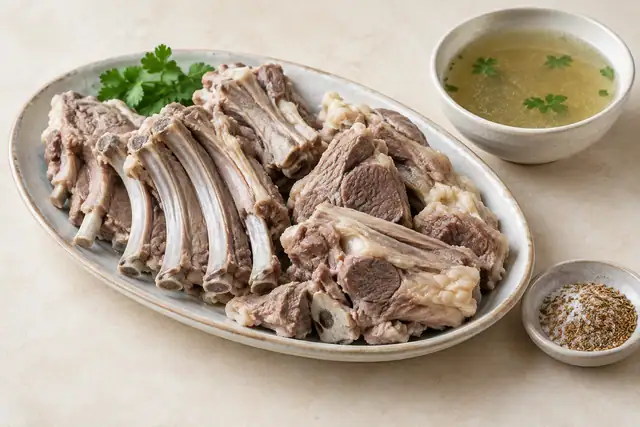
Linxia Hand-Grabbed Mutton 临夏手抓羊肉
Linxia Hand-Grabbed Mutton is featured among the local specialties of Gansu.
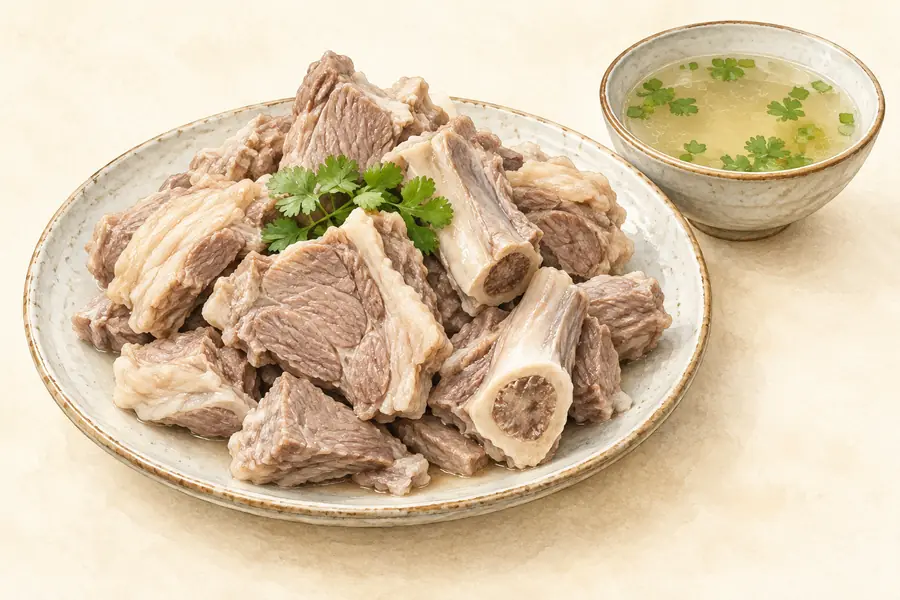
Linxia Hand-Grabbed Mutton (临夏手抓羊肉) is lamb boiled whole or in large pieces, chopped into chunks and eaten with pepper salt and garlic; the name comes from picking the meat up by hand. In Linxia (临夏) Hui Autonomous Prefecture, Gansu, the representative version is Dongxiang hand-grabbed mutton (东乡手抓), a specialty of the Dongxiang (东乡) people, and China Linxia Net says both Hui and Han people in Linxia favour Dongxiang mutton.
The lamb
Cooks prefer a young castrated ram lamb (羯羊羔). Dongxiang sheep descend from Mongolian sheep brought to Hezhou (河州) by the Tuyuhun (吐谷浑) and Xianbei (鲜卑) in the third and fourth centuries and later crossed with Tibetan sheep. The Dongxiang area lies at around 2,500 metres, with dry-grassland vegetation in which wild onion and garlic grow among the grasses. A Ming-dynasty gazetteer of Hezhou, from the Jiajing reign, records mutton from this area sent as tribute to the court.
How it is made
The lamb goes into the pot whole, or cut into six large pieces: fore and hind shoulders, breast, back, ribs and tail bone. It starts in cold water over a fierce fire; the scum is skimmed off as it boils and the heat is turned down so the broth stays clear. Salt, Sichuan pepper, ginger and caoguo (草果, tsaoko) go in, and the meat simmers until the bloody juices have almost gone and a chopstick slides in easily. To keep the meat white and tender, it is usually cooked with salt alone, or with only ginger added. The cooked meat is chopped into large chunks and plated by cut, or piled with ribs on top of breast and back.
How it is eaten
A bowl of the plain cooking broth, sprinkled with coriander and garlic shoots, comes first. The meat is dipped in pepper salt and garlic paste dressed with hot oil, or eaten with whole garlic cloves. For the Dongxiang, serving a whole lamb, with neck, ribs, legs and tail brought to the table in turn, is the highest honour for a guest.
Linxia also keeps the pinghuo (平伙) custom: in slack farming months or bad weather a group of friends share the cost of one sheep, one of them cooks it at home, and the meat is divided so every share has a piece of every cut. Noodle pieces are then pulled into the meat broth and eaten with chilli oil and vinegar. Some village restaurants tie raw meat into bundles of one or two jin (500 g or 1 kg), boil them and sell each bundle with a bowl of noodles.