

Cold Steamed Noodle Sheets 酿皮子
> Short summary: Niangpizi is a cold Gansu wheat-flour snack closely associated with Lanzhou: steamed sheets are cut into thick strips and dressed with vinegar, garlic, chilli oil and other seasonings, often with sliced gluten for a cool, springy bite.
Tap any red Chinese text to hear it in Mandarin.
Why try it in Lanzhou?
Niangpizi is a regional food rather than a single fixed recipe. A provincial government guide describes it as a flour-based cold food made across Gansu and singles out Lanzhou as a notable place for it. China Gansu Net likewise lists Lanzhou niangpizi among the city’s local foods and describes it as something found in streets and lanes around the city. That makes it a useful way to taste everyday Lanzhou food culture without tying the dish to one landmark, district or restaurant.
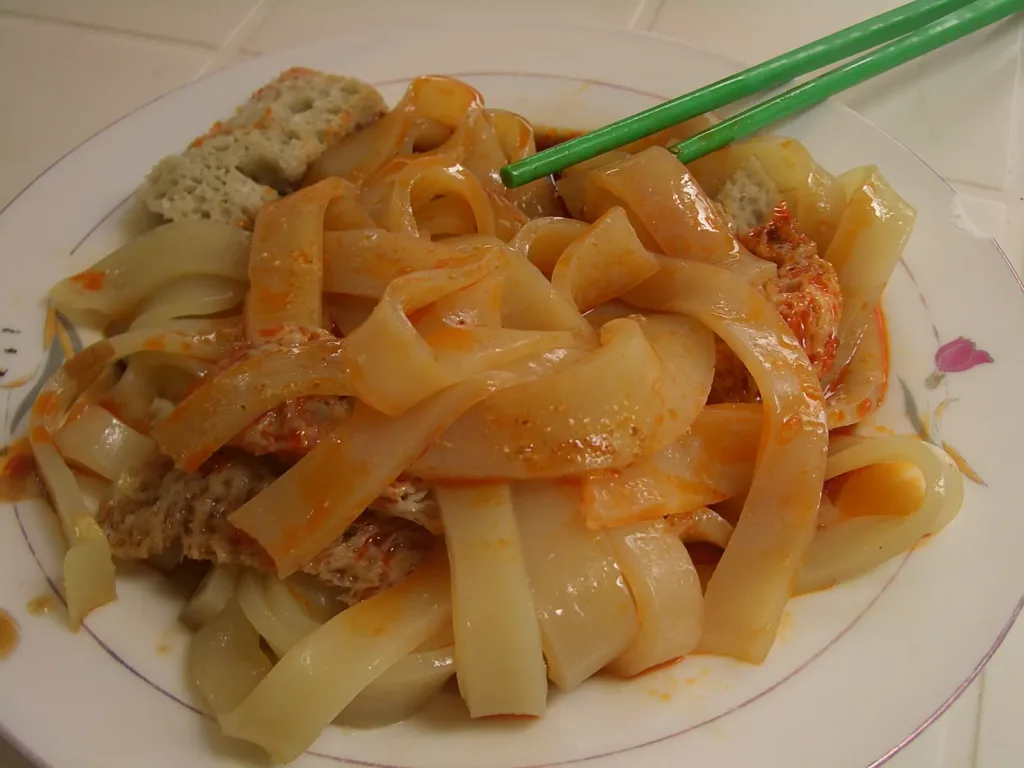
The Chinese name is the useful one to keep. “Cold steamed noodle sheets” describes the form in English, but the bowl you receive may be thicker, softer or more alkaline-tasting than the thin liangpi served elsewhere in northwest China. Look for the sheet’s translucent yellow surface, the way the sauce gathers on its cut edges and the contrast between the slippery strips and the springy pieces of gluten.
How the texture is made
In the water-washed method, wheat flour is kneaded with water into a firm dough. The dough is repeatedly rubbed and washed so that starch separates from the protein. The protein becomes gluten, which is steamed and sliced; the starch settles in the wash water, after which the clear water is poured off and a little alkali is mixed into the remaining batter. The batter is spread in a flat pan and steamed for a few minutes, producing sheets that can be cooled and cut.
Lanzhou is also associated with a thicker style called 高担酿皮 (gaodan niangpi). A recent regional account describes this version as using less repeated washing and a more direct alkaline batter, giving the finished sheet a thicker, softly elastic texture and a milky yellow sheen. The same account notes that there is no settled explanation for the name “高担”, so treat it as a local style name rather than a proven single-origin story.
What arrives in the bowl
The cooled sheets are folded and cut into strips roughly as thick as a chopstick, then mixed with sliced gluten. Common seasonings include soy sauce, vinegar, garlic, salt, sesame oil, coriander or cilantro, cucumber and chilli oil. Mustard and sesame paste may also be offered, and a vendor does not have to use every seasoning in the list.
The point is the balance: vinegar and chilli give the bowl its sharp, warming edge, while garlic and sesame add depth. The starch sheets stay cool, soft and slightly springy; gluten has a porous crumb that catches the dressing and gives a chewier bite. For a first bowl, ask for the regular mixed serving and request the chilli level you can comfortably eat. Local descriptions call the result sour, spicy and refreshing, but the exact dressing is part of each kitchen’s variation rather than a universal formula.
Regional variations
Do not treat every Gansu liangpi as the same dish. The regional account notes that Tianshui more often uses the name “liangpi” and favors a thinner, more translucent sheet. Further west, Wuwei’s thick 墩墩子 Dūndūnzi is a much heavier expression, cut or shaved into pieces and served with a cooked vinegar-based sauce. These examples explain why “niangpizi” is best understood as a family of related regional preparations, with Lanzhou’s thicker 高担 style as one local expression rather than a recipe that defines the whole province.
Finding a bowl
Niangpizi is not tied to a fixed address or visitor entrance. Search for “酿皮子” on Meituan (美团) or Amap / Gaode Maps (高德地图) to find nearby places serving this dish. Check menus, recent reviews, opening information and today’s availability before choosing. Search ranking does not prove quality or authenticity, and recipes, toppings and opening hours can change from one vendor to another. If you specifically want the thicker Lanzhou style, you can also try the term “高担酿皮” in the same search.
Dietary notes
The described base is made from wheat flour, so niangpizi is not gluten-free. Recipes and toppings vary; do not assume from appearance that a bowl is vegetarian, free of sesame or mustard, or safe from cross-contact. If you have an allergy, ask what is in the bowl before ordering—for example: 我对小麦、芝麻或芥末过敏,请问里面有什么? Wǒ duì xiǎomài, zhīma huò jièmo guòmǐn, qǐngwèn lǐmiàn yǒu shénme? (“I am allergic to wheat, sesame or mustard; what is in this?”). The sources describe the dish as a cold, dressed food, but they do not establish a universal ingredient list for every stall.
Sources & reading
Image credits & notes (1)
- A plate of niang pi at a sidewalk restaurant in Linxia City, Gansu, photographed on 25 July 2009; shown as a Gansu regional example rather than a Lanzhou-specific vendor. Photo: VmenkovPhoto: CC BY-SA 3.0