
Pingliang Mutton and Bread Soup 平凉羊肉泡馍
Pingliang Mutton and Bread Soup is featured among the local specialties of Gansu.
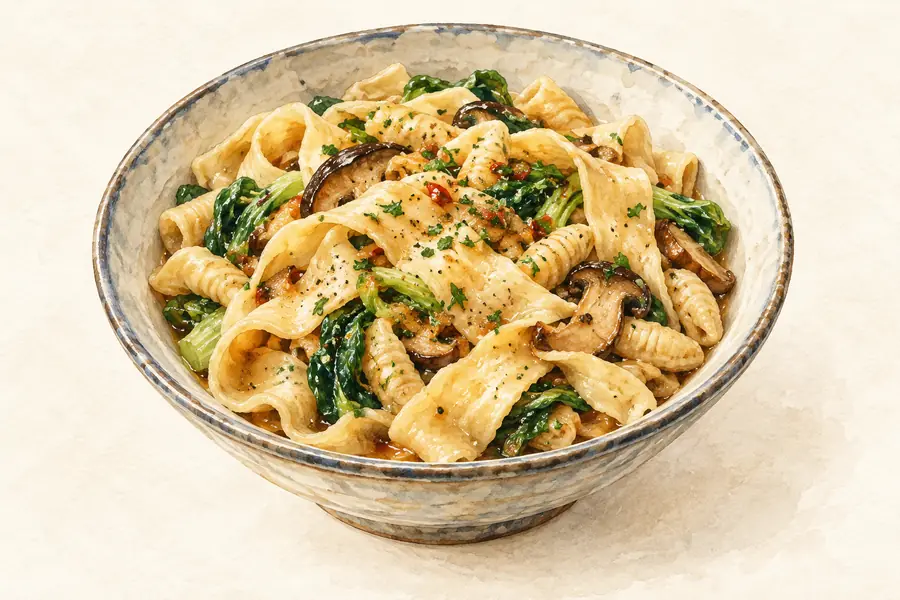
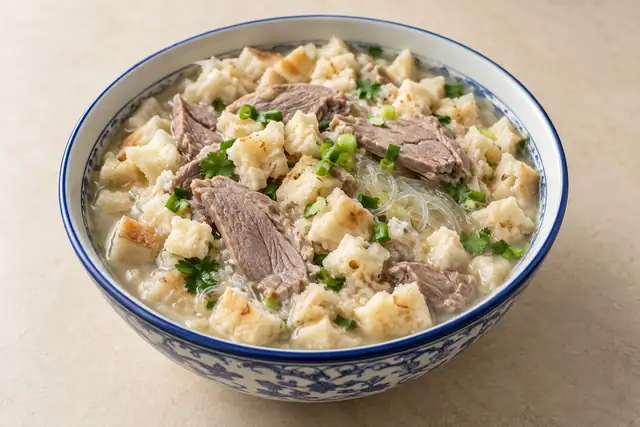
Pingliang Mutton and Bread Soup (平凉羊肉泡馍) is the meat-and-broth bowl of Pingliang (平凉) in eastern Gansu, which the Pingliang culture and tourism bureau promotes as the "first bowl of the northwest" (西北第一碗). Locally it is simply called yangrou pao (羊肉泡).
How it is made
In earlier times the soup was made from locally raised zhanyang (站羊) sheep. Meat with a balance of fat and lean is cut up and put into clear broth with seasonings. Cooked properly, the fat turns white and the lean stays red, and the broth remains clear rather than cloudy.
At the counter the carver asks whether you want fatty, lean or mixed meat and slices it to order; a standard bowl carries four liang (about 200 grams) of meat, and an all-mutton bowl about half a jin (about 250 grams). The condiments are oil-splashed chilli, coriander, and garlic or sweet pickled garlic (糖蒜). The bureau describes the taste as clean and fragrant, not greasy, and free of any muttony smell.
Mutton, beef or both
Although the Chinese name says mutton (羊肉), most Pingliang shops serve a mix of beef and mutton. Hui cooks season the mutton so it has almost no gamey smell, but for customers who shy away from lamb the shops substitute red beef, and regulars are asked whether they want mutton or beef. Almost every shop sign in the city reads "so-and-so paomo restaurant" rather than "mutton paomo restaurant", and the bureau notes that a more accurate name would be beef-and-mutton paomo (牛羊肉泡馍).
Where it comes from
Scholars quoted by the bureau trace mutton eating in eastern Gansu back to prehistory, when the area was home to the Qiang (羌) people. The bureau credits the dish's reputation to Pingliang's long history as a seat of prefectural, state and county government, whose officials and wealthy families brought in well-known cooks from outside who refined the local mutton cooking. Others argue that it shares an origin with Shaanxi water-basin mutton (水盆羊肉), pointing out that most of the Hui families who ran Pingliang mutton shops have ancestral roots around Weinan (渭南) in Shaanxi. The bureau treats this second view as plausible but unproven.
In the Republican era, competing shops such as Xishenglou (西盛楼), Chunhualou (春华楼) and Jumeicun (聚美村) refined the choice of meat, cooking and condiments into a distinct Pingliang style. The bureau describes Chunhualou as a century-old shop where Zhang Xueliang and Feng Yuxiang are said to have eaten. Pingliang people often start the day with a bowl, serve it whenever they host guests, and repeat the saying "不吃羊肉泡,枉把平凉到": a trip to Pingliang is wasted if you skip the mutton pao.
Questions before you order
Is Pingliang Mutton and Bread Soup made with mutton or beef?
Usually both. Pingliang shops mostly serve a mix of beef and mutton, and you can ask the carver for all mutton, all beef, or fatty, lean or mixed cuts.
Sources & reading
Written from the linked sources and checked sentence by sentence against quoted extracts by a separate reviewer on 2026-09-23. Recipes and servings vary between kitchens.