

Wuwei Santaoche Set Meal 武威三套车
Wuwei Santaoche Set Meal is featured among the local specialties of Gansu.
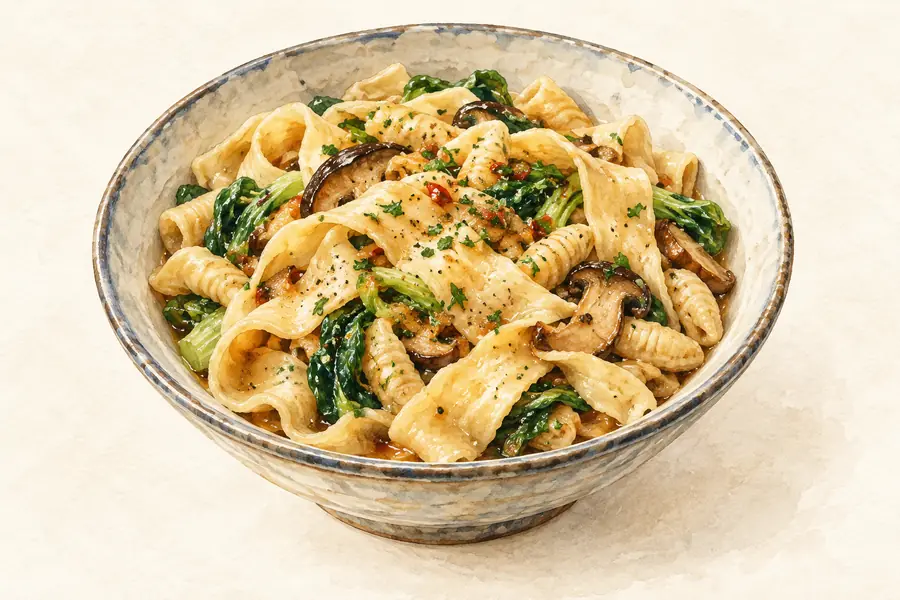
Wuwei Santaoche Set Meal (武威三套车) is the three-part meal of Wuwei (武威), the old Liangzhou (凉州): red-date fu tea (茯茶), braised pork and a bowl of hand-pulled xingmian (行面) noodles in gravy.
How it is made
The Wuwei Daily (武威日报) describes each part. The tea is simmered from Liangzhou red dates with goji berries, walnut kernels, rock sugar, longan and aged fu tea, a fermented brick tea. The pork is fresh meat cooked slowly over a low flame with a range of seasonings in a braising stock kept for many years; the paper calls it fragrant but not overpowering, fatty but not greasy, tender but not falling apart, and golden in colour.
The noodles, xingmian, are made from good Liangzhou flour with a little salt, mixed with water and rested, then pulled by hand into long strips of uneven width. After boiling they are served in a thickened gravy of cured pork, mushrooms, dried daylily buds, garlic scapes, coriander and potato starch.
Where it comes from
The Wuwei culture and tourism bureau sends visitors on its self-drive route to Beiguan Market (北关市场) for santaoche, which it explains as fu tea, Liangzhou xingmian and braised pork served together, like a carriage drawn by three horses in which none can be left out.
A legend retold in the Wuwei Daily links the name to Zuo Zongtang (左宗棠), the Qing governor-general of Shaanxi and Gansu. In the story, he came to Liangzhou in 1875 to gather army grain and was given a birthday table in the local manner: the tea for fu (blessings), the braised meat, lu, for official rank, and the noodles as longevity noodles. He is said to have named the set "Liangzhou santaoche" and later served it to his troops after the recovery of Xinjiang.
Sources & reading
Written from the linked sources and fact-checked against them on 2026-09-23. Recipes and servings vary between kitchens.