

Yongchang Vegetables Cooked with Flour 永昌卜拉子
Yongchang Vegetables Cooked with Flour is featured among the local specialties of Gansu.
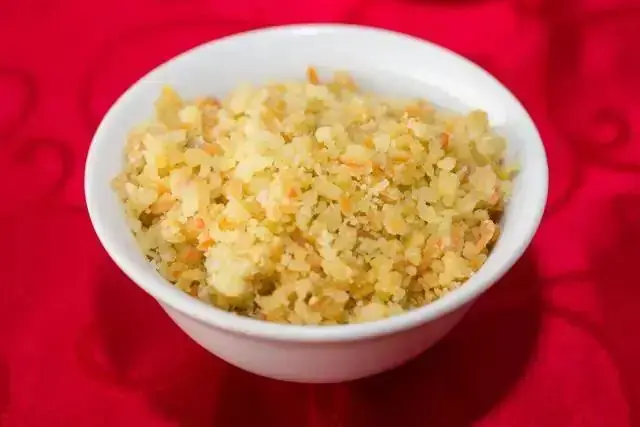
Photo adjustments
EXIF orientation normalized; resized without changing aspect ratio; converted to WebP. No subject edits.
Yongchang Vegetables Cooked with Flour (永昌卜拉子) is a snack of Yongchang County (永昌县) in Jinchang (金昌), Gansu, made by cooking chopped seasonal vegetables or wild greens together with fine wheat flour.
How it is made
The Yongchang county government describes two methods, chosen by the plant. Root vegetables such as beetroot and carrot are cooked by wu (焐), a slow covered cook over low heat. For the beetroot version the chopped beet goes into a clay or iron pot with water about two cun (寸) above it; once the water boils, a layer of flour is scattered on top and pierced with chopsticks so steam can escape. It cooks over a low flame for about 40 minutes, then the cooked flour and beet are stirred together, a little smoking-hot oil is poured on and the whole is stirred again.
Leaves and flowers such as fenugreek, mugwort and elm seeds are steamed instead. For the fenugreek version the leaves and tender tips are chopped and tossed with dry flour until every leaf is coated, spread on a steaming rack and steamed over a medium flame for 30 to 40 minutes. Salt and a little hot oil go on after it comes out, and it is stirred through.
Flavour and texture
The county describes Yongchang Vegetables Cooked with Flour as tasting strongly of the vegetables themselves, with a soft but chewy bite. A spoonful of hot flaxseed (胡麻) oil can be poured over and stirred in while it is hot, so the small grains of flour soak up the oil and turn glossy and fluffy, white flecked with green.
Where it comes from
The county government gives the name as a transliteration of a Mongolian word meaning a sweet food eaten on horseback, and says the dish reached Yongchang in the Yuan dynasty. It also describes the dish as a food invented in hard times: when grain ran short, people picked wild greens and pagoda-tree flowers (槐花), mixed them with flour and steamed them. The dish has outlived that need and is now everyday home food, a dish served to guests in restaurants and mutton houses, and sometimes a snack between meals.
The county also ties the local fondness for the dish to Yongchang's geographical setting, noting that from March onward wild greens come up along field edges and hillsides. In 2013 the Yongchang county government named it one of the county's ten signature foods, and in September 2014 it entered Jinchang's municipal intangible cultural heritage list as a traditional craft practised in every township of the county.
How it is eaten
It is served in a bowl and eaten hot with a small spoon or chopsticks, or picked up with the fingers.
Questions before you order
Which plants go into Yongchang Vegetables Cooked with Flour?
It changes with the season. The Yongchang county government lists root vegetables such as beetroot and carrot, and leaves and flowers such as fenugreek, mugwort, elm seeds and pagoda-tree flowers, always combined with fine wheat flour.
Sources & reading
Written from the linked sources and checked sentence by sentence against quoted extracts by a separate reviewer on 2026-09-24. Recipes and servings vary between kitchens.