

Zhenyuan Old-Style Banquet 镇原老席
Zhenyuan Old-Style Banquet is featured among the local specialties of Gansu.
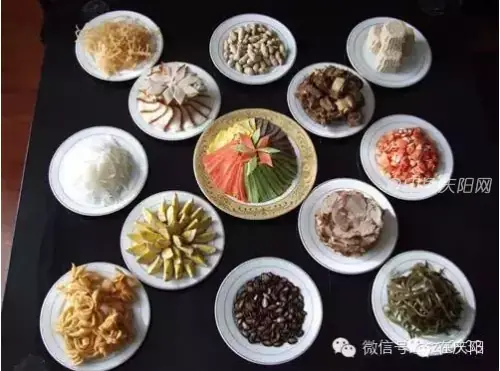
Photo adjustments
EXIF orientation normalized; resized without changing aspect ratio; converted to WebP. No subject edits.
Zhenyuan Old-Style Banquet (镇原老席) is the traditional formal feast of Zhenyuan County (镇原县) in Qingyang (庆阳), Gansu: a fixed sequence of mostly pork dishes served at a square table under set rules of seating and etiquette. Qingyang city listed it as municipal intangible cultural heritage in 2013.
How the banquet is served
Qingyang Net, in a 2016 report carried by China Gansu Net, names several forms of the banquet, including shiqi guo fu yan (十七国赴宴, "seventeen states at the feast"), shisan hua (十三花, "thirteen flowers") and shiquan (十全, "the complete ten"). Shisan hua is the one most often laid on for family occasions. It centres on thirteen large dishes with eight small ones; steamed buns come to the table four times, and dishes are carried out in seventeen trips. The dishes arrive one at a time, a large dish followed by a small dish, eight of each, a pattern known as feng jiao xue (风搅雪), "wind stirring snow".
Guests sit eight to a square Eight Immortals table (八仙桌) set with a pair of taishi armchairs (太师椅), the two most honoured seats, with plaques, hangings and calligraphy behind the table. Once all the dishes are on the table, the most senior guest picks up chopsticks first and the others follow. Wine is not poured round the table in order but alternately, left then right.
How it is made
Meat dominates the menu and pork is the main ingredient, with a little chicken. The cooks make a series of pork dishes from different parts of the pig: ribs, xuanrou (旋肉, spiral-cut pork), liver, crisp-fried pork, tiaozi rou (条子肉, pork in strips), trotters and meatballs. One banquet often uses up a whole pig. The Qingyang Net report puts the test of a cook in the knife work: soft pork has to be sliced thin without breaking, and xuanrou slices are set on edge one against the next. Slices of fatty pork go through boiling, steaming and frying, so they taste rich but not greasy.
Seasoning is simple, mostly ginger powder, star anise, vinegar and salt, and many dishes are processed very little or not at all so that the food keeps its own flavour.
Where it comes from
The banquet is said to descend from court cooking of the Han and Wei dynasties. Local legend credits Xu Li (许理), a Zhenyuan man who passed the imperial examination in the Zhengde reign of the Ming dynasty, with bringing banquet techniques home from the court and teaching them locally. Qingyang Net describes the feasts Zhenyuan people set out for New Year, festivals, weddings and funerals as modelled on court banquets. In 2016 the same report described the banquet's practitioners as dwindling.
Questions before you order
What is the thirteen-flowers form of the Zhenyuan Old-Style Banquet?
It is the form most often served at family occasions: thirteen large dishes and eight small ones, brought out alternately, with steamed buns served four times and dishes carried out in seventeen trips.
Sources & reading
Written from the linked sources and checked sentence by sentence against quoted extracts by a separate reviewer on 2026-09-24. Recipes and servings vary between kitchens.