

Chaoshan Beef Hotpot 潮汕牛肉火锅
A Chaoshan-region hotpot built around freshly cut beef, briefly swished in a clear broth and dipped in shacha sauce. Its carefully separated cuts make texture part of the meal, and Shenzhen helped carry the style beyond its home region.
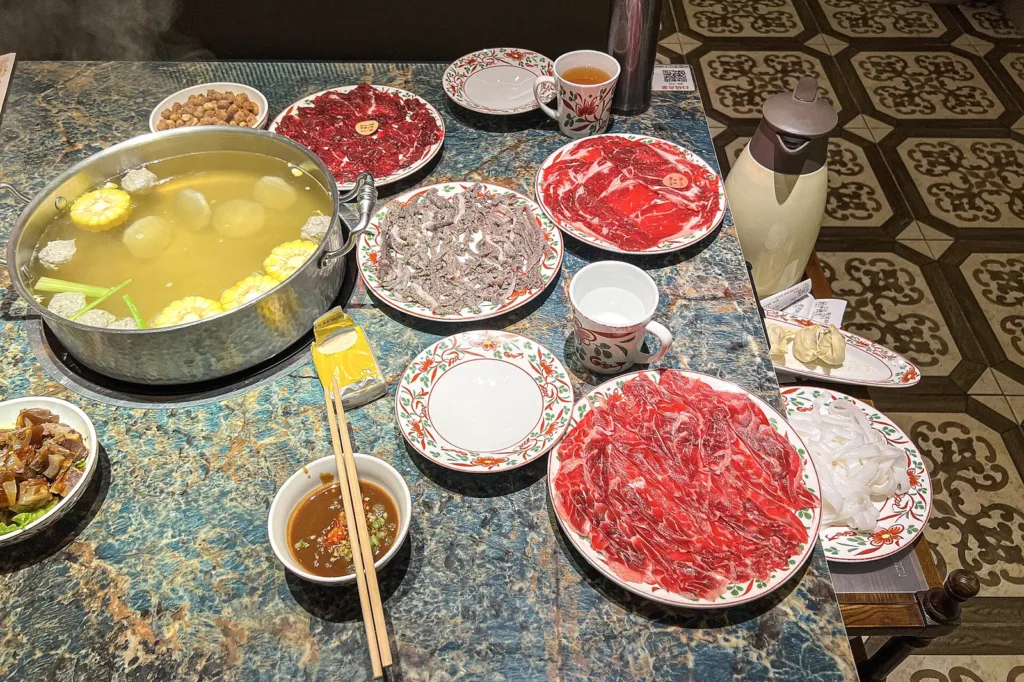
City-card summary: A Chaoshan-region hotpot built around freshly cut beef, briefly swished in a clear broth and dipped in shacha sauce. Its carefully separated cuts make texture part of the meal, and Shenzhen helped carry the style beyond its home region.
What arrives at the table
Chaoshan beef hotpot belongs to the food traditions of the Chaozhou–Shantou–Jieyang area of eastern Guangdong; it is not a dish unique to Shenzhen. A cultural overview describes its shift from a richer pot seasoned with shacha toward a plainer beef-bone broth with white radish, which lets the beef stay in the foreground.
The defining feature is the cut-by-cut presentation. Thin slices are arranged separately, and the names indicate different parts and textures rather than one generic “beef” order. For example, diaolong (吊龙), a strip along the back, is described as tender with a fine edge of fat; shijian (匙柄) comes from near the shoulder and is leaner and chewier. Ask the server which cuts are available and what texture to expect; names and exact menus can vary by restaurant.
At the table, dip one slice at a time into the simmering broth and follow the restaurant’s guidance for that cut rather than treating all the plates alike. The brief cooking keeps thin beef supple; dipping it in shacha adds a stronger, savory finish. A plain broth and a more heavily seasoned one are both possible, so ask what the pot contains if you have dietary restrictions. Beef balls may also be offered, but they are a different texture from the sliced cuts.
Shenzhen and the dish
Shenzhen is one important chapter in the dish’s wider spread, not its place of origin. Shenzhen News reports that Shantou-born restaurateur Lin Haiping opened a Shenzhen branch in 2014; a 2023 account likewise describes that move as the brand’s first expansion beyond Shantou and links Shenzhen’s response to later national growth. These accounts document one brand’s history, not a claim that every Shenzhen restaurant follows the same supply chain or method.
For visitors, the useful distinction is between the regional style and an individual restaurant. Freshness, cut names, broth, sauce, menu language and current service arrangements depend on the venue. The 2023 report describes one operator’s then-current fresh-meat supply chain, but that is not a guarantee about every shop today. If freshness or a particular cut matters, ask the restaurant how its beef is sourced and prepared before ordering.
Practical tips
Beef, beef broth, beef balls and shacha sauce are not vegetarian by default, and diners should ask about ingredients and cross-contact rather than relying on appearance.
Where to eat it
You can find Chaoshan Beef Hotpot all over Guangdong, so there is no need to seek out one particular restaurant. To find one near you, search for “潮汕牛肉火锅” in Meituan (美团) or Amap (高德地图) and check recent reviews, distance and opening hours.
Sources & reading
Image credits & notes (1)
- A clear-broth hotpot with separately plated beef cuts and dipping sauce at Baheli Haiji, ZGC1, Beijing; photographed on 3 October 2022. This illustrates the regional dish and is not a Shenzhen restaurant photograph. Photo: N509FZPhoto: CC BY-SA 4.0