

Water Chestnut Cake 马蹄糕
A sweet Cantonese cake made by steaming water-chestnut pulp or flour with sugar. Guangzhou’s best-known local association is Pantang, whose versions are translucent, smooth and gently sweet.
Tap any red Chinese text to hear it in Mandarin.
Water chestnut cake is a sweet Cantonese steamed cake made from water chestnut pulp or water chestnut flour, water and sugar. In Guangzhou, the best-known local association is with Pantang (泮塘), the historic area around old Lychee Bay; this place-name does not mean that every cake sold in the city follows one recipe.
From water chestnut to cake
The water chestnut (马蹄, also called 荸荠) is ground into a slurry, or dried water-chestnut flour is mixed with water and sugar. In the Pantang preparation described by Guangzhou’s municipal tourism page, the slurry is strained and sugar water is boiled. The boiling liquid is poured into the slurry and stirred until it thickens into a paste, which is then steamed until set.
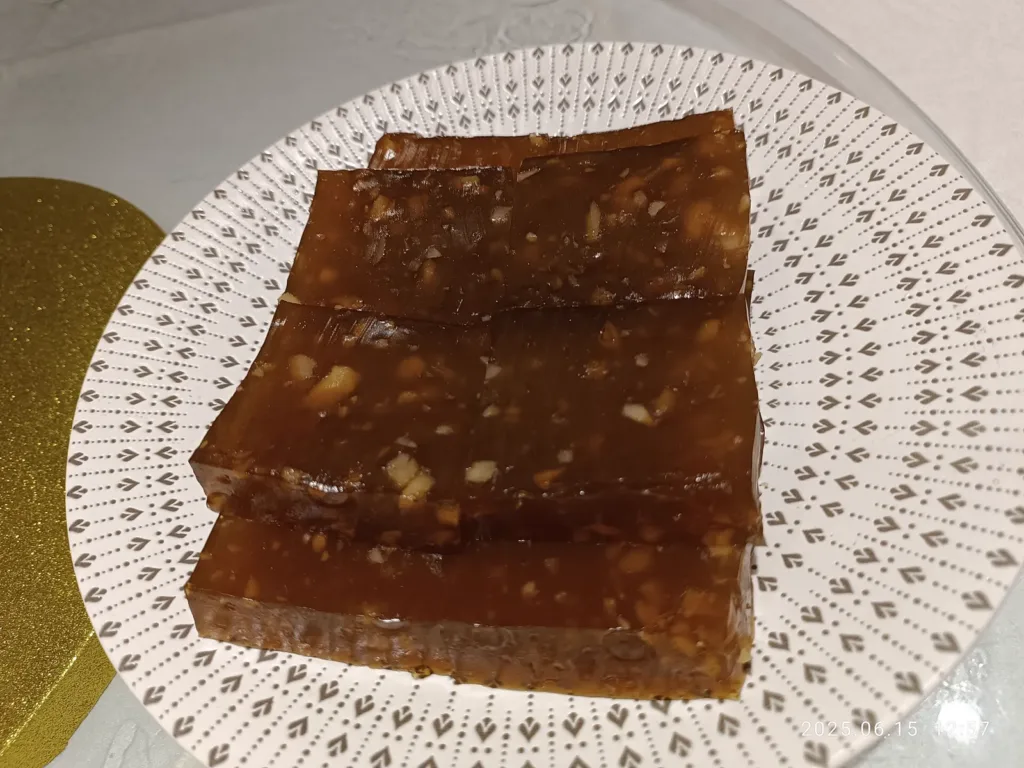
The finished cake is translucent and smooth, lightly sweet, with a subtle water-chestnut fragrance. The same source lists clear, freshly ground, pan-fried, two-tone and three-colour versions. A steamed piece shows the soft, smooth set; pan-frying adds a browned surface. Recipes and added ingredients can vary by kitchen, so ask what is in the serving you order.
Pantang and festive food
Water chestnut was one of the “Five Delicacies of Pantang” (泮塘五秀), alongside lotus root, water caltrop, wild rice stem and arrowhead. Pantang was once a growing area, but a 2024 local report says residents no longer grow water chestnuts there; a resident interviewed in that report also emphasizes using fresh flour for the traditional cake. Treat that as local testimony, not a guarantee about the flour used by a particular shop today.
The same report places water-chestnut cake among the cakes traditionally steamed around Lunar New Year in Guangzhou, alongside radish cake. A separate local account recounts the name “Pantang water-chestnut cake” becoming associated with a cake served at Panxi Restaurant in 1947; that is a reported naming history, not proof that all water-chestnut cake originated there.
Ordering
Look for 马蹄糕 Mǎtí Gāo on a menu; 泮塘马蹄糕 Pàntáng Mǎtí Gāo names the Pantang-associated style. If several preparations are offered, ask whether the cake is steamed or pan-fried and whether it contains visible water-chestnut pieces. No particular restaurant or current menu is specified here, so confirm availability where you order. If you have allergies or other dietary restrictions, ask about the actual batch and preparation: the cake’s appearance alone cannot establish that it is vegetarian, halal or free of allergens.
Image credits & notes (1)
- Slices of Pantang-style water-chestnut cake with visible chestnut pieces, photographed at Pan Xi Restaurant in Liwan, Guangzhou, on 15 June 2025. Photo: MeiOLA 2290 WMENSZPhoto: CC0 1.0