

Sizzling Claypot Dishes 啫啫煲
A Cantonese claypot cooking style in which ingredients meet fierce heat and reach the table still sizzling; the short, high-heat finish brings out browned aromas while different ingredients call for different timing and sauces.
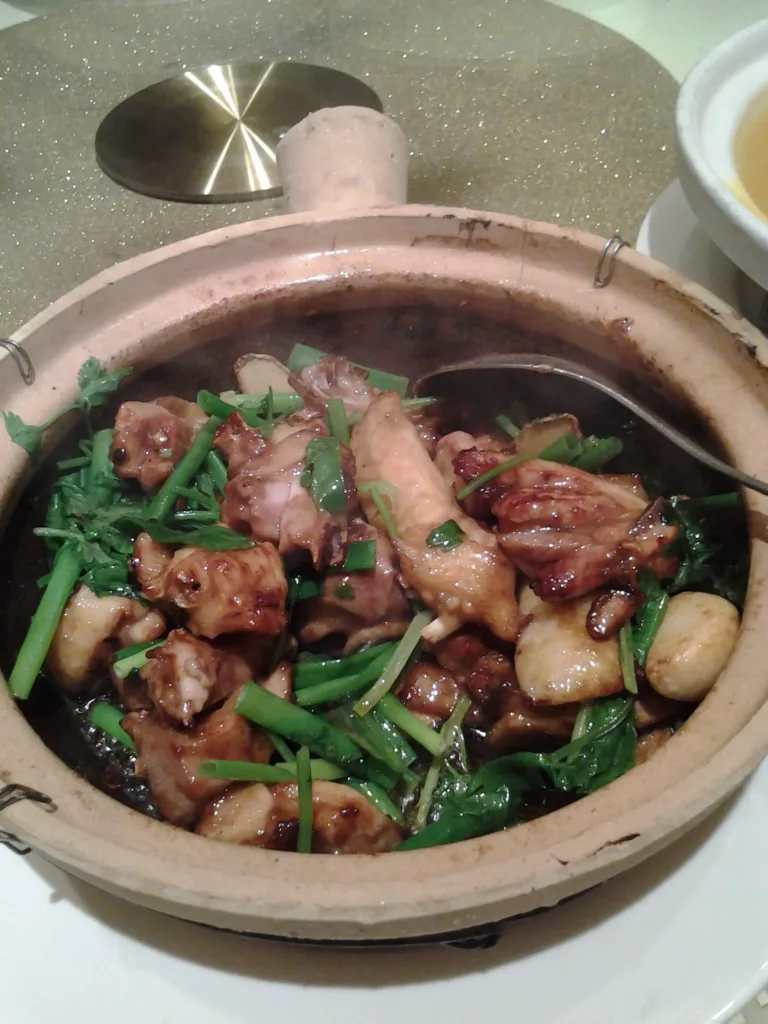
What the name describes
“啫啫” imitates the repeated sizzling sound made as juices from ingredients hit a very hot claypot and evaporate. The dish is strongly associated with Guangzhou, but its exact origin is disputed: local reporting describes both street-stall cooking in the 1980s and the early-1990s development of “生啫” at Huishijia. It is safer to treat the dish as a Guangzhou-linked Cantonese style than to assign it a single uncontested inventor.
How the pot makes its flavour
The claypot is heated before the ingredients are added. In the “生啫” method, fresh ingredients cook directly in the pot; some other versions use ingredients that have already been partly cooked. The intense heat quickly sets and browns the outside, while the pot’s retained heat continues cooking the food after it leaves the kitchen. The result depends on timing: food may still be finishing when the lid is opened at the table, so diners commonly stir and serve it promptly rather than leaving it in the hot pot.
There is no single fixed recipe. Local examples include eel, chicken, frog, beef, pork intestine, fish maw, rice rolls and greens; some restaurants also apply the technique to seafood, eggs or fruit. A cook adjusts the heat and timing to the ingredient: leafy vegetables release water quickly, while meats and seafood need their own doneness control. Sauces range from lighter seasoning to stronger combinations such as shrimp paste, fermented bean or pepper sauces. These are examples reported by local sources, not a promise that every restaurant serves them.
Expect a hot, aromatic dish with browned edges and a tender or springy centre, depending on what is in the pot. The sizzle and aroma are part of the presentation, but neither guarantees a particular spice level or a lighter dish: sauce, oil and ingredients vary by kitchen. If you have an allergy or dietary restriction, ask the restaurant about the full ingredient and sauce list before ordering. A pot of greens should not be assumed vegetarian, since sauces and other additions can vary.
Ordering and eating
啫啫煲 is a cooking style rather than one fixed dish. Ask what ingredients are in the day’s version and whether the kitchen uses 生啫 (raw ingredients cooked in the pot) or a partly cooked preparation. When it arrives, take care around the hot claypot and lid; share or portion it soon, while the food is still sizzling.
Where to eat it
You can find Sizzling Claypot Dishes all over Guangdong, so there is no need to seek out one particular restaurant. To find one near you, search for “啫啫煲” in Meituan (美团) or Amap (高德地图) and check recent reviews, distance and opening hours.
Sources & reading
Image credits & notes (1)
- A Cantonese zhe zhe chicken dish served in a clay pot, with browned chicken and greens. Photo: ChumanchunPhoto: CC BY-SA 4.0