

Miao sour soup 苗家酸汤
A fermented Miao soup base associated with Kaili and the wider Qiandongnan Miao-and-Dong region, best understood through its white rice-sour and red tomato-chilli forms rather than as one fixed recipe.
Tap any red Chinese text to hear it in Mandarin.
What it is
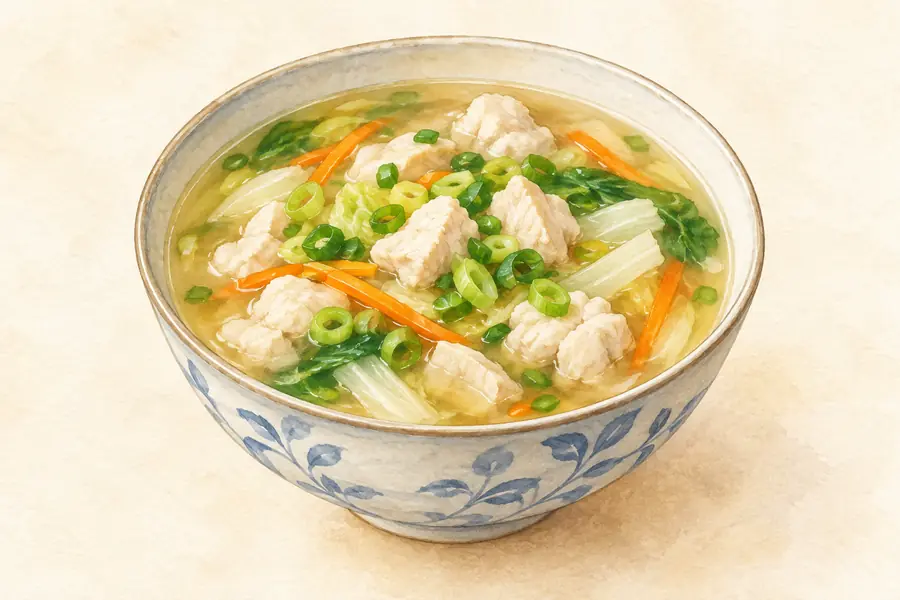
苗家酸汤 (Miaojia suantang) is a fermented sour soup and cooking base associated with Miao households around Kaili in Qiandongnan, Guizhou. It is a flavour system rather than one standardized bowl: the base may be served as soup, used to cook meat or vegetables, or turned into a hotpot broth. Kaili’s own food account places the traditional white base at the centre of the local style.
Do not treat 苗家酸汤 Miáo Jiā Suān Tāng as a synonym for 酸汤鱼 (fish in sour soup). 酸汤鱼 is one dish cooked in the base; the soup itself can be paired with fish, beef, pork, tofu, or vegetables. Local accounts also describe meatless sour soup.
White, red, and other sour bases
The older rice-based form is 白酸 (bai suan), also called 米酸 (mi suan). A traditional account uses the clear liquid left from cooking or washing rice, which is cooled and sealed in a jar to ferment. One report describes a three-to-five-day preparation, but that is a description of one traditional process, not a universal timer for every household or kitchen.
红酸 (hong suan) is a later, redder style made on the white-sour foundation with tomato and fermented chilli. In Guizhou, local 毛辣果 Máo Là Guǒ—a small, tangy tomato—may be used alongside red chilli, ginger, garlic, Sichuan pepper, and 木姜子 (litsea), producing a brighter, fresher sourness with gentle heat.
Kaili’s local “八酸一汤” account also names 糟辣酸 Zāo Là Suān, 西红柿酸 Xīhóngshì Suān, 鱼酱酸 Yú Jiàng Suān, 腌汤酸 Yān Tāng Suān, 果酸 Guǒ Suān, and 盐菜酸 Yán Cài Suān. These are not interchangeable labels: fish-paste sour, for example, includes fermented fish, while a vegetable or rice-based sour may be meat-free. Ask which base a kitchen is serving before assuming that “sour soup” is vegetarian or mild.
How to taste it
White sour is described locally as mellow and plainly sour; red sour is brighter, more aromatic, and mildly hot. It may arrive as a simple soup before a meal, as a bubbling broth with fish or beef, or with tofu and seasonal vegetables. The point is to taste the fermented base first, then notice how the ingredients change it: fish brings a clean savoury sweetness, while vegetables and tofu absorb the sour and chilli as they cook.
Because recipes vary, ask two short questions before ordering: 这是白酸还是红酸? Zhè shì bái suān háishì hóng suān? (Is this white or red sour?) and 里面有没有鱼酱、肉或辣椒? Lǐ miàn yǒu méiyǒu yú jiàng, ròu huò là jiāo? (Does it contain fish paste, meat, or chilli?) If you have an allergy, dietary restriction, or low-spice preference, ask about the base and dipping sauce separately; a meat-free bowl is not automatically free of fish, fermented seafood, or chilli.
Finding it without choosing a specific restaurant
Keep the exact Chinese name 苗家酸汤 Miáo Jiā Suān Tāng on your phone. In Meituan (美团) or Amap/Gaode Maps (高德地图), search that phrase near your current location first. If results are sparse, try 凯里酸汤 Kǎi Lǐ Suān Tāng, 白酸/米酸, or 红酸 Hóng Suān, but read the menu carefully: a listing for 酸汤鱼 may offer a fish dish rather than the soup base on its own.
Open the current listing and check that the menu actually names the variant you want. Then read several recent, dated reviews for evidence that the dish is being served now, check the displayed opening hours, and ask the venue whether the white, red, or fish-paste version is available that day. Platform rankings and claims such as “most authentic” are not proof of a recipe or current supply, so do not use them as a recommendation.
Season, access, and transport
The sources describe sour soup as household and everyday food, not as a ticketed seasonal attraction. They do not establish one universal service season. A kitchen’s choice may change with its fermented stock and fresh produce, so treat the exact variant and same-day availability as questions to verify at the time of eating rather than promises about a future season.
This is a dish, not a single venue: it has no ticket, gate, fixed address, passport check, or dish-specific transport route. This entry therefore does not name a restaurant or assign a meal-time route. Once you have chosen a current listing through Meituan or Amap, use that listing’s own map and service information for the final walk or ride.
More dishes to compare
Explore related local specialties and compare their names, preparation notes and ordering guidance.
Miao Jia Suan Tang Yu 苗家酸汤鱼 →
Kaili's sour-soup fish is cooked in this base; the Kaili city government notes that its soup is mainly white sour.