

Kedong Fermented Tofu with Congee 克东腐乳配粥
Kedong Fermented Tofu with Congee is featured among the local specialties of Heilongjiang.
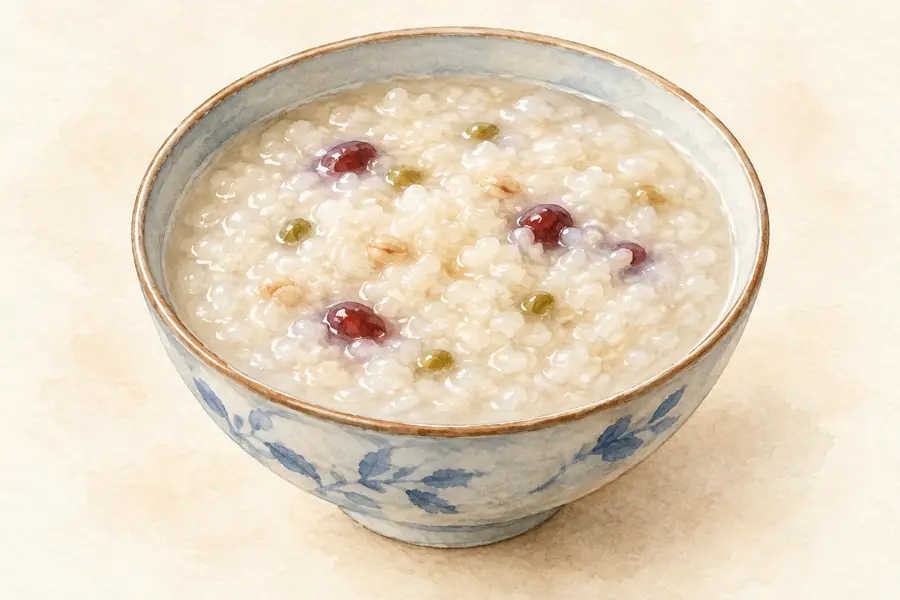
Kedong Fermented Tofu with Congee (克东腐乳配粥) is a Heilongjiang breakfast: a cube of Kedong fermented bean curd mashed into plain rice or millet congee, sold as a county speciality.
How it is made
The bean curd itself is a fermented product, not a fresh one. Soybeans are made into tofu, cut and inoculated, then left to ferment and finally packed in a salted dressing; Kedong's county profile describes its own version as a "micrococcus" type and says the factory takes northeastern non-GMO soybeans as the main material, adds thirteen herbs as seasoning, uses local volcanic-rock mineral water, and puts the product through more than thirty processing steps. At the table nothing more is done: a cube or half a cube is lifted out with clean chopsticks and stirred into a bowl of hot congee.
What it tastes like
Kedong bean curd is described in the county profile as bright red in colour with a long finish and a deep, mellow aroma, which is a different profile from the pale, wine-scented bean curds of the south. The salt and fermentation make it a condiment rather than a dish: a small amount seasons a whole bowl, and the point of pairing it with congee is that plain rice porridge gives it nothing to hide behind. The flavour builds as the curd dissolves into the hot liquid, so the last spoonfuls taste stronger than the first.
Where it belongs
Kedong is a county in Qiqihar, western Heilongjiang, and the county government treats the bean curd as its signature product. Its profile dates the company to 1915, calls it a China Time-Honoured Brand (中华老字号) awarded by the former national commerce ministry, describes it as a pioneer and representative of micrococcus-fermented bean curd, and notes that the county was named "China's home of fermented bean curd (micrococcus)" by a regional development body. Congee with bean curd is the everyday way that product is eaten: breakfast in a northeastern household, or the free accompaniment to a bowl of porridge in a small restaurant.
Ingredients and dietary questions
Soybeans, salt, the fermentation culture, water and the seasoning mix are the components the county profile names; its mention of thirteen herbs is that page's own description, not an ingredient list a buyer can verify on a menu. Fermented bean curd is high in salt and is not a low-sodium food, and the dressing can contain wheat-based or alcoholic components; anyone avoiding soy, gluten or alcohol should ask, and anyone on a salt-restricted diet should treat one cube as a full day's worth of seasoning.
Ordering it
In a congee shop, ask for 粥 (porridge) and 腐乳 (fermented bean curd) — 克东腐乳 if the shop is proud of its supplier. 一碗粥 for one bowl, 一块腐乳 for one cube; shops often bring a small dish of bean curd with the porridge, and 再来一块 adds another. If you want the plainest version, ask for 白粥 (plain rice congee) so that nothing competes with the bean curd.
How it is eaten
The routine is simple: take a little bean curd on the tip of your chopsticks, then a spoonful of congee, and let them meet in the mouth rather than stirring the whole cube in at once — otherwise the last third of the bowl becomes very salty. It is breakfast or a light supper rather than a banquet dish, and in Heilongjiang it is also sold in jars as a take-home souvenir.
More dishes to compare
Explore related local specialties and compare their names, preparation notes and ordering guidance.
Guobaorou sweet-and-sour pork 锅包肉 →
Guobaorou sweet-and-sour pork (锅包肉) is Heilongjiang's sweet-and-sour fried pork, a restaurant dish built on sugar, vinegar and a crisp coating. Kedong bean curd with congee sits at the other extreme: no cooking at the table, no sweetness, and a flavour that comes entirely from fermentation and salt. Reading them together shows the range of a northeastern table, where a strongly seasoned banquet dish and a plain bowl of porridge with bean curd can belong to the same day.
Questions before you order
Is 克东腐乳 a cheese?
No. It is fermented tofu: soybean curd inoculated and fermented, then packed in a salted dressing, which is why it spreads like a soft cheese but tastes of soy and salt.
How much should go into one bowl of congee?
A quarter to half a cube is usually enough for a bowl, and it is better to add a little at a time; the curd is a seasoning and the whole cube makes the last spoonfuls very salty.
Sources & reading
The supplied food list supports this name and regional association. The culinary terms below are explained as menu vocabulary; a local recipe, origin story and venue availability have not been independently verified.