

Fish Stewed with Pickled Cabbage 酸菜炖鱼
Fish Stewed with Pickled Cabbage is featured among the local specialties of Heilongjiang.
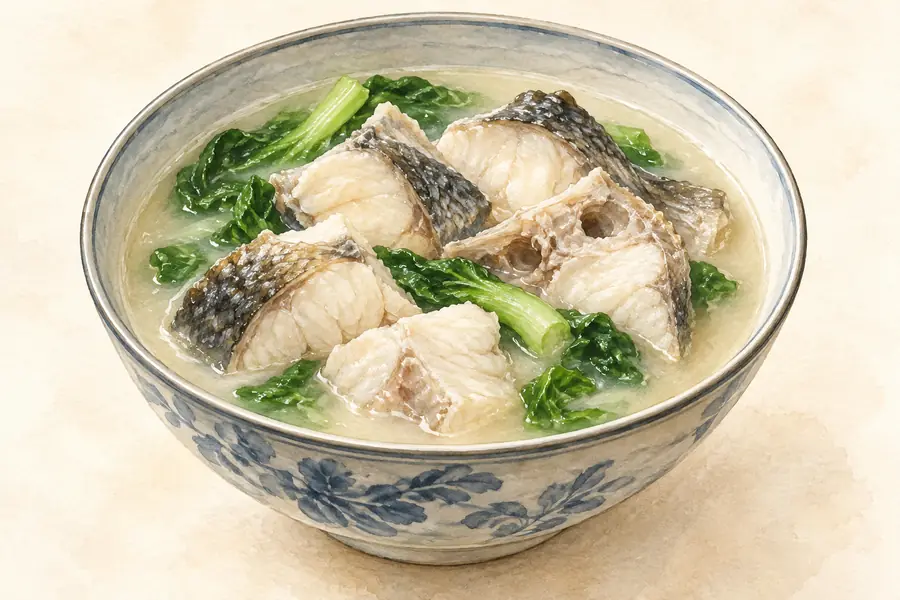
Fish Stewed with Pickled Cabbage (酸菜炖鱼) brings Northeast China’s fermented cabbage together with freshwater fish in a long simmer. It is listed for Jiamusi, a city on the Songhua in the eastern half of Heilongjiang.
Sour cabbage, then a long simmer
Northeast 酸菜 is cabbage fermented with salt and water, and once drained and rinsed to take off some of the sharpness it is normally used in stewed and braised dishes. Here it supplies the sour element of the cooking liquid. 炖 describes simmering the ingredients together until the broth develops and the textures soften and give.
Sour broth, firm fish
The pickle is there to sharpen a rich fish and to give the broth a sour backbone. Heilongjiang cooking is characterised as especially strong with freshwater fish and shrimp, and local flavour is described as aiming for mellow aroma, freshness, a clean moist texture and balanced seasoning rather than extremes of salt or heat.
Rivers and cold cellars
Jiamusi sits on a river system that threads the whole province, and freshwater fish are one of the recognised regional strengths. The cabbage side of the dish comes from the same winter habit: cabbage was salted into crocks and left in the cold so that something sharp and vegetable-like was on hand through the months when little grew.
Ingredients and questions
Ask which fish is used, because the name fixes the method and the pickle rather than a species, and ask whether the fish comes whole or filleted. Cabbage, water and salt are the pickle’s base, so the broth will be salty. If you avoid alcohol, check whether cooking wine goes into the simmer.
Judging the portion
Ask whether the order is a bowl of stew or a pot for sharing. Northeast braises are usually sized generously and served family-style, so a single order can stretch further than expected. If the fish is served whole, ask the staff to bring a spare plate for bones before you start.
Eating the dish
Serve it hot with rice, and treat the broth as part of the dish rather than something to leave behind. Bones are common in the whole-fish versions, so keep room on the plate to set them aside. If the sourness is stronger than you like, eat the fish first and take the cabbage in small amounts.
More dishes to compare
Explore related local specialties and compare their names, preparation notes and ordering guidance.
Demoli fish stew 得莫利炖鱼 →
得莫利炖鱼 is named for 得莫利, a town in Fangzheng County under Harbin, and the dish appears among Heilongjiang’s recognised local specialities as 得莫利炖活鱼. Both it and 酸菜炖鱼 are river-fish stews from the same province, but 得莫利炖鱼 takes its name from the place while 酸菜炖鱼 takes its name from the pickle.
Questions before you order
Does 酸菜炖鱼 always use the same fish?
No. The name fixes the pickle and the method, not the species, so ask which fish the kitchen is using that day and whether it is served whole.
Is this the same sour cabbage used in Sichuan cooking?
No. In the Northeast 酸菜 means salted Chinese cabbage, while the pickle behind Sichuan dishes such as 酸菜鱼 is made from mustard greens.
Source introduction: Wikipedia contributors: 酸菜 (中式) · CC BY-SA 4.0 (Wikipedia text, attribution required). English guide adapted from the cited material, with additional preparation and ordering guidance.
Source introduction: Wikipedia contributors: 龙江菜 · CC BY-SA 4.0 (Wikipedia text, attribution required). English guide adapted from the cited material, with additional preparation and ordering guidance.
