

Sticky Bean Buns 粘豆包
Sticky Bean Buns is featured among the local specialties of Heilongjiang.
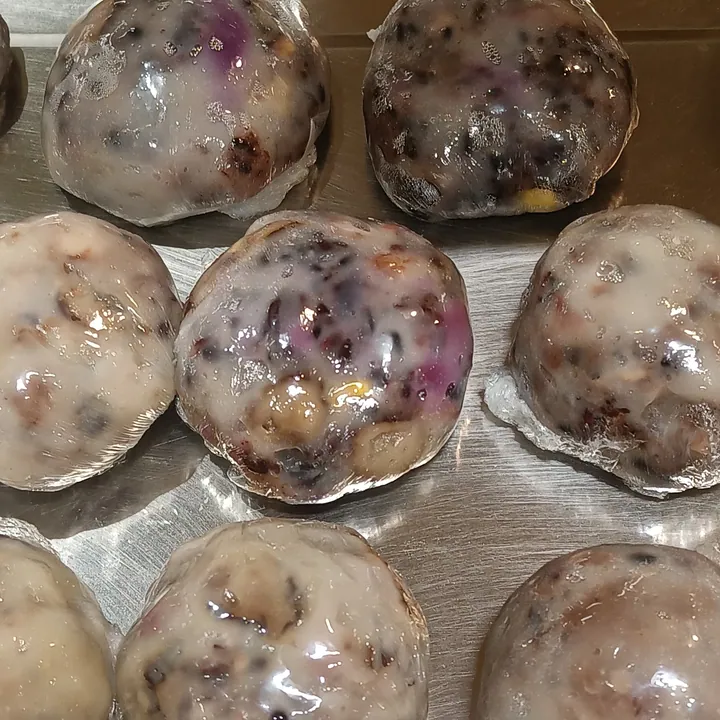
Sticky Bean Buns (粘豆包) is a sticky bean bun of China’s Northeast, and in Heilongjiang the name is used in 鹤岗, 双鸭山, 伊春, 七台河, 绥化 and 大兴安岭地区.
How it is made
The source keeps the making of this food simple. It calls the preparation easy, 制作简易, and the reason it gives for the bun’s place in the diet is energy rather than technique: because the food supplies a large amount of it, it suits long hours outdoors in cold weather, hunting being the example the article chooses. What the paragraph never provides is a method. It does not name the grain, does not say how the dough is mixed, and does not describe how the buns are cooked, so any sequence you read elsewhere is a local version rather than the definition of the name.
What it is like to eat
The article offers no tasting notes, which is worth knowing before you order: everything it says concerns what the food is made of and what it is for. The name carries the two strongest impressions. 粘 describes something sticky and chewy, the texture a glutinous wrapper takes on when it is steamed; 豆 points to the bean filling at the centre. Warmth and a dense, filling quality follow from the energy the source credits it with, but how sweet the filling is, or whether the wrapper tastes of grain or of fermentation, is not settled by anything here.
Local roots
The spread is wider than one town: 鹤岗 and 双鸭山 in the east, 伊春 and 七台河 in the centre, 绥化 in the farming country north of Harbin, and 大兴安岭地区 in the far north-west, where the winter bites hardest. That range matches the food's framing as Northeastern rather than the property of one place, and it sits alongside a separate, named Acheng version.
Ingredients
Read the name as the ingredient list: a sticky grain for the wrapper and beans for the filling. The 粘 of 粘豆包 signals the glutinous quality of the grain and 豆 is the bean itself. The source adds nothing further. It does not name the bean, does not say whether the wrapper uses one grain or a blend, and does not mention sugar or fat. Anyone with dietary restrictions therefore has to ask, and the region’s named variant, a yellow sticky-grain wrapper around a sweet kidney-bean filling, is the closest thing to a specification on hand.
Ordering and buying
The source attaches no ordering ritual and no stall practice to this food, so the following is general rather than local. Buns of this family are usually sold by the piece or by weight, often from trays where they have been kept warm, and they travel well enough to be bought in quantity. If you are buying direct from a maker, ask whether they are ready to eat or frozen for steaming at home, and ask which grain the wrapper uses, because that one answer changes the texture more than anything else.
How it is served
The article’s angle is the outdoors: food that is easy to make, dense with energy and suited to long hours in the cold. That is the serving it implies – hot, in winter, in quantities that carry you through a day of work. The source says nothing about what accompanies it. If you meet it as a breakfast or a snack, eat it warm, while the wrapper is still soft and the filling still holds its shape.
More dishes to compare
Explore related local specialties and compare their names, preparation notes and ordering guidance.
Yagou sticky bean buns 亚沟粘豆包 →
Both this name-level entry and 亚沟粘豆包, a specific Acheng tradition, are in use. The second is the yellow sticky-grain wrapper around a sweet kidney-bean filling, small and chewy when eaten warm. The difference is one of definition: 粘豆包 is the general Northeastern food, used across six Heilongjiang places, while 亚沟粘豆包 names both the place and the grain.
Questions before you order
Where does the name 粘豆包 come from?
It is descriptive rather than historical: 粘 points to the sticky, chewy grain wrapper and 豆 to the bean filling inside. The food is confirmed as Northeastern and energy-dense, but no story stands behind the name.
Is 粘豆包 eaten all year?
The source ties it to cold weather and long days outdoors, so the association is winter. The name is used across Heilongjiang without a season, and the Acheng variant is sold as a warm snack.
Source introduction: Wikipedia contributors: 粘豆包 · CC BY-SA 4.0. English translation and adaptation of the cited introduction, with additional preparation and ordering guidance.
Sources & reading
Named culinary source added during the audit. Source origin and local variants remain distinct; this is not a claim that all preparations have been individually verified.
Image credits & notes (1)
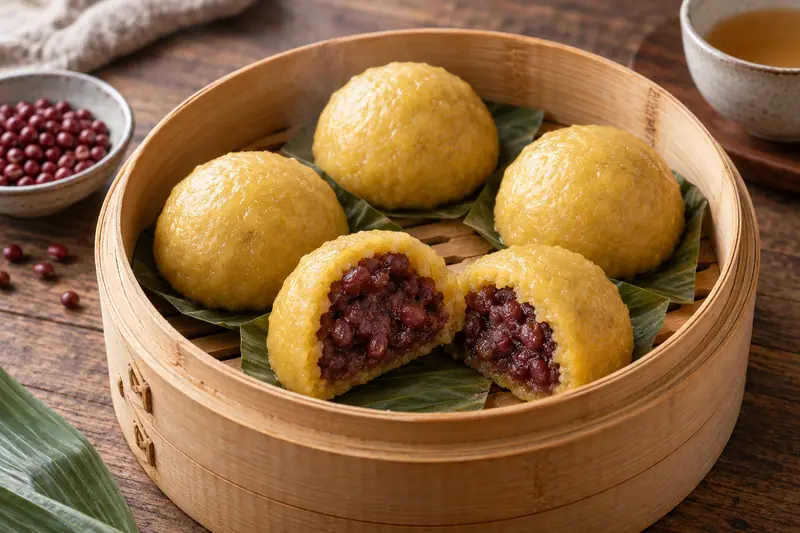
- Zhan dou bao, steamed glutinous rice buns with red bean filling, a Northeast Chinese snack eaten in Heilongjiang · 粘豆包:包裹红豆馅的黏米小吃,黑龙江东北地区常见Photo: Fumikas Sagisavas · CC0 · taken 2024-04-16Resized for the web; the photo itself has not been edited. Thumbnails may show a cropped view.
