

Yuzhou Menzi Starch Loaf 禹州焖子
Yuzhou Menzi Starch Loaf is featured among the local specialties of Henan.
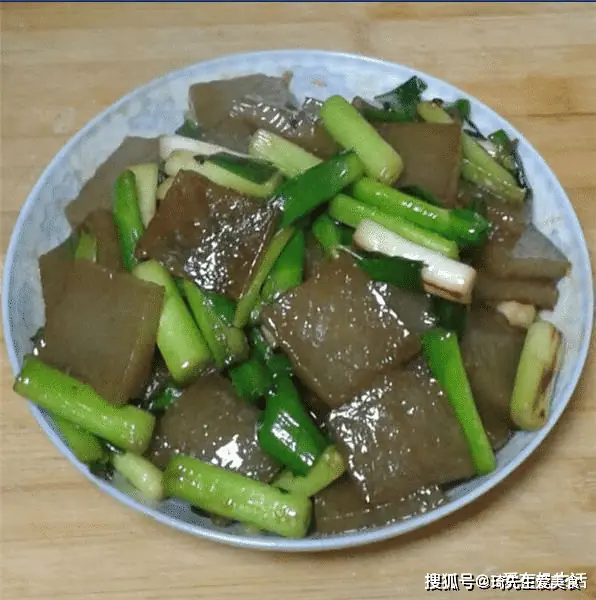
Image notes
Resized for the web; the photo itself has not been edited.
Yuzhou Menzi Starch Loaf (禹州焖子) is a steamed-then-finished starch loaf listed for Xuchang in Henan, where Yuzhou is the city and 焖子 names a family of set starch-and-stock preparations.
Set as a loaf, then cooked again
焖子 is made by cooking starch with stock until it thickens, then pouring the mixture into a tray or bowl to set into a firm loaf. It is then cut into slices or blocks and finished by pan-frying, braising or simmering, which is where the 焖 in the name comes in. Sweet potato starch is a common base in northern Henan, and the stock gives the loaf its savour. The proportion of starch to liquid decides whether the loaf slices cleanly or collapses in the pan.
Mild, chewy and best with sauce
The loaf itself is mild and slightly gelatinous, with a pleasant chew and a savoury note from the stock. Fried slices develop a crisp browned surface around a soft centre; braised slices soak up sauce and turn silky. It is usually served as one dish among several, dressed with garlic, chilli oil, vinegar or soy, and it works well next to heavier meat dishes because it is light and absorbs their sauce.
A technique with a city name
禹州 is a city in Xuchang, in central Henan, and 焖子 is a family of starch-based preparations made across the north rather than one fixed recipe. The name attaches a place to a technique, which is the usual pattern for these entries, so the label identifies a local version rather than an exclusive product. What changes between makers is the starch, the stock and how the set loaf is finished.
Ingredients and dietary checks
Starch, usually sweet potato and sometimes mung bean or pea, plus a stock that may be meat-based, and salt with often scallion or ginger. Soy sauce in the dressing brings wheat. If the loaf is made with meat stock it is not vegetarian even though the starch is. Ask 什么淀粉 (which starch), 是素的吗 (is it vegetarian), 有肉汤吗 (is there meat stock) and 怎么做的 (how is it finished).
How to order 禹州焖子
Show 禹州焖子 and ask 怎么做的 (how it is prepared) — 煎 (pan-fried), 炒 (stir-fried) or 炖 (braised) — then 辣不辣 (how spicy) and 一份多大 (how big a portion). If the shop sells the set loaf itself, ask 怎么卖 (how it is sold) and 怎么吃 (how it is served at home), because the loaf needs cooking before it is eaten. Confirm whether the stock is meat-based if you are ordering for a vegetarian.
One plate among several
Serve it as a shared plate among several rather than as a main dish on its own. Fried slices are best eaten immediately, while the crust is crisp; braised slices keep longer on the table and go well with rice. Because the loaf is mild, it takes on the flavour of whatever sauce it meets, which makes it a useful balancing dish beside salty braises and fried meat.
More dishes to compare
Explore related local specialties and compare their names, preparation notes and ordering guidance.
Yuzhou Thirteen-Bowl Banquet 禹州十三碗 →
Yuzhou Thirteen-Bowl Banquet (禹州十三碗) is the banquet format from the same city, and 焖子 is the kind of dish that appears within such a table. Comparing them pairs one component with the whole: a single starch loaf against a fixed set of thirteen bowls served to a group.
Questions before you order
Is 焖子 a kind of noodle?
No. It is a set loaf of starch and stock that is cut and then cooked a second time. The name describes the setting and finishing rather than a noodle.
Is it vegetarian?
The starch is, but the loaf is often set with a meat stock. Ask 是素的吗 (is it vegetarian) and 有肉汤吗 (is there meat stock) rather than assuming from the appearance of a plain-looking slice.
Sources & reading
The supplied food list supports this name and regional association. The culinary terms below are explained as menu vocabulary; a local recipe, origin story and venue availability have not been independently verified.