

Naryn Noodles with Boiled Meat 马肉那仁
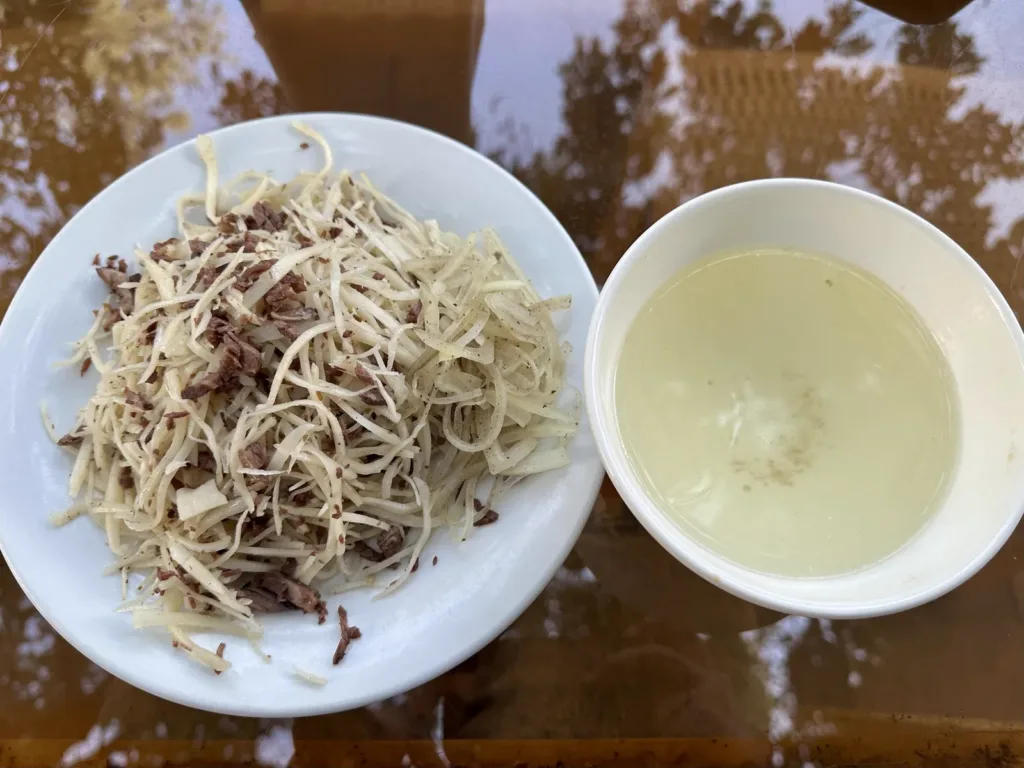
Naryn is Ili’s meat-and-noodle dish: noodles or flat noodle pieces are cooked in meat broth, then served beneath boiled meat and onion. A 2026 Ili prefectural-government report lists 纳仁 among Xinjiang’s ten classic staple dishes, while regional reporting calls the horse-meat version especially characteristic in Ili.
Tap any red Chinese text to hear it in Mandarin.
At a glance
Naryn is Ili’s meat-and-noodle dish: noodles or flat noodle pieces are cooked in meat broth, then served beneath boiled meat and onion. A 2026 Ili prefectural-government report lists 纳仁 among Xinjiang’s ten classic staple dishes, while regional reporting calls the horse-meat version especially characteristic in Ili.
Why try it
Naryn is a useful way to taste the relationship between pastoral meat cookery and wheat noodles in Ili, rather than a single chef’s signature recipe. A China News feature about Xinyuan calls it “the first dish for guests” (待客第一道), a phrase about local hospitality rather than a promise that every kitchen serves the same version.
The dish is related to the wider Central Asian family of boiled meat, noodles and onion. CGTN describes Kazakhstan’s beshbarmak as resembling Xinjiang Naryn, not as proof that the two names guarantee an identical recipe. In Ili, use the local name 纳仁 Nàrén when asking what is available.
What is in the bowl
The Yining government’s traditional description uses large bone-in pieces of mutton. The meat is simmered after the foam is skimmed, with salt as the basic seasoning. Noodles or flat sheets are then cooked in the same broth, lifted onto a platter, and covered with the meat. Onion juice, chopped onion, garlic or chilli may be added according to taste.
An Ili Daily feature describes local Naryn as usually made with horse or beef and singles out horse-meat Naryn as particularly characteristic. These accounts show real variation, not one fixed ingredient list: a menu may say 马肉纳仁 (horse-meat Naryn), beef Naryn or a mutton version. Ask which meat and which broth the kitchen is using before you order.
How to eat it
Naryn is commonly presented on a large platter for sharing. In the Yining description, the meat is cut into smaller pieces, mixed with the noodles and eaten by hand; the same source also calls the dish 手抓肉 Shǒuzhuāròu. A modern restaurant may provide chopsticks, a spoon or a fork, so follow the setting rather than treating hand-eating as a performance.
If a menu uses 手抓肉 Shǒuzhuāròu on its own, check whether it means boiled meat without the noodles. Search for 纳仁 Nàrén first, then use 马肉纳仁 Mǎròu Nàrén if you specifically want the horse-meat version.
Where to look and what to check
Naryn has no fixed restaurant, gate or official dining address. In Meituan (美团) or Amap/Gaode Maps (高德地图), search 纳仁 Nàrén near your current location; add 马肉纳仁 Mǎròu Nàrén as a second search. Open the individual menu and check recent reviews, the listing’s current opening status and whether the dish is available that day. Treat platform rankings and promotional copy as leads, not proof of authenticity or supply.
Before ordering, ask whether the dish uses horse, beef or mutton; whether the stock contains other meats; and whether onion, garlic, chilli or a horse-meat sausage is included. Recipes and serving sizes vary between kitchens. The dish itself has no ticket, passport requirement, scenic-area entrance or dedicated transport route: getting there depends on the venue you choose, and the venue’s same-day supply is the practical thing to confirm.
Dietary notes
Naryn is not vegetarian or vegan: the defining preparation includes meat and wheat noodles. If you avoid egg, ask about the noodle dough rather than assuming; related Central Asian preparations are often described with egg noodles, but local recipes vary. If you need halal assurance or have an allergy, ask the kitchen about the meat source, broth, dough, oils and cross-contact. Do not infer halal status, vegetarian suitability or an absence of allergens from the dish’s name or appearance.
More dishes to compare
Explore related local specialties and compare their names, preparation notes and ordering guidance.
Kashgar pigeon soup noodles 喀什鸽子汤面 →
Pigeon is simmered to make a savory soup and served with noodles, either together or as coordinated parts of a meal. The bird may remain bone-in. The broth is gently rich, while pigeon meat has a firmer, more concentrated bite than the noodles.
Hotan roast pigeon 烤鸽子 →
Small whole pigeons are seasoned and roasted until the skin browns and the meat cooks through. The marinade and grilling or oven method depend on the stall. The meat is compact and savory, with a firmer bite than a large chicken portion. Browned skin adds aroma, but there are many small bones.
Sources & reading
Recipes and servings vary between kitchens.
Image credits & notes (1)
- A serving of Naryn with shredded noodles and meat beside a separate bowl of broth in Tashkent, Uzbekistan. Photo: ПриклиPhoto: CC BY 4.0