

Huaxi beef rice noodles 花溪牛肉粉
Huaxi beef rice noodles is a Guiyang-area rice-noodle dish associated with Huaxi District: rice noodles in a savoury beef broth with beef, pickled vegetables and optional chilli and herb toppings; kitchens vary, so the Chinese name is more reliable than assuming one fixed recipe.
Tap any red Chinese text to hear it in Mandarin.
What this dish is
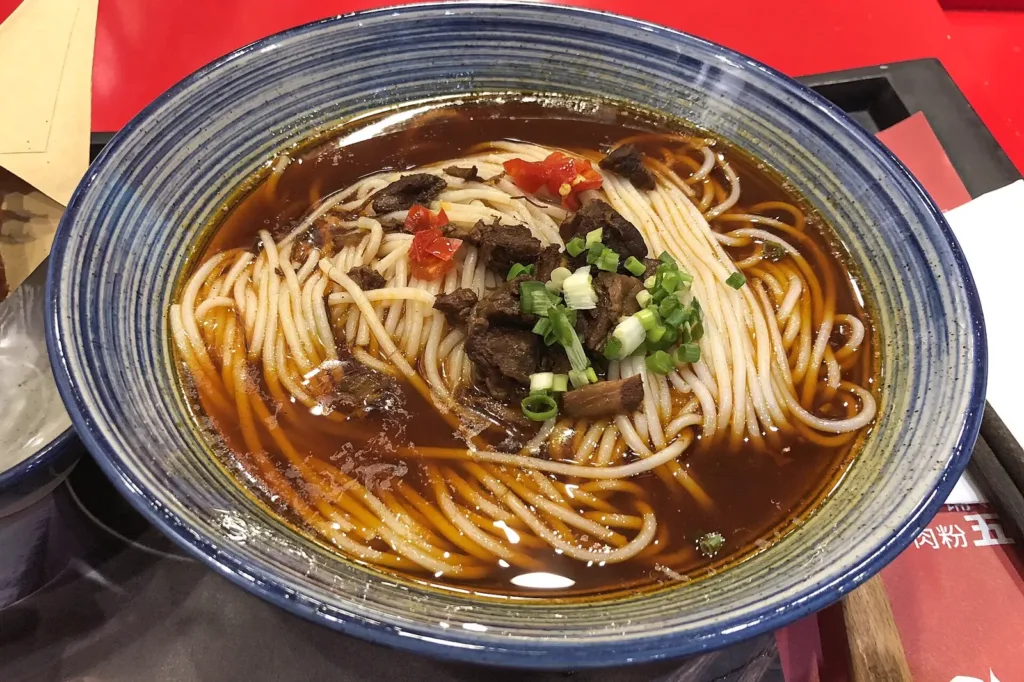
花溪牛肉粉 (Huāxī niúròu fěn) is a Guiyang-area rice-noodle specialty associated with Huaxi District. It is commonly eaten as a quick meal, including breakfast, but it is not a single chain recipe or a dish with one fixed presentation. A Huaxi District government report describes the local bowl through three recurring qualities: a rich broth, tender beef slices and springy rice noodles. The same report says local kitchens differ in their ingredients, broth-making, accompaniments and overall process.
A typical bowl brings together rice noodles, beef broth and beef prepared in more than one form. A Xinhua report describes braised beef slices, stewed beef cubes and seasoned pickled Chinese cabbage, with other toppings added at the bowl. Another 2025 account describes beef that may be boiled, stewed or braised, while the broth is made by simmering beef and beef bones. These are useful descriptions of the family of preparations, not a promise that every bowl contains every cut or topping.
Flavour, texture and local variations
Expect a savoury beef broth, smooth-to-springy rice noodles and a mix of tender or pleasantly chewy beef textures. Pickled cabbage or other pickled vegetables can add salt and acidity; spring onion, coriander and chilli add fragrance or heat. The balance depends on the kitchen and on what you add at the table.
Do not treat “Huaxi” as a guarantee of one level of heat or sourness. The Huaxi government has reported productised versions in original broth, sour-broth and red-braised styles, among other packaged specifications. That is a description of one standardisation and product line, not a universal restaurant menu. A fresh bowl may be lighter, hotter, more sour or more heavily garnished than another bowl using the same Chinese name.
For a first taste, try a little of the broth before adding extra chilli or pickles. If the menu offers a choice of beef topping, ask what the Chinese terms mean and whether the portion is sliced, cubed or a mixed serving. The exact options are venue-specific.
How to order and find a current serving
Show or copy the Chinese name 花溪牛肉粉 Huā Xī Niú Ròu Fěn. On Meituan (美团) or Amap/Gaode Maps (高德地图), search that exact name from your current location and inspect several nearby results. Amap’s Guiyang food page exposes city and district filters and links to individual place pages, but its ranking is a discovery tool rather than an editorial recommendation.
Before choosing a result, open the current menu or menu photographs and confirm that 花溪牛肉粉 Huā Xī Niú Ròu Fěn is actually listed. A shop name containing “花溪” is not by itself proof that this bowl is available. Read recent reviews and photographs for the current preparation, beef portion, chilli level and whether diners mention the dish being sold that day. Then check the displayed opening status. If this bowl matters to your itinerary, ask the venue on the day whether it is still available and whether the version you want is 原汤 (original broth), 酸汤 (sour broth) or another listed style. Menus, hours and stock change; do not use platform ranking, order volume or sponsored placement as a claim that one venue is the most authentic.
Dietary notes and access
This is a beef dish and its broth is not vegetarian. Chilli, pickled vegetables, cooking oil and fresh herbs are common parts of the serving, but the exact seasonings and garnishes vary. If you have an allergy or avoid particular ingredients, ask about the broth, pickles, sauces and kitchen cross-contact rather than relying on the colour or appearance of the soup. Do not assume that a bowl is mild, low-sodium, gluten-free or free of animal ingredients beyond the beef you can see.
This dish has no single address, visitor entrance, ticket, reservation system or dedicated transport route. It is also not a seasonal attraction with a fixed access calendar. Local reporting shows the food being prepared early in the day, but each venue sets its own hours and supply. Once you have checked a currently operating listing in Meituan or Amap/Gaode Maps, use that venue’s current map route; no restaurant, brand, address or station is being recommended here.
More dishes to compare
Explore related local specialties and compare their names, preparation notes and ordering guidance.
Changwang noodles 肠旺面 →
Egg noodles are served with cooked pork intestine, blood curd and crisp pork pieces in a seasoned broth. Chili oil and other finishing condiments vary by shop. The bowl combines springy noodles, soft blood curd, chewy intestine and crunchy pork, with a rich savory-spicy broth.
Dushan fermented-shrimp sour beef 独山虾酸牛肉 →
The fermented condiment seasons the beef as it cooks, producing a strong sour-savoury dish rather than plain stir-fried beef. Expect a pronounced fermented aroma, acidity and chilli warmth with tender beef. The flavour is deliberately assertive.
Sources & reading
Recipes and servings vary between kitchens.
Image credits & notes (1)
- Regional illustrative photo: a Changde-style beef rice noodle soup photographed in Beijing, not Huaxi beef rice noodles photographed in Guiyang. Photo: N509FZPhoto: CC BY-SA 4.0