

Huizhou fermented mandarin fish 徽州臭鳜鱼
Huizhou fermented mandarin fish is featured among the local specialties of Anhui.
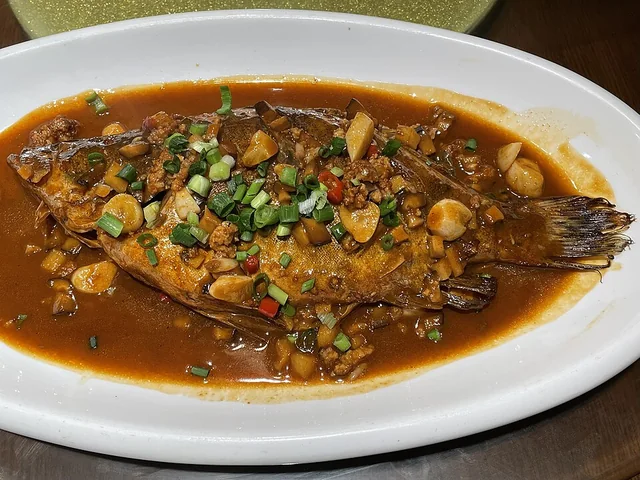

Photo adjustments
EXIF orientation applied where present; resized proportionally to at most 640 px on the long edge and encoded as WebP. No crop, retouching, recoloring or subject changes.
A pronounced fermented aroma distinguishes this named Huizhou fish dish. Order a shared portion and decide whether its flavor suits your table.
How it is made
Mandarin fish is lightly cured or fermented to develop its characteristic aroma, then commonly braised with a savory sauce and aromatics. The preparation is deliberate, with the restaurant responsible for handling and fermentation.
Flavour & texture
Its smell is pronounced, while the cooked flesh remains tender and savory. The fermented character differs from simply adding a sour sauce.
Local roots & traditions
Chouguiyu is strongly associated with Huizhou cuisine in southern Anhui.
Ingredients & dietary needs
Mandarin fish is lightly cured or fermented before cooking in this Huizhou speciality. Soy-based seasonings, chilli, pork fat or other ingredients can be included. Ask which fish is used and whether the preparation contains meat products beyond the fish itself.
How to order Huizhou fermented mandarin fish
Share one fish, confirm the size and decide whether everyone at the table enjoys fermented flavors. Ask whether it is sold as a whole fish or a fixed portion and confirm the total price before cooking. It is normally a shared main rather than a street snack. If the aroma is unappealing, choose another Huizhou dish instead of assuming that every local meal requires tasting it.
How to eat it & plan a meal
Try a small shared portion with rice and a gently cooked vegetable. The distinctive aroma can be stronger before the first bite than in the cooked flesh. Eat carefully around bones and taste the sauce gradually, especially if this is your first fermented-fish dish.
Names & local variations
臭 in the name refers to the characteristic preparation and aroma; it does not mean that any spoiled fish is an acceptable substitute. The dish is different from ordinary fresh braised mandarin fish and from much stronger preserved-fish products. A restaurant should prepare and cook it as a specific dish.
More dishes to compare
Explore related local specialties and compare their names, preparation notes and ordering guidance.
Cao Cao chicken 曹操鸡 →
A whole chicken is braised slowly with a mixture of aromatics until it is tender and evenly seasoned. Different Bozhou kitchens interpret the named preparation with their own spice blend. The skin becomes soft and flavorful, and the meat should separate readily from the bones. It is a rich savory poultry dish rather than a crisp roast.
Hu Shi's one-pot dish 胡适一品锅 →
Several ingredients are arranged in layers inside one pot and slowly cooked so their juices mingle. Meat, tofu products and vegetables may appear, but the exact combination is set by the kitchen. The upper layers stay distinct while lower ingredients absorb a rich, savory broth. The pleasure comes from comparing those textures within one serving.
Questions before you order
What name should I show when ordering?
Show 徽州臭鳜鱼 for Huizhou fermented mandarin fish.

Sources & reading
Recipes and servings vary between kitchens.