

Stir-Fried Changbai Mountain Matsutake and Yam 滑炒长白山松茸山药
Stir-Fried Changbai Mountain Matsutake and Yam is featured among the local specialties of Jilin.
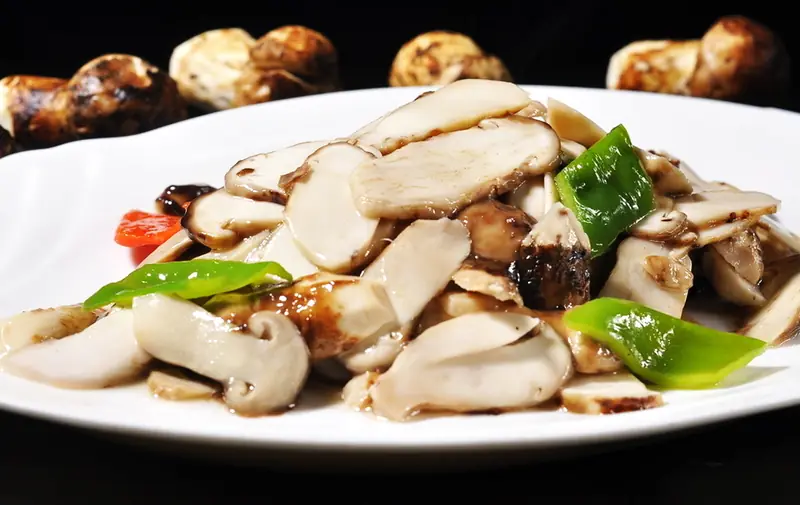
Photo adjustments
EXIF orientation normalized; resized without changing aspect ratio; converted to WebP. No subject edits.
Stir-Fried Changbai Mountain Matsutake and Yam (滑炒长白山松茸山药) is a Jilin stir-fry of matsutake mushroom and Chinese yam, where 滑炒 describes a quick, gentle fry that keeps both ingredients tender.
A soft, fast stir-fry
滑炒 is a gentle, fast stir-fry: the pan is hot but the food is moved constantly and the sauce stays light, so nothing browns hard. Matsutake caps are cleaned by brushing rather than soaking, because the aroma sits near the surface, and then sliced; the yam is peeled and cut into batons or rounds and often blanched first to remove its slippery starch. The two are then tossed with oil, salt and a little stock or soy so the mushrooms stay firm rather than wilting.
Pine aroma against a soft background
Matsutake is the flavour here: piney and faintly spicy, unlike any cultivated mushroom, while the yam adds a soft, slightly sweet background with almost no taste of its own. The texture is a deliberate contrast of firm, slightly fibrous mushroom and smooth, slippery yam. Because the seasoning is light, this is a mild dish on a table of braises and pickles, and it depends on the mushrooms being fresh rather than on the sauce.
A mountain and a seasonal mushroom
长白山 is the Changbai mountain range along Jilin's south-eastern border, and 松茸 is the matsutake that grows in its pine forests in late summer and autumn. Naming the mountain and the mushroom makes the dish a claim about a local seasonal ingredient rather than about a cooking method, since 滑炒 is used across northern China. Fresh matsutake is costly and short-lived, so the dish is not available everywhere at once.
Ingredients and dietary checks
Matsutake mushroom, Chinese yam, cooking oil, salt and often a little stock, soy, garlic or scallion. Soy brings wheat into the dish, and the oil may be a flavoured one. Ask 松茸是新鲜的吗 (is the matsutake fresh), 有小麦吗 (is there wheat), 有蒜吗 (is there garlic) and 辣不辣 (how spicy), because the mushroom is the whole reason to order this plate.
How to order 滑炒长白山松茸山药
Show 滑炒长白山松茸山药 and ask 松茸是新鲜的吗 (is the matsutake fresh) and 一份多大 (how big a portion), then 辣不辣 (how spicy) and 咸不咸 (how salty). Fresh matsutake is often billed by weight, so when the menu says 时价 (market price) confirm 多少钱 (the price) before ordering. Ask 有没有别的做法 (is there another way it is cooked) if you would prefer a steamed version.
Eat it early
Eat it early in the meal, while the mushrooms are hot, because the aroma fades and the yam firms as the plate cools. Serve it beside heavier cold-weather dishes such as braised meat or pickles, which is the role a light stir-fry plays on a north-eastern table. Keep it away from the chilli sauce at the table so the mushroom remains detectable.
More dishes to compare
Explore related local specialties and compare their names, preparation notes and ordering guidance.
Changbai Mountain Delicacies Banquet 长白山珍宴 →
Changbai Mountain Delicacies Banquet (长白山珍宴) is the banquet format built from Changbai mountain ingredients, and this stir-fry is the kind of dish that appears within such a set. Comparing them places one seasonal plate against the whole menu it belongs to.
Questions before you order
Why is matsutake so expensive?
It grows wild in pine forests, cannot be cultivated the same way as button mushrooms, and has a short season. That is why the dish may be priced by weight and why freshness is worth asking about first.
What is the yam in the dish?
It is Chinese yam, a smooth pale root that cooks to a soft, slightly slippery texture. It carries the sauce rather than adding flavour, which is why the mushroom dominates the plate.
Sources & reading
The supplied food list supports this name and regional association. The culinary terms below are explained as menu vocabulary; a local recipe, origin story and venue availability have not been independently verified.