

Kaifeng sweet-potato paste 炒红薯泥
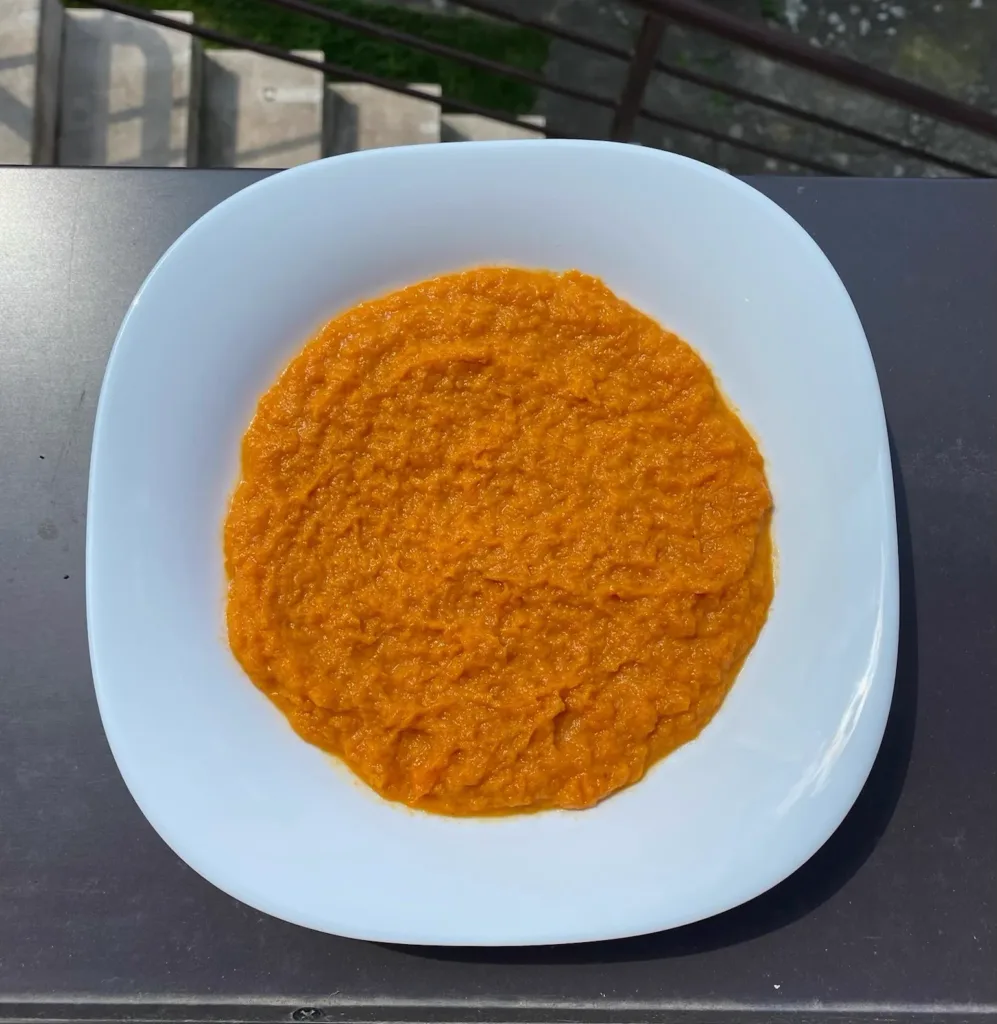
Kaifeng sweet-potato paste (炒红薯泥) is a sweet, dense sweet-potato dish associated more specifically with Qixian (杞县) in Kaifeng. The cooked mash is worked with sugar and sesame oil until glossy and cohesive; local accounts describe a smooth, persistent heat and optional floral or nutty garnishes.
Tap any red Chinese text to hear it in Mandarin.
In brief: Kaifeng sweet-potato paste (炒红薯泥) is a sweet, dense sweet-potato dish associated more specifically with Qixian (杞县) in Kaifeng. The cooked mash is worked with sugar and sesame oil until glossy and cohesive; local accounts describe a smooth, persistent heat and optional floral or nutty garnishes.
What you are eating
This is not a loose sweet-potato soup or a baked whole tuber. It is a cooked sweet-potato mash transformed over heat into a thick, glossy paste. Local sources use the more specific name 杞县红薯泥 Qǐ Xiàn Hóngshǔ Ní and describe it as a Qixian specialty within the Kaifeng area. That makes “Kaifeng sweet-potato paste” a useful visitor label, but not a claim that every Kaifeng kitchen follows one recipe or that the dish belongs only to the city centre.
The documented preparation starts with cooked sweet potatoes. The peel and inner fibres are removed, and the flesh is pressed into a fine mash. The accounts differ at this first step: one describes boiling, while a later transmission account explicitly says to steam rather than boil. Both then describe sugar melted into syrup, sesame oil, and sustained stirring over heat. One account gives medium heat and roughly ten minutes as its working description; that is a recorded method, not a universal timing rule.
The finished paste is commonly described as persimmon-red, smooth and sweet. Traditional accounts mention layers or toppings such as diced hawthorn, rose, candied osmanthus, coloured fruit strips, black sesame, pine nuts or melon seeds. These are variations, not a fixed garnish list. Expect a dense, cohesive spoonful with a sweet roasted-root character; the sugar, oil, heat and garnish balance will depend on the kitchen and batch.
Why it is associated with Kaifeng
The strongest local identity evidence is more specific than the English label: the Henan tourism source calls red-sweet-potato paste a famous dish of Qixian, while the Qixian government’s local biography records chef Jiang Shiqi’s red-sweet-potato paste as his notable creation and describes its long-standing “three non-stick” reputation—traditionally said not to stick to the chopsticks, plate or teeth. These are local culinary-history accounts, not proof that every present-day version has identical texture.
Several dramatic stories about famous historical figures and the dish circulate in local writing. The same tourism feature warns that these stories are folk legends with weak historical certainty. Keep the Qixian food tradition and the documented preparation; do not treat those anecdotes as verified origin history.
Heat, texture and how to eat it
A calm-looking surface can conceal a very hot, dense centre. Local accounts repeatedly use the dish’s slow heat loss as a defining eating lesson, and the older local description says it can remain warm after serving. Take a small spoonful first, let the centre cool, and do not swallow a large mouthful simply because the paste is not steaming. The “stays hot” description is a traditional serving observation, not a guaranteed temperature or a promise about every batch.
The older phrase “three non-stick” is best understood as a texture ideal: a cohesive paste that lifts cleanly and feels smooth rather than watery. It does not guarantee that a modern serving will have no stickiness. If you prefer less sweetness, ask whether the kitchen can serve a smaller portion; recipes and portion sizes vary.
How to look for it without choosing a particular shop
Keep this exact Chinese name handy: 炒红薯泥 Chǎo Hóngshǔ Ní. If a search produces no useful result, try 杞县红薯泥 Qǐ Xiàn Hóngshǔ Ní; 红薯泥 Hóngshǔ Ní is a broader fallback and needs menu checking because it can also mean a generic sweet-potato purée. In Meituan (美团) or Amap/Gaode Maps (高德地图), search the Chinese name around your current Kaifeng neighbourhood rather than relying on an English translation.
Before travelling to any result, check the listing’s current menu or recent customer photos for the exact dish name. Read recent reviews for evidence that it is being served now, confirm the displayed opening information, and message or call to ask about same-day supply, portion size, toppings and whether it is served very hot. Do not treat platform ranking, “most authentic” language or an old review as a guarantee. The public web versions of both platforms are dynamic and/or login-gated, so they are appropriate for same-day checking, not for asserting a permanent supply calendar.
This guide does not recommend a restaurant, brand, address or branch. Once you have independently confirmed a current listing, use that listing’s live map pin for the final walk or local ride.
Season and dietary questions
One 2016 transmission account discusses choosing sweet potatoes at harvest time, and another local description calls the dish a winter favourite. Neither establishes a current restaurant season or a reliable year-round schedule. Treat availability as venue- and batch-specific and check on the day you want to eat it. Do not plan a future seasonal trip around an old harvest note.
The documented methods use sugar and sesame oil, and the optional toppings may include sesame or nuts. Ask about the current garnish, cooking oil, shared equipment and cross-contact if you have an allergy. Do not assume that a particular serving is vegan, gluten-free or suitable for a religious diet without asking the kitchen about its actual ingredients.
Access
炒红薯泥 has no single public entrance, ticket, reservation system or dish-specific transport route. It therefore has no meaningful metro, bus, rail or taxi route of its own. The practical access step is to verify a current venue through the exact Chinese name, then follow that venue’s live map information. No fixed address or shop route is supplied here.
More dishes to compare
Explore related local specialties and compare their names, preparation notes and ordering guidance.
Henan stir-braised chicken 熬炒鸡 →
Chicken pieces are first stir-fried with aromatics, then simmered with broad starch sheets in a savory sauce. The sheets soften and absorb the juices as the chicken finishes cooking. The dish combines bone-in chicken with slippery, chewy starch strips and a full-flavored gravy. Chili and spice levels depend on the kitchen.
Xinyang Maojian tea 信阳毛尖 →
The young green-tea leaves are processed with heat to halt oxidation, then dried into fine, slender shapes. For drinking, the leaves are infused in hot water without milk or sweetener. The liquor is fresh and vegetal with a gentle nuttiness and a possible light astringent finish. Leaf quality, water temperature and steeping time change the balance.
Sources & reading
Recipes and servings vary between kitchens.
Image credits & notes (1)
- Plate of orange sweet-potato puree on a white square plate, photographed in North Macedonia; illustrative only, not Kaifeng or Qixian 炒红薯泥Photo: Deodora333 · CC BY-SA 4.0