

Lanzhou cool noodles 兰州凉面
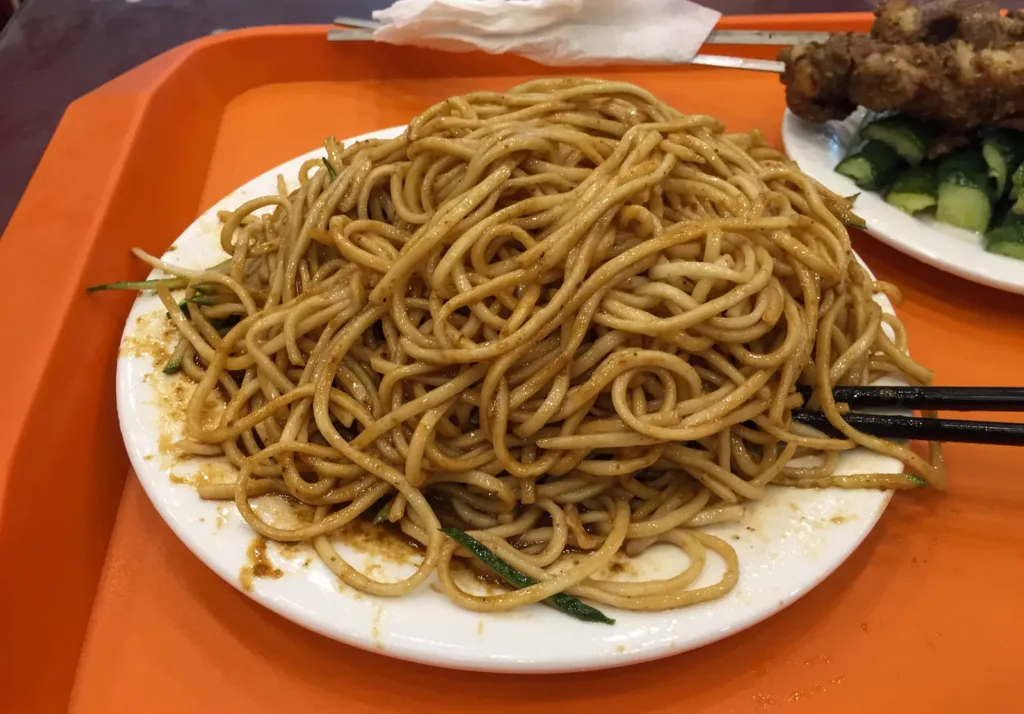
Lanzhou liangmian (兰州凉面) is a seasonal noodle dish built from wheat noodles cooled after cooking, tossed with oil, and served with a cooked vegetable gravy. In Lanzhou it is also described as “liangmian tiaor, re luzhi” (凉面条、热卤子); the topping’s temperature and vegetables can vary by kitchen.
Tap any red Chinese text to hear it in Mandarin.
Why this bowl belongs to Lanzhou’s summer table
Lanzhou liangmian is tied to the city’s warm-weather noodle-shop routine rather than to one fixed address. Local Gansu coverage places it among the early-summer foods of Lanzhou and says that beef-noodle shops put it out in summer. The commonly used phrase “凉面条、热卤子” explains the basic idea: cooled noodles meet a cooked, savoury vegetable gravy.
That local name is useful, but it does not mean every cold noodle in Gansu is the same dish. A separate account of Liangzhou liangmian from Wuwei describes its own meat-and-vegetable gravy and regional associations. When comparing dishes across the province, keep “Lanzhou liangmian” tied to the Lanzhou name rather than treating all “liangmian” as one fixed recipe.
How the noodles and gravy are made
The noodle base is wheat-based. A local recipe describes cooking the noodles, passing them through water, and tossing them with cooked rapeseed oil so the strands stay separate as they cool. Another Gansu account summarizes the same Lanzhou method as noodles made with a pulled-noodle process, then rinsed and oil-tossed.
The vegetable gravy, or lùzi (卤子), is cooked separately and lightly thickened. A recipe example lists potato, green bamboo shoot, carrot, cauliflower, wood ear and celery, while other local descriptions mention seasonal vegetables such as beans; these are examples, not a compulsory list. The oil, starch and cooking liquid give the gravy a fuller coating than a thin cold-noodle dressing.
Serving temperature is not completely uniform. The local feature that uses “凉面条、热卤子” presents the gravy hot, while the recipe page tells the cook to let the vegetable lùzi cool before pouring it over the noodles. A secondary summary also notes that shops vary. Ask whether the lùzi is hot, warm or cooled if that contrast matters to you.
Common finishing choices include chilli oil, garlic juice, vinegar, mustard and sesame paste. Mix the noodles through the gravy first, then add the sharper condiments gradually. The flavour can move from savoury and vegetable-rich to sour, hot, garlicky or mustardy without requiring a single “correct” combination. A local Gansu article also describes eating the noodles with grilled lamb skewers; treat that as a local pairing idea, not part of the bowl’s fixed recipe.
Ordering it in Lanzhou
Show the Chinese name 兰州凉面 Lánzhōu Liángmiàn when ordering. You may also see the descriptive phrase 凉面条、热卤子 Liáng miàntiáo, rè lǔzi. Ask 卤子是热的还是凉的? Lǔzi shì rè de háishi liáng de? if you want to know the topping temperature, and 是素卤吗? Shì sù lǔ ma? if you need a vegetable-based gravy. Do not assume that a vegetable-looking bowl is vegetarian or free of animal stock: kitchens can vary in gravy, seasoning and add-ons.
Search for “兰州凉面” on Meituan (美团) or Amap / Gaode Maps (高德地图) to find nearby places serving this dish. Check menus, recent reviews, opening information and today’s availability before choosing.
This is a dish rather than a venue, so there is no single entrance, ticket or transport route to list. Supply is associated with the warm season in the sources, and a shop may change its vegetables or stop serving the dish outside its seasonal window. For strict dietary needs, ask about wheat, sesame, mustard, garlic, the gravy base and cooking oil before mixing the bowl.
More dishes to compare
Explore related local specialties and compare their names, preparation notes and ordering guidance.
Dunhuang donkey-meat yellow noodles 敦煌驴肉黄面 →
Yellow wheat noodles are cooked and served with prepared donkey meat and a savory sauce. The meat may arrive separately from the noodle plate, depending on the restaurant. The noodles have a firm, springy bite, while the sliced meat is dense and aromatic. Sauce brings the two components together.
Jiangshui sour-broth noodles 浆水面 →
Fermented vegetables and their sour liquid form a broth for wheat noodles. Aromatics may be fried separately and added to the soup, while chili is often adjusted at serving. The broth is light but distinctly tangy, with soft vegetables and chewy noodles offering a refreshing contrast to richer meat soups.
Sources & reading
Recipes and servings vary between kitchens.
Image credits & notes (1)
- Cold noodles at Xinchuan Noodles, Xinjiekou, Beijing, photographed on 22 June 2017; a regional visual example, not a verified Lanzhou liangmian serving. Photo: N509FZPhoto: CC BY-SA 4.0