

Longyang rice-wine steamed bread 龙羊酒酿馒头
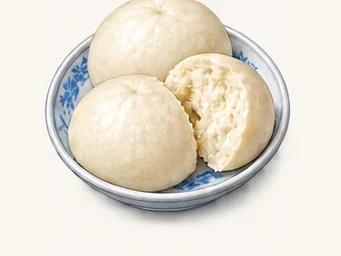
A gently sweet, resilient steamed wheat bun associated with rural Fuyang in Hangzhou; rice-wine fermentation gives it a fragrant, tender crumb.
What the name means
Treat “Longyang” as a Fuyang-area food association, not as proof of one standardized recipe or a single branded shop. A Fuyang local-government feature places Wanshi and Dongqiao within the Longyang area and names rice-wine buns among Wanshi’s local foods. A separate Hangzhou newspaper story follows a maker in Wen Village, Dongqiao, so the food is found in more than one Fuyang locality. The reporting does not establish that every bun sold under this name comes from the same maker or has one fixed formulation.
How it is made and tastes
The common thread is wheat dough fermented with 酒酿 (jiǔniàng, sweet fermented rice) or a rice-wine starter, then shaped and steamed. In Wanshi, a maker says the starter formula, fermentation and tight hand-shaping all matter: a compactly shaped bun rises into a rounder form rather than spreading. In Dongqiao, another maker uses rice-wine fermentation and steams buns in bamboo baskets lined with lotus leaves. These are documented makers’ practices, not a universal specification; the available local reports do not give a standard flour-to-rice-wine ratio or establish whether every kitchen also uses baker’s yeast or added sugar.
Expect a pale, plump steamed bun with a tender yet resilient bite and a mild fermented sweetness. The aroma is most noticeable warm. The Dongqiao maker’s lotus-leaf lining adds a leafy fragrance, while the Wanshi report describes a more robust chew. Those details belong to the reported versions rather than every Fuyang bun.
Fermented-rice steamed breads are not exclusive to Hangzhou: a China Daily account of a Quzhou maker describes a different process using fermented glutinous rice and rice-paste fermentation water. That comparison is a reminder that methods vary by locality; it should not be mistaken for the Fuyang recipe.
How to try it
Look for 酒酿馒头 at a Fuyang market or ask a local seller whether the batch is freshly steamed. It is a plain steamed bread, so try it warm on its own or alongside a savory meal; confirm the seller’s preferred way to reheat a takeaway bun.
Where to eat it
You can find Longyang rice-wine steamed bread all over Hangzhou, so there is no need to seek out one particular restaurant. To find one near you, search for “龙羊酒酿馒头” in Meituan (美团) or Amap (高德地图) and check recent reviews, distance and opening hours.
More dishes to compare
Explore related local specialties and compare their names, preparation notes and ordering guidance.
Jiande tofu buns 建德豆腐包 →
Leavened wheat dough is filled with seasoned tofu, often including chili, then steamed into soft buns. The tofu is cut or crumbled so it holds seasoning inside the bread. The wrapper is fluffy and mild, while the center is tender, moist and savory, sometimes with a clear chili kick.
Osmanthus glutinous-rice lotus root 桂花糯米藕 →
Glutinous rice is packed into the holes of a lotus root, which is slowly cooked in sweet liquid and sliced. Osmanthus flowers or syrup add the final fragrance. Tender lotus root retains a little structure around the sticky rice, with a rich, floral sweetness throughout. The slices are more substantial than a light fruit dessert.
Sources & reading
Recipes and servings vary between kitchens.