

Milk, egg & fermented-rice sweet soup 鸡蛋牛奶醪糟
In Lanzhou, 牛奶鸡蛋醪糟 is a hot, sweet soup of milk, fermented glutinous rice and egg, often finished with sesame, dried fruit or nuts. Its place in Lanzhou’s night-market food culture makes it a practical way to taste a local sweet without treating one stall as the definition of the dish.
Tap any red Chinese text to hear it in Mandarin.
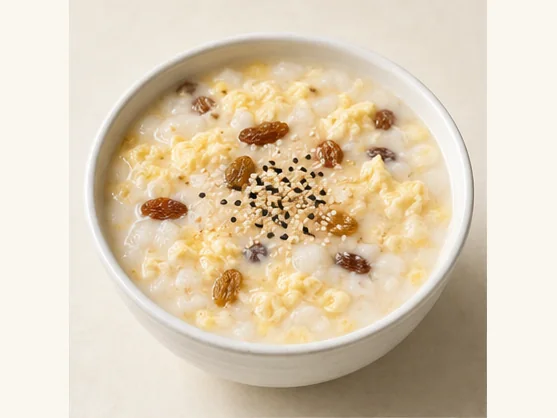
牛奶鸡蛋醪糟 is a hot, sweet milk-and-egg soup built around 醪糟, fermented glutinous rice. You may also see the same name written as 鸡蛋牛奶醪糟. In Lanzhou, it is closely associated with night-market eating: a Lanzhou Daily report places it among the foods visitors encounter in several night-market streets and describes it being prepared at stalls. The dish is linked with Gansu and the wider north-western food scene, but it is better understood as a regional street-food tradition than as a single shop’s invention or a recipe with one fixed topping list.
What goes into the bowl
The usual sequence is simple but matters for the texture. Milk is heated, 醪糟 is added, and beaten egg goes in near the end, forming soft egg ribbons or clouds as it sets. Street versions may be finished with sesame, goji berries, raisins, peanuts, walnut or other chopped nuts. A 2024 report from Lanzhou describes the milk, 醪糟 and egg being cooked in that order, with sesame, goji and raisins added at serving; a Gansu tourism feature also describes the milky, eggy and fermented-rice aromas alongside dried fruit and nut toppings.
Expect a warm, sweet bowl with a creamy milk base, tender egg and small rice grains. The fermented rice contributes a mild fermented aroma, while sesame and nuts add a roasted note and dried fruit adds chew and extra sweetness. Because vendors change the amount of 醪糟, sugar and toppings, two bowls can be noticeably different. Ask what is included before the bowl is made rather than assuming that a colourful garnish is standard.
How to order and eat it
Keep the Chinese name handy: 牛奶鸡蛋醪糟 Niúnǎi Jīdàn Láozāo. Search for “牛奶鸡蛋醪糟” on Meituan (美团) or Amap / Gaode Maps (高德地图) to find nearby places serving this dish. Check menus, recent reviews, opening information and today’s availability before choosing. If a result uses the alternate word order, try 鸡蛋牛奶醪糟 Jīdàn Niúnǎi Láozāo as well. Search ranking does not prove quality or authenticity, and a listing does not guarantee that a vendor still has the soup that day.
Ask which toppings are already mixed in and request omissions for taste preferences. Milk and egg are central ingredients; sesame, peanuts, walnuts and other nuts or dried fruit may be added, and prepared mixtures or shared utensils can matter for allergy decisions. Do not infer that a bowl is vegetarian or free of a particular allergen from its appearance.
醪糟 is a fermented food made from glutinous rice and starter culture. Food-safety guidance explains that fermentation converts sugars into ethanol and warns that ordinary cooking does not guarantee complete removal of alcohol. If you must avoid alcohol, ask the vendor about the actual 醪糟 used and do not treat a briefly heated bowl as alcohol-free. The soup is substantial enough to share or to have as a dessert after a lighter meal; let the bowl cool enough to taste the contrast between the soft egg, rice grains and toppings.
More dishes to compare
Explore related local specialties and compare their names, preparation notes and ordering guidance.
Fermented-grain milk tea 甜醅奶茶 →
Cooked grain is fermented separately, then added to a prepared milk-tea base. Shops adjust the sweetness, temperature and quantity of grain; some make the base in advance, limiting later changes. Expect milky tea, sweetness and a mild fermented note, with grains collecting at the bottom. Stirring changes the balance between a plain sip and a mouthful containing the grain.
Sanpaotai tea 三炮台 →
Tea, rock sugar and dried additions are placed in a covered bowl and infused with hot water. The lid is used to move floating ingredients aside while sipping, and the bowl can be refilled. The drink changes as sugar dissolves and fruit releases flavor, combining tea bitterness with sweetness and dried-fruit aroma.
Sources & reading
Recipes and servings vary between kitchens.