

Miancha 面茶
Miancha is featured among the local specialties of Beijing and Tianjin.
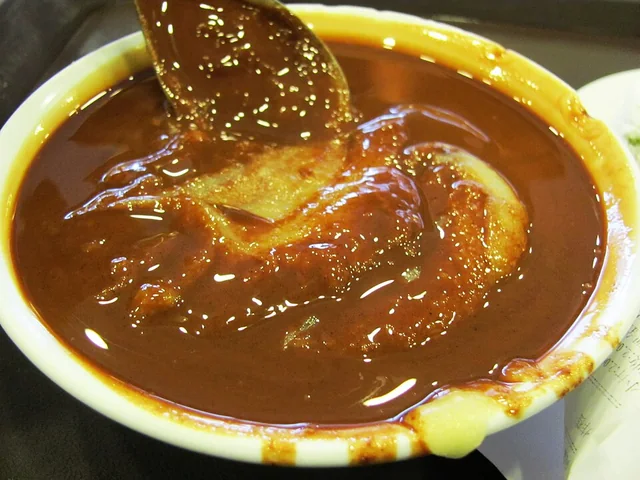

Photo adjustments
EXIF orientation applied where present; resized proportionally to at most 640 px on the long edge and encoded as WebP. No crop, retouching, recoloring or subject changes.
Miancha (面茶) is a Beijing grain-based snack with a thick base and a sesame-rich finish. Despite the character for tea in its name, it is not a cup brewed from tea leaves. Its appeal comes from the relationship between the mild grain mixture and the more concentrated topping.
How it is made
Millet or another grain flour is cooked into a thick porridge and topped with sesame paste and seasoned sesame salt. Recipes and topping proportions differ between Beijing and Tianjin shops.
Flavour & texture
The grain base is smooth and mild; the concentrated sesame layer brings a roasted aroma and savory richness.
Local roots & traditions
Although cha means tea, miancha is a substantial grain bowl rather than a brewed drink.
Ingredients & dietary needs
Ask which grain or flour blend the shop uses for its thick base and how the sesame topping is prepared. The texture is closer to a spoonable grain food than a clear drink, so it is useful to think about portion size as well as flavour.
Sesame is an important ingredient to check, along with any added flour, salt or other seasoning. The food's short Chinese name cannot establish the complete recipe, and a tea-like translation should not be used to infer what is in the bowl.
How to order Miancha
Try a small bowl hot, tasting both the topping and the porridge together before mixing everything.
Miancha and chatang are different orders
Miancha and chatang can both confuse visitors because their names are translated with tea, but they are not interchangeable labels for a single food. Miancha's grain-and-sesame combination should be ordered by its own name, 面茶. The separate chatang guide explains its sweeter flour-based preparation.
When comparing breakfast snacks, identify the base, topping and sweetness before choosing. This is more useful than relying on the size of the bowl or an English menu category labelled drinks.
More dishes to compare
Explore related local specialties and compare their names, preparation notes and ordering guidance.
Sweet grain-flour pudding 茶汤 →
Fine grain flour is whisked with boiling water into a thick pudding, then topped with sugar and small nuts or preserved-fruit pieces. The flour and toppings differ between Beijing and Tianjin shops. The base is smooth and spoonable, with a gentle grain aroma; crunchy toppings interrupt its soft texture.
Gabacai 锅巴菜 →
Thin pancakes made from grain and bean batter are cut into strips and warmed in a thick savory gravy. Sesame paste, fermented tofu and other condiments may be spooned over the bowl. Soft, slightly resilient strips absorb the gravy; the condiments bring nutty, salty and sometimes spicy flavors.
Questions before you order
What name should I show when ordering?
Show 面茶 for Miancha. Try a small bowl hot, tasting both the topping and the porridge together before mixing everything.

Sources & reading
Recipes and servings vary between kitchens.