

Sweet grain-flour pudding 茶汤
Cha tang (茶汤) is a warm, sweet Beijing snack made by scalding fine millet flour with boiling water, then serving the thick, pale-golden mush with toppings such as sugar, osmanthus syrup, sesame or dried fruit. Despite its name—literally “tea soup”—it is a grain dish, not a tea drink.
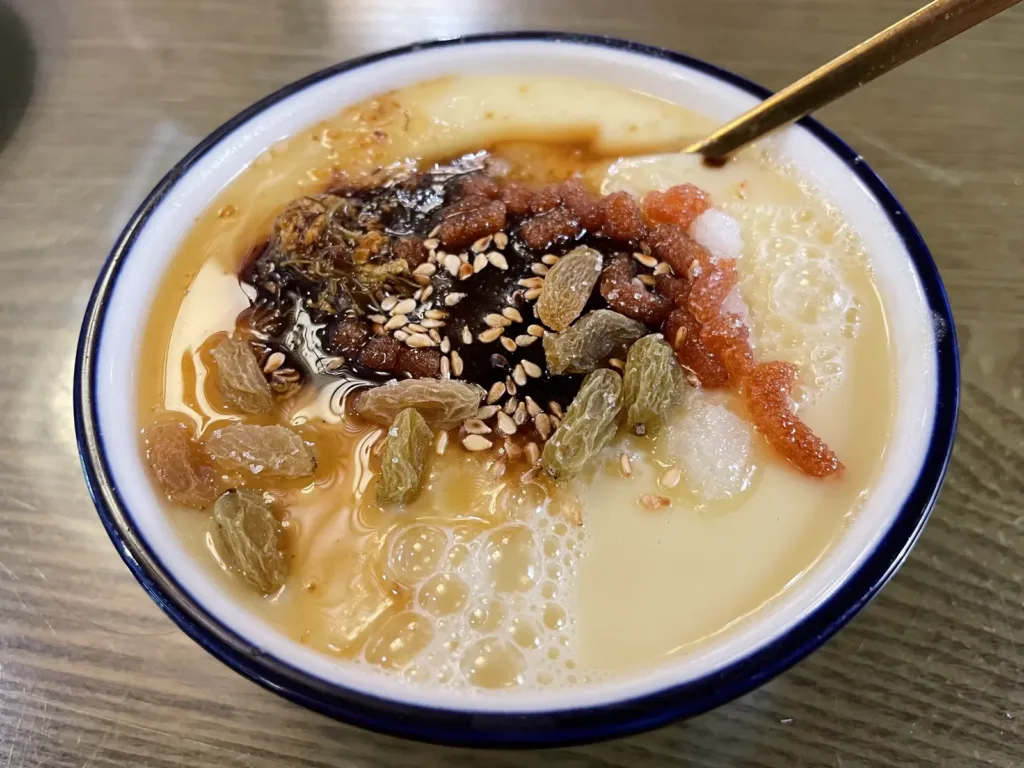
What cha tang is
Cha tang is a sweet, spoonable grain snack associated with Beijing and the wider northern Chinese food tradition. Its name describes the way it is made: hot water is poured into a prepared flour mixture, somewhat like brewing tea. There are no tea leaves in the dish. Beijing sources identify proso millet flour (méizi miàn, 糜子面) as its characteristic base. A 2026 account of the Tianjin version describes red sorghum flour combined with proso millet, illustrating regional variation rather than a single required grain formula.
The base is gently grain-scented and smooth when the flour is fine and well hydrated. Beijing’s tourism listing describes the finished color as apricot-gold and the taste as sweet, mellow and fine-textured. A bowl may be finished with sugar and osmanthus syrup, with sesame, nuts or preserved fruit adding fragrance, chew and crunch. The exact topping mix varies by vendor.
How it is made and eaten
The flour is first loosened or mixed with water in a bowl. Boiling water is then poured in while it is stirred, cooking the starch into a thick, glossy mush. The skilled pour matters: if the water and flour are not combined properly, lumps can spoil the smooth texture. One Beijing Tea Soup Li tradition uses a special copper kettle for the pour; its “inverted-bowl” presentation is a notable craft demonstration, not a required feature of every serving.
This is not the same snack as miànchá (面茶). Both may use millet flour, but cha tang is sweet and scalded with boiling water, while Beijing-style miancha is savory, cooked into a porridge and commonly finished with sesame paste and seasoned sesame. Ask for the characters 茶汤 if you want the sweet version.
Eat it warm with a spoon, taking care with the hot center and folding the toppings into the soft base as you go. At Tea Soup Li, a documented traditional method is to use a small copper spoon to cut a portion from the bowl’s edge, where osmanthus syrup is drizzled; this lets the syrup flow into each bite. That is one serving style, not a universal rule.
Beijing association
Cha tang belongs in a Beijing food guide as a traditional local snack, but it is not exclusive to Beijing: a 2026 China Daily account describes it as a traditional snack in Tianjin as well. The Beijing tourism account describes the long-running Tea Soup Li craft, and a 2026 Beijing News report documents the brand continuing to present its signature “inverted-bowl” technique at a Lunar New Year market. Those reports support a living Beijing association without establishing that one shop’s recipe or presentation defines every bowl.
Tea Soup Li is reported to have begun in 1858.
Dietary note
The grain base is millet in the Beijing tourism description; the documented Tianjin version also uses red sorghum flour. Toppings can include sesame, nuts and dried fruit. Ask the vendor about the actual flour and toppings if you need to avoid a particular grain, sesame or nut; the dish’s name alone does not guarantee a fixed ingredient list.
Where to eat it
You can find Cha tang all over Beijing, so there is no need to seek out one particular restaurant. To find one near you, search for “茶汤” in Meituan (美团) or Amap (高德地图) and check recent reviews, distance and opening hours.
More dishes to compare
Explore related local specialties and compare their names, preparation notes and ordering guidance.
Miancha 面茶 →
Millet or another grain flour is cooked into a thick porridge and topped with sesame paste and seasoned sesame salt. Recipes and topping proportions differ between Beijing and Tianjin shops. The grain base is smooth and mild; the concentrated sesame layer brings a roasted aroma and savory richness.
Honey-dipped ear pastries 糖耳朵 →
Thin pieces of sweetened dough are folded into ear-like shapes, fried and dipped in syrup. The syrup penetrates the folds rather than simply forming a dry sugar coating. Fresh pieces combine a lightly firm surface with a dense, chewy interior. Their lasting sweetness makes plain tea a useful accompaniment.
Sources & reading
Recipes and servings vary between kitchens.
Image credits & notes (1)
- Beijing cha tang topped with syrup, osmanthus jam, sesame, raisins and hawthorn jelly. Photo: Zheng ZhouPhoto: CC BY-SA 4.0