

Mongolian cultured cream 蒙古奶嚼口
Mongolian cultured cream is featured among the local specialties of Inner Mongolia.
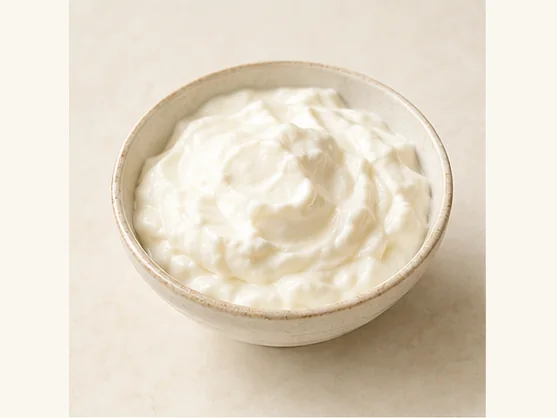
Naijiaokou is a rich cream collected from milk that has been allowed to ferment and separate. It is often eaten with toasted grains rather than treated as a drink by itself.
How it is made
As the milk rests under controlled conditions, it thickens and separates. The pale upper layer is collected as the cream. Commercial products may use different processing methods, so a shop's version need not match a household preparation exactly.
Flavour & texture
The texture is thick and smooth, with a milky richness and a gentle fermented tang. Sweetening changes the balance considerably; a plain sample gives a better sense of the dairy flavour before sugar or grains are mixed in.
Local roots & traditions
Wulagai's tourism bureau describes naijiaokou as a dairy food eaten with toasted grains or rice. It belongs to a broader pastoral dairy tradition, alongside milk skin, milk curd and other products that use different parts or treatments of milk.
Ingredients & dietary needs
Milk is fundamental, with cow's milk commonly used. Sugar and accompaniments depend on the serving. Ask whether a packaged version includes additional cream, flavourings or other ingredients, and keep fresh dairy according to the producer's instructions.
How to order Mongolian cultured cream
Ask for a small serving and clarify whether it is sweetened. If it arrives with grains, add them gradually so you can compare the cream alone with the softer mixture that develops after soaking.
How to eat it & plan a meal
This is a rich accompaniment, so you may prefer a shared portion with plain tea and other breakfast items. Check storage requirements before buying it as a souvenir, particularly when travelling for several hours without refrigeration.
Names & local variations
Naijiaokou is softer than dried milk skin and is not simply the same thing as a block of milk tofu. Similar English labels such as cream, curd and cheese can conceal quite different textures on local menus.
More dishes to compare
Explore related local specialties and compare their names, preparation notes and ordering guidance.
Milk curd 奶豆腐 →
Milk is fermented or curdled, then heated, drained and pressed into a firm dairy product. Pieces may be eaten fresh, dried or softened in hot milk tea depending on their texture. Fresh milk curd can be mildly sour and chewy, while drier pieces are more concentrated and firm. Sweetened preparations taste different from plain ones.
Salty milk tea 咸奶茶 →
Tea is boiled and combined with milk and salt; some preparations are enriched with butter or accompanied by roasted grain and fried dough. Strength and saltiness vary between households and restaurants. The flavor is savory and milky, with tea tannin underneath. Added millet changes from crisp to soft as it soaks.
Questions before you order
What name should I show when ordering?
Show 蒙古奶嚼口 for Mongolian cultured cream.
Sources & reading
Recipes and servings vary between kitchens.