

Mustard-dressed cabbage rolls 芥末墩
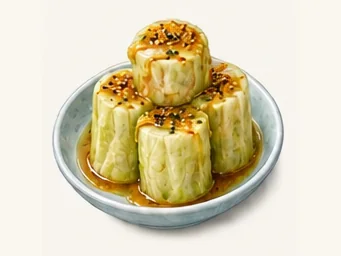
芥末墩 (jièmo dūn) is a Beijing-associated cold cabbage dish built around compact pieces of Chinese cabbage and a nose-tingling mustard dressing. Vinegar, salt and often sugar balance the pungency; recipes differ in whether the cabbage is lightly blanched or salted and rested, and in how long it sits before serving.
Tap any red Chinese text to hear it in Mandarin.
What the name describes
The name 芥末墩 means, roughly, “mustard mound” or “mustard cabbage stack.” It refers to the compact, layered portions of cabbage, not to a stuffed cabbage roll. In Beijing, it is remembered as a homestyle winter cold dish, often associated with the season when stored Chinese cabbage was plentiful and with New Year or other rich meals. It is a Beijing tradition, not a claim that no similar mustard-and-cabbage dish exists elsewhere.
The central ingredients are Chinese cabbage and mustard, commonly prepared from mustard powder. Salt, vinegar and sugar appear in documented versions, but there is no single fixed ratio or required method. One Beijing description uses the dense cabbage core, salts it, layers the pieces with mustard and adds rice vinegar before sealing the dish for several days. A home recipe instead briefly blanches short cabbage sections, coats them with mustard paste, and adds sugar, salt and white vinegar before resting. These are examples of different household approaches, not a universal specification.
How it is made and how it tastes
A typical preparation makes compact portions from the firmer inner cabbage leaves or core. Depending on the cook, the cabbage may be salted to draw off some moisture or briefly blanched until it begins to soften. Mustard powder is mixed with warm water into a paste; the cabbage is then layered or coated with it. Vinegar, salt and often sugar season the layers, which are covered and left to rest so the sharp mustard and sour-sweet dressing reach the cabbage. The rest may be short or extend over a few days, depending on the recipe.
Expect pale cabbage with a yellow mustard coating rather than a chili-red sauce. The first impression is the mustard’s sharp, nose-rising heat; it is different from the slower burn of chili. Vinegar brings a clean sour note, while sugar in many versions rounds the edge. The cabbage stays juicy and crisp to gently tender, with the denser core giving more bite than the leaf. A well-made piece tastes at once sharp, sour, lightly sweet and fresh.
Ordering and eating
Look for 芥末墩 Jièmo dūn or 芥末墩儿 Jièmo dūnr on a menu, or show the characters when ordering. It is usually served chilled in small portions as a side dish. Take one piece at a time and eat it alongside richer dishes; that contrast is why it is often recalled at winter and New Year tables. Start with a small bite if you are not used to prepared mustard—the nose-clearing sensation can be forceful even though the dish contains no chili in the versions described here.
If you need to check ingredients, ask whether the dressing contains sugar or a particular kind of vinegar, and whether the cabbage was blanched or only rested. Mustard itself is the defining seasoning; do not ask for “less chili” as a substitute for milder mustard.
More dishes to compare
Explore related local specialties and compare their names, preparation notes and ordering guidance.
Peking duck 北京烤鸭 →
The duck is seasoned, air-dried and roasted until its skin becomes lacquered and crisp. Carved slices are brought out with thin pancakes, scallion and a sweet bean sauce; cucumber is a common additional accompaniment. The pleasure comes from brittle skin against tender meat, with fresh vegetables cutting through the rich fat.
Zhajiangmian 炸酱面 →
Wheat noodles are boiled separately while diced pork is fried with fermented soybean paste into a thick sauce. Cucumber and other finely cut vegetables are arranged on top for mixing. The sauce is salty, deeply savory and oily; fresh vegetables lighten the mouthful while firm noodles supply chew.
Sources & reading
Recipes and servings vary between kitchens.