

Pork-intestine noodles 大肠面
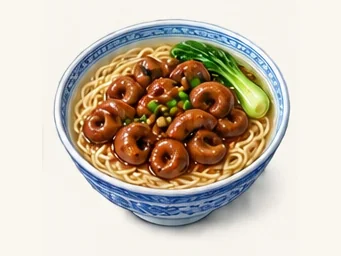
Shanghai-style dachangmian (大肠面) pairs wheat noodles with pork large intestine, often soy-braised to a glossy brown-red and served either in broth or as a mixed bowl. The intestine may be tender-soft or springy, while sweetness, chilli and extra toppings vary by shop. It is a familiar choice in Shanghai’s topping-noodle culture, not one fixed recipe.
Tap any red Chinese text to hear it in Mandarin.
What the name means
Dachangmian means noodles topped with pork large intestine. In Shanghai, the dish belongs to the broader tradition of jiaotou mian (浇头面): a noodle base with a separately prepared topping. Local food coverage lists 大肠面 among the city’s recognisable topping-noodle choices, but that association is not evidence that the dish originated in Shanghai or that every shop follows one formula.
What may be in the bowl
The central pairing is wheat noodles and pieces of pork intestine. Some Shanghai versions use soy-seasoned, red-braised intestine; another reported shop style stir-fries the topping. The intestine may be cut into thick rings—often called quanzi (圈子)—or served in other cuts. These are kitchen choices, not a naming rule.
A soup bowl can combine relatively light noodle broth with the darker, more concentrated sauce clinging to the intestine. In one reported version, the intestine softens further as it sits in the broth. Other shops serve a drier bowl, or let diners mix the topping and sauce through the noodles themselves. Ask which style is available rather than assuming the name tells you whether it will be soupy.
Flavour and texture
Look for a brown-red sheen on the braised topping, with savoury soy notes and sometimes a slight sweetness. Slow braising can make the thicker pieces tender while leaving some spring in their bite; a quickly finished or stir-fried version may feel firmer. The contrast is part of the appeal: supple, slippery noodles against a rich, chewy topping. Reports about Shanghai bowls describe both very soft and distinctly springy results, so texture is shop-specific.
Garlic or a little chilli can be added in some shops, and other toppings may share the bowl. One English-language account of a Shanghai shop describes combinations with kaofu (烤麸, braised wheat gluten), minced pork, mushrooms and egg; those are that shop’s additions, not a standard ingredient list. A reported local version is topped with roast gluten that absorbs the sauce.
How to order and eat it
Show 大肠面 (dàchángmiàn). If the menu does not make the serving style clear, ask 有汤面和拌面吗? Yǒu tāngmiàn hé bànmiàn ma? (“Do you have a soup version and a mixed version?”). If the sauce arrives separately or looks especially concentrated, start with a little and mix in more to taste. Add garlic or chilli only if offered and wanted. A bowl may also come with toppings such as braised gluten, but check the shop’s menu rather than expecting them automatically.
This is an offal dish and contains pork. Wheat noodles are usual; toppings and seasonings vary, and soy seasoning is common in reported Shanghai preparations. If you have a dietary restriction or allergy, ask the individual shop about the noodles, sauce and additional toppings rather than relying on the dish name alone.
More dishes to compare
Explore related local specialties and compare their names, preparation notes and ordering guidance.
Scallion-oil noodles 葱油拌面 →
Scallions are slowly fried in oil until fragrant and browned, and the oil is combined with soy-based seasoning. Cooked wheat noodles are tossed through the mixture just before serving. The noodles are slippery and chewy, with sweet-salty soy flavor and deep fried-scallion aroma. Crisp scallion pieces provide occasional contrast.
Crisp noodles with topping 两面黄 →
Cooked noodles are browned on both sides into a crisp bed, then covered with a hot savory topping and sauce. The topping softens parts of the noodles while leaving other sections crunchy. This creates the central contrast: brittle browned strands, chewy softened noodles and moist vegetables or meat above.
Sources & reading
Recipes and servings vary between kitchens.