

Sanzi fried noodle nests 馓子
Sanzi (馓子) is a crisp fried wheat-dough snack that appears in Ningxia and Qinghai food traditions. In Yinchuan it is best understood as a tea-table and traditional-pastry food: look for a fresh portion, break off small pieces, and ask whether it is available that day.
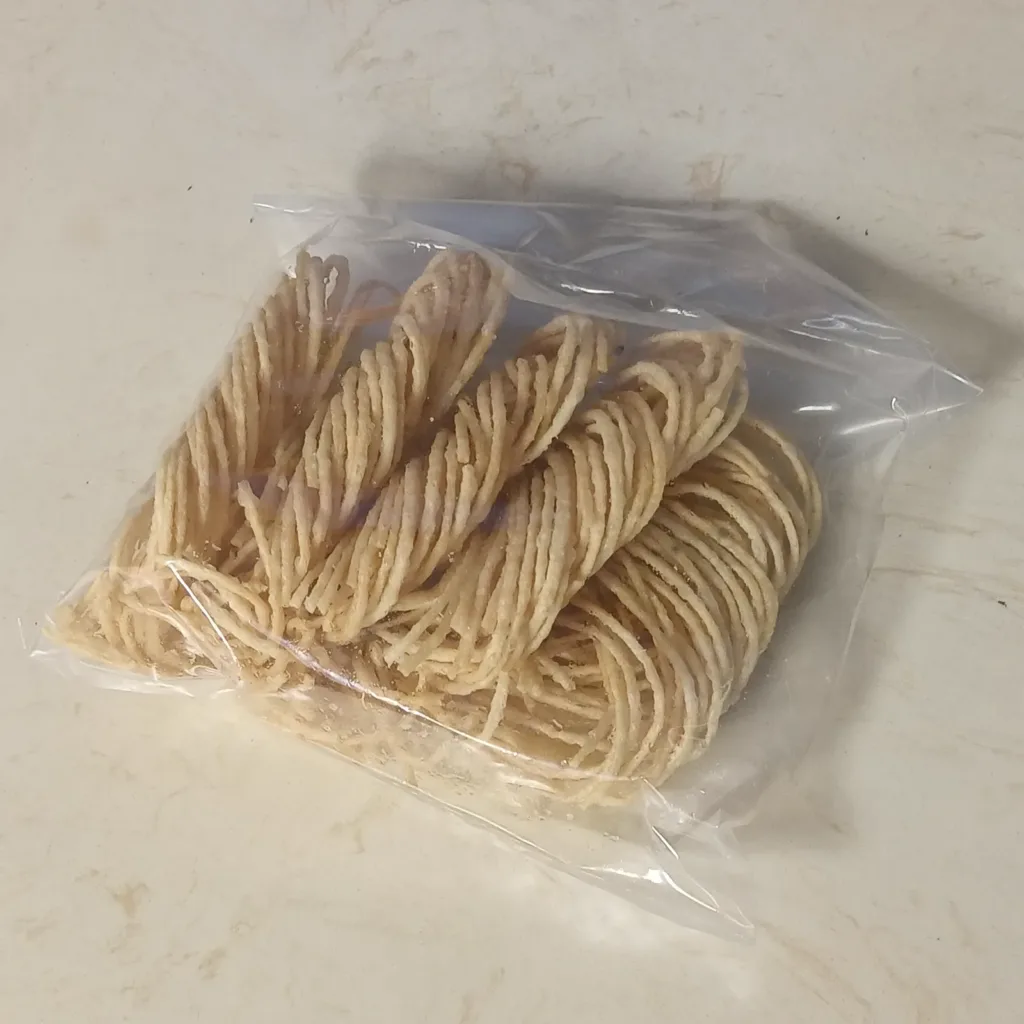
What it is
Sanzi is made by pulling wheat dough into narrow strands and frying them until dry, crisp and golden. Qinghai’s 2026 “Qinghai Family Feast” list describes it as a finely made fried pastry served for festivals, hospitality and tea. An English guide to Qinghai describes it as a festival food associated with Hui and Salar Muslim communities.
A Chinese cultural-resource profile of the Salar people likewise lists sanzi among foods made for major festivals and gatherings, and among foods offered to guests.
The name covers a regional food tradition rather than one fixed Yinchuan recipe. That matters at the counter: a nest, loose bundle or other shape can all be sold as 馓子, and the seasoning may be mild rather than sweet or salty. Try it for the contrast between a brittle outside and the toasted aroma of fried wheat, not because every shop follows the same formula.
From dough to crisp strands
The common method is straightforward but delicate. Wheat flour is mixed with oil and, in one Qinghai description, crushed Sichuan peppercorns. The dough is kneaded, pulled into long thin strands and lowered into hot oil. The strands need to reach a crisp golden brown; taken out early they remain undercooked, while over-frying gives them a burnt flavour.
Published recipes show why the ingredient list should not be treated as universal. A teaching recipe from the Penn Museum’s Silk Road material, focused on a Xinjiang example, also includes egg white with flour, oil and Chinese prickly ash. That is a regional example, not a specification for every serving in Yinchuan. If wheat, egg, pepper or shared frying oil matters to you, ask before ordering.
How it fits Yinchuan’s food culture
Yinchuan’s traditional fried pastries are part of an everyday food culture rather than only a festival display. A 2021 food-program page for Yinchuan calls out “oilxiang sanzi” and places the snack within the city’s traditional pastry life. A Ningxia government food feature likewise lists crisp sanzi beside gaiwan tea in Wuzhong’s breakfast spread, showing how the snack can sit with tea and other small dishes across the region.
Taste and dietary questions
Expect a dry, light crunch with a roasted wheat note. The Qinghai description presents sanzi as neither inherently sweet nor salty, but local portions can differ. Start with a small piece and let it break cleanly; the loose strands are also easy to share with tea.
Sanzi is not automatically vegetarian, egg-free or free of allergens. Wheat flour contains gluten, some recipes use egg, and the frying oil and preparation area may vary. The name or a Hui- or Salar-associated food setting also does not by itself confirm a particular shop’s certification. Ask about ingredients and preparation when that distinction matters.
Where to eat it
You can find Sanzi all over Qinghai, so there is no need to seek out one particular restaurant. To find one near you, search for “馓子” in Meituan (美团) or Amap (高德地图) and check recent reviews, distance and opening hours.
More dishes to compare
Explore related local specialties and compare their names, preparation notes and ordering guidance.
Niangpi noodle sheets 酿皮 →
A flour or starch batter is steamed into sheets, cooled and sliced, then dressed with savory condiments. Wheat-based versions may be served with separate pieces of gluten, but ingredients vary. The sheets are smooth and elastic, with the dressing contributing sourness, chili heat and aromatic richness. Gluten adds a spongier bite when included.
Dawukou cold wheat noodles 大武口凉皮 →
Wheat-based noodle sheets are cooked, cooled and cut into broad strips, then tossed with chili oil and savory seasonings. Gluten pieces or vegetables may accompany the sheets depending on the shop. The strips are smooth and chewy, carrying a vivid sour-spicy dressing. Crunchy additions interrupt the otherwise slippery texture.
Sources & reading
Recipes and servings vary between kitchens.
Image credits & notes (1)
- A bag of Wang's sesame-oil tea sangza (馓子), photographed in Changzhou, China; a regional food example, not a Yinchuan venue or local brand. Photo: François NguyenPhoto: CC BY 2.0