

Niangpi noodle sheets 酿皮
Xining niangpi (酿皮) is a cool, wheat-based sheet snack whose smooth ribbons are dressed with chili oil, vinegar, garlic and other seasonings, then paired with springy pieces of wheat gluten; it is a practical way to taste Qinghai’s everyday food culture rather than a fixed recipe.
Tap any red Chinese text to hear it in Mandarin.
What you are tasting
Niangpi is a traditional Qinghai snack with a strong place in everyday Xining food culture. The sheets are cut into long strips and dressed rather than served as a soup. Expect supple, smooth ribbons carrying sourness, chili heat and garlic or chive aromas, with pieces of separately cooked wheat gluten adding a springier bite. The seasoning balance and the amount of gluten vary from one stall or kitchen to another.
A bowl is often eaten cool, although local descriptions also note that niangpi can be served hot or cold. The point is the contrast: soft, elastic sheets, a sharp dressing and a little chewy gluten. It is filling enough to stand in for a simple meal, but it also works as a small cold dish.
How it is made
A common Qinghai method starts with a wheat-flour dough. The dough is kneaded and washed in water until the starch separates from the gluten. The remaining gluten is cooked on its own. The starch water is allowed to settle, then the thickened batter is cooked into a sheet—either steamed on a cloth-lined steamer or cooked in a metal pan over a water bath—before it is cut into strips and dressed.
The two cooking methods create a useful texture difference. The Qinghai reference describes steamed sheets as darker, thicker and more substantial, while the water-bath method produces sheets that are yellower, brighter, thinner and more tender. The same basic process can therefore produce noticeably different bowls before the sauce is even added.
Local roots and variation
Xining’s niangpi belongs to a wider Qinghai food tradition that also appears in Gansu and the Linxia area, so it is better understood as a regional style than as a dish with one exclusive birthplace. Recent local reporting describes niangpi as a long-standing part of Xining’s street-food life, with recipes shaped by the cook, the season and the ingredients available for the dressing.
Look for the details that change locally: the strength of the vinegar, the colour and heat of the chilli oil, the freshness of the chives and garlic, and whether the gluten is cut into generous or modest pieces. Comparing two bowls can be more revealing than searching for a single “authentic” formula.
How to order
Show the Chinese name 酿皮 Niàngpí when ordering. Ask what flour base is used, whether wheat gluten is included, and how much chilli you want before the ingredients are mixed. Local Qinghai descriptions list vinegar, chilli oil, mustard, chives and garlic among possible accompaniments, but a stall may use only some of them.
If you avoid wheat or gluten, do not assume that a pale, starch-like sheet is safe: the standard local method starts with wheat dough and commonly serves the separated gluten alongside it. Ask about the sheets, gluten and seasonings as a set. The Chinese name is the clearest way to order; local reporting notes that the first character is commonly read rang in Qinghai speech.
More dishes to compare
Explore related local specialties and compare their names, preparation notes and ordering guidance.
Louyuzi starch drops 漏鱼子 →
A cooked starch mixture is passed through holes into cool water, forming small tapered pieces that resemble fish. The set pieces are served with a savory liquid dressing. They are smooth, slippery and mildly flavored, with garlic, vinegar and chili providing most of the taste. Their small size makes a spoon useful.
Qinghai sanzi noodle nests 馓子 →
Dough is stretched into fine strands, arranged in loops or nests and deep-fried until golden. The strands are kept separate enough to form a light, open structure. Sanzi is brittle and crisp, with a toasted wheat aroma and little chew. A few strands can add crunch to a drink or soft meal.
Sources & reading
Recipes and servings vary between kitchens.
Image credits & notes (1)
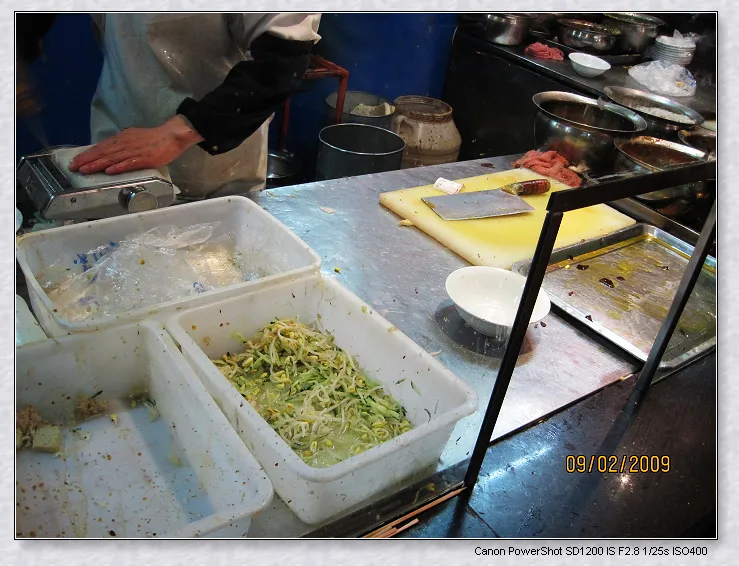
- A historical food-stall preparation scene associated with niangpi in Xining's Mojia Street area, photographed on 2 September 2009; it is a local-food context image, not evidence that the stall still operates. Photo: parodyfangPhoto: CC BY-SA 3.0