

Russian-style beet soup 俄式红菜汤
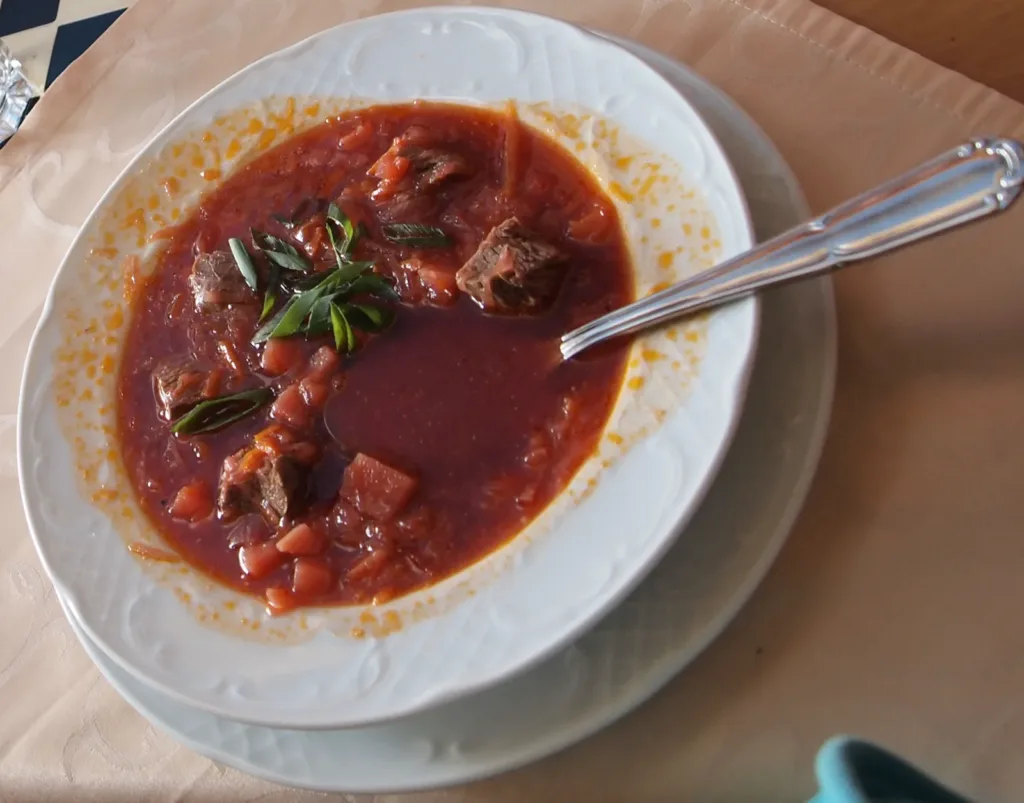
Harbin’s Russian-style beet soup is a hot beet-and-beef soup linked to the city’s Russian-influenced restaurant tradition. A 2026 Heilongjiang standard describes one regional reference preparation, with earthy beet sweetness, tomato acidity, beef stock and tender vegetables; individual kitchens may still vary.
What makes it a Harbin dish
In Chinese menus, you may see this soup as 俄式红菜汤, 罗宋汤 (luosong tang), or sometimes 苏泊汤. It is not a single restaurant’s proprietary recipe. Its place in Harbin comes from the city’s long Russian-style and Caucasian-influenced dining culture, where imported techniques and local Northeast tastes developed side by side.
On 14 July 2026, the provincial standard DB23/T 4056—2026, Longjiang Traditional Food: Harbin Russian-style Beet Soup, took effect. The standard is a technical reference for making the dish in Heilongjiang; it does not mean that every restaurant uses exactly the same recipe.
The reference preparation starts with beef ribs and a beef-leg-bone broth. Beetroot, onion, carrot, potato, cabbage and celery build the vegetable base, while tomato paste adds acidity. The method cooks the stock gently, sautés the tomato paste and vegetables, then simmers the ingredients together. That sequence explains the bowl’s usual combination of a deep red-purple colour, earthy sweetness, savoury broth and soft vegetable texture.
How to eat it
The standard’s serving guidance recommends the soup hot, at 50–70°C, with bread. Tear off a piece of bread and dip it into the broth if that is how the restaurant serves it. The target profile is balanced rather than simply sweet or sour: beetroot and tomato should be noticeable, while the beef broth gives the soup weight. A restaurant may finish its version with light cream and lemon juice, but this is not a guarantee for every bowl.
Do not treat the red colour as proof that the soup is vegetarian or dairy-free. Ask what meat is in the stock, whether cream or another dairy ingredient is added, and whether bread is included. The standard describes one regional version, while Harbin’s restaurants can differ in seasoning, thickness, garnish and presentation.
Where to eat it
You can find Russian-style beet soup all over Heilongjiang, so there is no need to seek out one particular restaurant. To find one near you, search for “俄式红菜汤” in Meituan (美团) or Amap (高德地图) and check recent reviews, distance and opening hours.
More dishes to compare
Explore related local specialties and compare their names, preparation notes and ordering guidance.
Northeastern mixed vegetable & pork stew 东北乱炖 →
The meat and aromatics are started first where used, then the vegetables simmer together until tender. Cooks adjust the timing so denser potatoes and beans cook through while softer vegetables give body to the broth. The flavour is savoury and homely, with different vegetables contributing sweetness and texture. Corn can remain juicy, potato softens and aubergine absorbs the seasoning; the dish is about their combination rather than perfectly separate pieces.
Yichun wild-greens dumplings 伊春山野菜水饺 →
Seasonal edible greens are chopped into a filling, sometimes with meat, wrapped in wheat dough and boiled. The type of green is central to the dumpling's identity and should be stated by the restaurant. The wrapper is soft and chewy, while the filling may be herbal, earthy or gently bitter depending on the plant.
Sources & reading
Recipes and servings vary between kitchens.
- National Standard Information Public Service Platform: DB23/T 4056—2026
- Life Daily: Harbin Russian-style beet soup receives an official standard
- Xinhua: TATOC, Harbin’s first western restaurant, carries on a dining tradition
- Harbin Daily: More than 40 Russian restaurants along the century-old street
- Local food reference
Image credits & notes (1)
- A bowl of borscht with beef and vegetables, photographed in a restaurant in Kryvyi Rih, Ukraine; an illustrative regional-soup image, not a Harbin restaurant photograph. Photo: Tiia Monto (Wikimedia Commons user Kulmalukko)Photo: CC BY-SA 3.0