

Biangbiang Belt Noodles biangbiang面
A signature bowl to seek out in Xi’an, biangbiang mian pairs broad, chewy wheat noodles with bold Shaanxi-style seasonings. The dish belongs to the wider Guanzhong and Shaanxi food culture, not to Xi’an alone.
Tap any red Chinese text to hear it in Mandarin.
A Xi’an favourite with regional roots
Biangbiang mian is a familiar Xi’an noodle specialty, but it is also widely associated with the surrounding Guanzhong region and Shaanxi. Xinhua describes the noodle as a hand-made, belt-wide food circulating in Guanzhong towns and countryside; a People’s Daily Overseas report likewise identifies it as a traditional Guanzhong hand-pulled noodle and recounts a preparation example from a Xi’an restaurant. These accounts support its place in Xi’an food culture without making it an exclusive city invention.
The name’s unusually intricate “biang” character is part of its local cultural presence. A widely recited Guanzhong mnemonic teaches how to draw the character, but stories about who invented it or what its strokes originally meant vary. Enjoy the character as a playful food-culture marker rather than a settled historical explanation.
What is in the bowl
The defining element is the noodle: wheat-flour dough, usually mixed with water and a little salt, is kneaded and rested so it can stretch without tearing. A cook portions and oils the dough, then presses, pulls and stretches each piece into a long, broad strip before boiling it. Width and thickness vary by kitchen, but the result should feel substantial and springy, with a pleasantly chewy centre rather than the delicate slurp of a thin noodle.
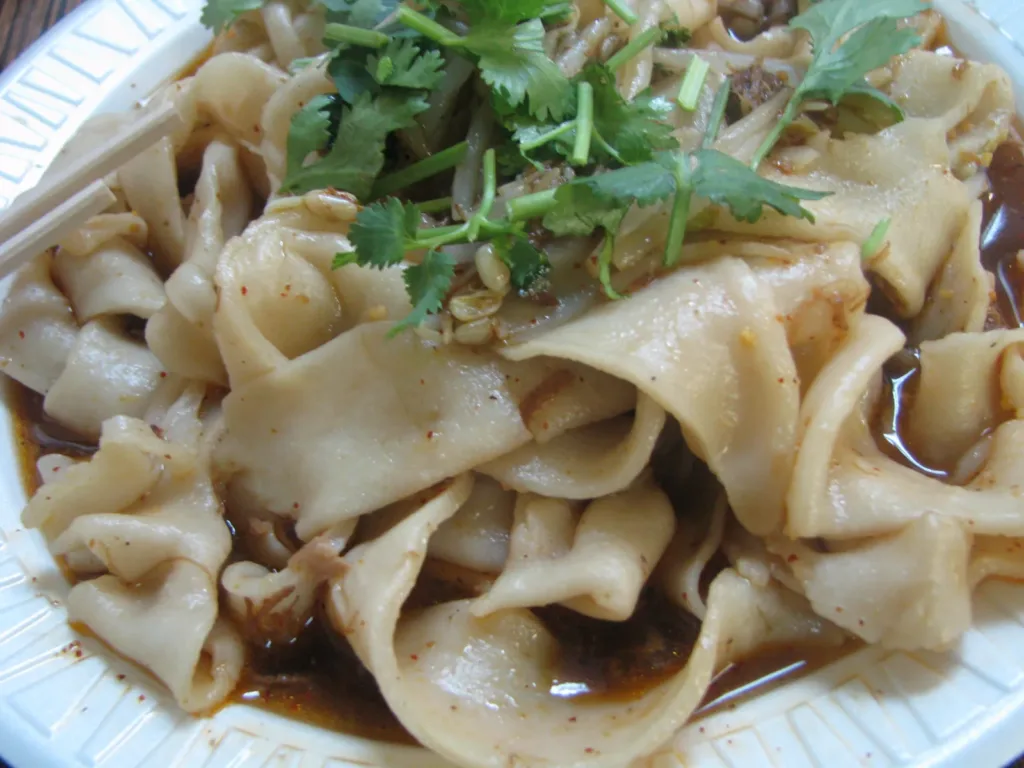
A common way to finish it is youpo (油泼): cooked noodles are topped with ingredients such as chilli flakes, chopped garlic and scallions, then hot oil is poured over them. The oil sizzles against the aromatics, releasing a vivid, savoury fragrance and coating the folds. Many bowls also use soy sauce and black vinegar, giving the chilli heat a salty, tangy balance; some preparations add Sichuan pepper or other seasonings. The surface can look red with chilli oil and green with scallions, while the wide strands carry both the aroma and sauce in each bite.
Recipes and restaurant bowls are not uniform. Some are served with greens; others add a tomato-based topping or a meat saozi (臊子), a finely prepared savoury topping. A youpo dressing describes the hot-oil treatment, not a mandatory set of toppings, and the name biangbiang mian alone does not tell you whether a bowl contains meat.
How to order and eat it
At a noodle shop, look for biangbiang面 on the menu. If you want the hot-oil version, ask whether it is 油泼 yóupō. Check whether the bowl includes pork or another meat, and ask about chilli before ordering if you are avoiding either; a meat-free-sounding dish name is not a dietary guarantee. Kitchens differ, so treat any online recipe as one example rather than a city-wide standard.
The broad strands are easier to eat after stirring the dressing through the bowl. Lift a manageable section with chopsticks and bite through it as needed; add table vinegar or chilli gradually if offered. Expect a filling, chewy mouthful, bright chilli aroma and—when vinegar is used—a tart edge.
Where to eat it
You can find Biangbiang Belt Noodles all over Xi’an, so there is no need to seek out one particular restaurant. To find one near you, search for “biangbiang面” in Meituan (美团) or Amap (高德地图) and check recent reviews, distance and opening hours.
More dishes to compare
Explore related local specialties and compare their names, preparation notes and ordering guidance.
Shaanxi Hot-Oil Noodles 油泼面 →
Youpo mian (油泼面) are cooked noodles finished with a sizzling hot-oil dressing. The defining action is pouring the oil over the prepared bowl, releasing the aroma of its seasonings.
Shaanxi Saozi Noodles 臊子面 →
Saozi mian (臊子面) are noodles served with a finely cut topping and broth. The Qishan-style preparation reviewed here combines pork saozi with a sour, spicy soup and small pieces of vegetables and tofu.
Sources & reading
Recipes and servings vary between kitchens.
Image credits & notes (1)
- Biangbiang mian, close-up; illustrative example, not a standard recipe or serving guarantee. Photo: Diadoco (credited on Wikimedia Commons)Photo: CC BY 2.0