

Shengzhou steamed buns 嵊州小笼包
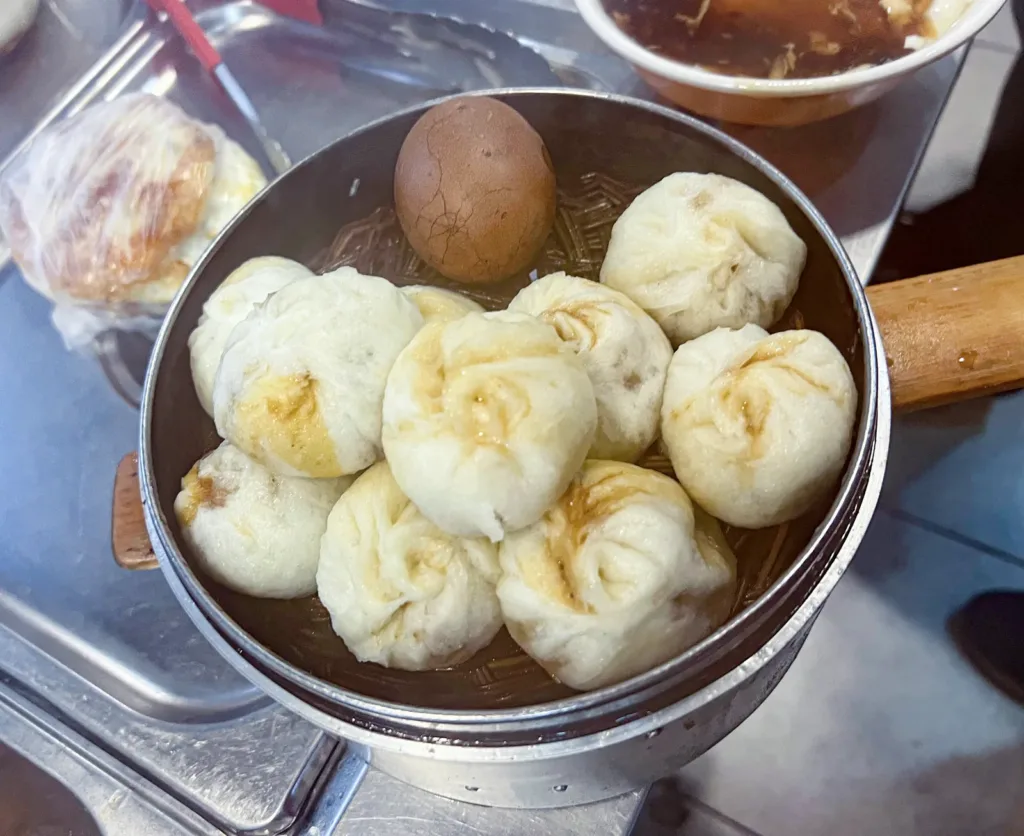
Shengzhou steamed buns are yeasted, hand-pleated breakfast buns associated with Shengzhou in Shaoxing. Their fuller wrapper carries a savoury meat filling rather than the broth-filled centre many visitors expect from Shanghai-style xiaolongbao, so the Chinese name is worth keeping ready when you order.
Tap any red Chinese text to hear it in Mandarin.
What makes them different
The useful distinction is texture. Shengzhou xiaolongbao use a risen wheat wrapper, so the bite is softer and more substantial than a thin-skinned soup dumpling. A Xinhua feature describes the Shengzhou style as meat-filled but without soup; do not order it expecting a pocket of hot broth.
Local production standards preserve an old-dough fermentation process and hand pleating. The standards describe no added baking powder, a skin-to-filling ratio of about 6:4, steaming for 8–10 minutes over boiling water, and a “carp-mouth” seal with 16–22 pleats. These are a useful description of the target style, not a promise that every breakfast shop follows exactly the same specification. A local producer profile likewise describes naturally fermented old dough and hand production, while giving one maker’s fermentation time rather than a universal clock.
The traditional choice is pork. Contemporary outlets can add other fillings: a 2025 report from Shaoxing recorded a pork version alongside a cilantro-and-beef version in a limited breakfast promotion. Treat those as separate filling choices, not as proof that every basket is mixed.
How to order and eat them
Show 嵊州小笼包 Shèngzhōu xiǎolóngbāo when ordering. Ask 什么馅? (What filling?) before choosing several baskets, especially if you need to avoid pork or have an allergy. A small basket is a sensible first order: the wrapper is filling, and the steamed buns are best judged while fresh. The local standards give 5–10 minutes after steaming as the preferred eating window.
Let one bun cool briefly, then taste the filling before adding vinegar or chilli. If you are taking them away, loosen a tightly closed container when appropriate so trapped steam does not soften the wrapper further.
Name and local scope
Shengzhou steamed buns are a food associated with Shengzhou, within Shaoxing, rather than a generic translation for every small steamed bun in Zhejiang. The place name matters when ordering: “xiaolongbao” can otherwise lead visitors toward Shanghai-style soup dumplings with a different wrapper and filling style. Shengzhou’s buns are part of an everyday breakfast tradition that has also travelled far beyond the city through local food shops.
The wheat wrapper and meat filling mean this is not a vegetarian order by default. Recipes and shop offerings vary, so confirm the filling and seasonings with the vendor instead of relying on the appearance of the bun.
Where to eat it
You can find Shengzhou steamed buns all over Zhejiang, so there is no need to seek out one particular restaurant. To find one near you, search for “嵊州小笼包” in Meituan (美团) or Amap (高德地图) and check recent reviews, distance and opening hours.
More dishes to compare
Explore related local specialties and compare their names, preparation notes and ordering guidance.
Huzhou tofu-skin parcels 湖州千张包 →
Thin sheets of tofu skin are wrapped around a minced savory filling and cooked, often in broth. The wrapper absorbs soup while holding the filling together in a compact parcel. The skin is tender with a slight bean-like chew, contrasting with the juicy, finer filling and light surrounding liquid.
Shaoxing fried fermented tofu 绍兴臭豆腐 →
Tofu is fermented in a seasoned brine, then fried so the surface turns crisp while the inside remains soft. The brine tradition and frying method differ between makers. The aroma is forceful and fermented, but the interior can taste milder and creamier than the smell suggests. A dip adds sweetness, salt or heat.
Sources & reading
Recipes and servings vary between kitchens.
Image credits & notes (1)
- Shengzhou-style xiaolongbao with a tea egg at a restaurant near Wanshousi, Beijing, photographed on 13 March 2023; shown as a regional dish illustration, not as a Shengzhou-local shop photograph. Photo: N509FZPhoto: CC BY-SA 4.0