

Shishan goat hotpot 石山壅羊火锅
Shishan goat hotpot is a Haikou-area communal meal built around the locally named Shishan goat. A bone-based broth, thin slices of skin and meat, and Hainan-style dipping sauces mark it as a local Shishan style rather than a generic mutton hotpot; it is especially associated with the volcanic countryside of Shishan in southwestern Haikou.
Tap any red Chinese text to hear it in Mandarin.
What makes it a Shishan dish
Shishan is a town in Haikou’s Xiuying District, around the Ma’anling volcanic area. Local tourism and food accounts connect the goat with volcanic ground and selected grasses, while describing the dish as one of the area’s food traditions. This is a regional identity, not a promise that every restaurant uses the same cuts or stock.
The name can be confusing in English because 羊 can be translated as either goat or sheep. For this dish, keep the local name visible: 石山壅羊火锅 Shíshān Yōngyáng Huǒguō. Some local pages print the variant 石山雍羊 Shíshān Yōngyáng, so searching with both characters can help when looking for a menu or restaurant.
What arrives at the table
The classic sequence starts by simmering chopped goat bones for stock. Local descriptions add fresh bamboo shoots and pickled greens, then cook thin slices of skin and meat in the broth. Older published accounts list additions such as red dates, codonopsis, goji berries and radish; treat those as one recorded style, not a fixed formula.
At some meals, pieces of liver, tripe or blood arrive as extra cuts, followed by greens, tofu, glass noodles or mushrooms. A 2023 report describes a Shishan restaurant using locally grown dendrobium in the broth and serving fresh goat pieces with a dipping sauce. That is a restaurant-specific variation, not a standard recipe.
The local selling point is tender skin and meat with little mutton odour, together with a broth that becomes fuller as the meal progresses. Because the animal’s age, cuts, pre-marinade and stock differ between kitchens, read those descriptions as a guide to the style rather than a guarantee of every bowl.
How to order and eat it
Show 石山壅羊火锅 Shíshān Yōngyáng Huǒguō when ordering. Ask what is included in the pot—meat, bone, skin, offal and vegetables—and how the portion is priced. Local descriptions list 什锦酱 Shíjǐn Jiàng, ginger-and-garlic sauce, soy-based dipping sauce and chilli as possible accompaniments; use them to adjust salt, sourness and heat.
This is a sharing dish. Cook the meat in batches, then add vegetables, tofu or noodles to the remaining stock. Do not assume that a menu labelled goat hotpot is identical to the Shishan style: restaurants may offer white-cut, red-braised or medicinal-stewed goat alongside the hotpot.
If you avoid pork, chicken, sesame, peanuts or other ingredients, ask about both the stock and the dipping sauces before eating. One older published recipe uses pork bones and chicken in the stock and sesame- and peanut-based seasoning; those ingredients are not visible from the name of the dish.
Where to eat it
You can find Shishan goat hotpot all over Hainan, so there is no need to seek out one particular restaurant. To find one near you, search for “石山壅羊火锅” in Meituan (美团) or Amap (高德地图) and check recent reviews, distance and opening hours.
More dishes to compare
Explore related local specialties and compare their names, preparation notes and ordering guidance.
Coconut chicken hotpot 椰子鸡 →
Chicken pieces are simmered in coconut water, often with coconut flesh and additional aromatics. Diners may add other ingredients after the chicken has cooked. The broth is gently sweet and clear-tasting, with chicken richness developing as the meal continues. A separate dipping sauce adds salt, citrus and spice to the meat.
Dongshan goat 东山羊 →
Dongshan goat is prepared in several ways, including a slow braise or a concentrated dry-pot style. The meat is cooked with seasonings until tender, with the chosen cut determining how much skin and bone remain. Expect a distinct goat flavor, savory richness and sometimes a gelatinous edge. A dry-pot version is more concentrated than a soup.
Sources & reading
Recipes and servings vary between kitchens.
Image credits & notes (1)
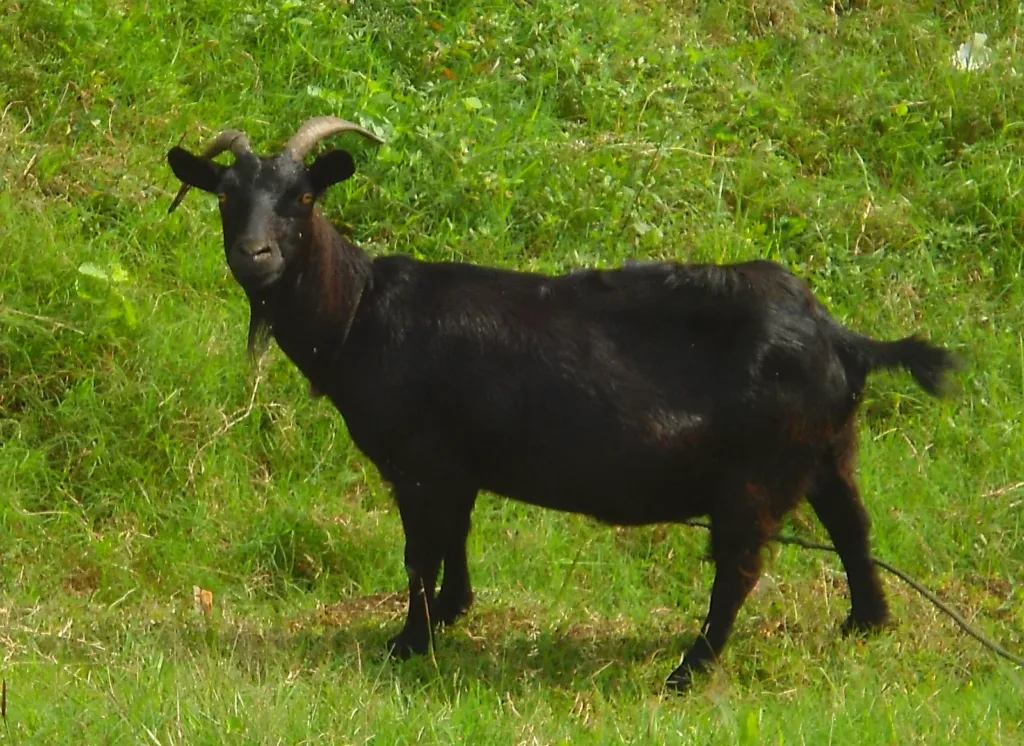
- A typical black goat in Hainan, photographed as regional ingredient context for Shishan goat hotpot; this is not a photograph of the finished dish or a specific restaurant. Photo: Anna FrodesiakPhoto: CC0 1.0