

Sichuan mixed-spice broad beans 怪味胡豆
Crunchy broad beans coated in a sweet, salty, chilli-and-pepper glaze make a portable Chongqing-associated snack; recipes and seasoning balance vary by maker.
Tap any red Chinese text to hear it in Mandarin.
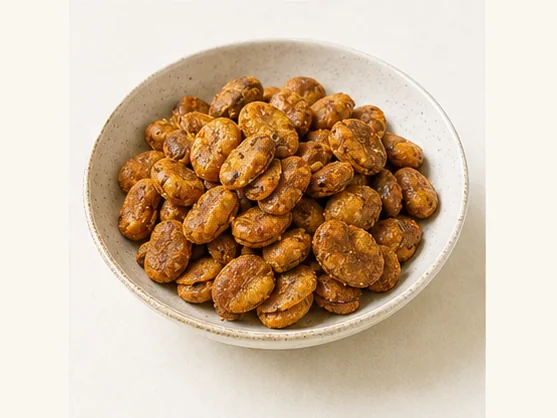
Guaiwei hudou are dried broad beans—also called fava beans—fried until crisp and coated with a rough, set layer of mixed seasoning. “Guaiwei” describes a deliberately layered taste rather than an unidentified ingredient: sweetness and salt meet chilli warmth and the fragrant, tingling numbness of Sichuan pepper. The result is crisp, savory-sweet and aromatic, with a firm bean at the center and a craggy coating that catches on the tongue. The color ranges from golden to brown according to the batch and glaze.
Chongqing has a well-documented connection to the snack: Chongqing food makers sell locally produced versions, including products from both Zhima Guan and Yuxiong. That establishes a strong local food association, but does not prove that Chongqing is its exclusive birthplace or that every maker follows one citywide formula. A maker-specific account describes Yuxiong’s process as soaking and opening the beans, frying them, preparing a cooked sugar coating, mixing in seasonings, then cooling the coated beans. Treat that as one producer’s method, not a universal recipe.
The basic mechanism is straightforward: soaking softens the bean; opening the skin helps it cook; frying dries and crisps it; and a hot sugar-based glaze carries the seasonings before cooling hardens the outer shell. A published process example also blanches and dries the beans before frying, then mixes them with syrup, spices and sesame. A separate home-style recipe uses sugar, chilli, five-spice powder and Sichuan pepper. These are examples of variation, not a definitive standard.
Expect the sweetness, salt, chilli heat and peppery numbness to shift from one brand or batch to another. Some versions add sesame or other seasoning ingredients. Enjoy a few at a time with tea or as a snack between meals; the hard, crunchy beans are more like a coated savoury nibble than a soft cooked bean dish. Ask for 怪味胡豆 guàiwèi húdòu when buying. There is no single restaurant or serving counter that defines the food, so choose a sealed pack from a current retailer and check its ingredient and allergen label if needed.
More dishes to compare
Explore related local specialties and compare their names, preparation notes and ordering guidance.
Northern Sichuan jelly noodles 川北凉粉 →
Starch is cooked with water into a smooth mixture, cooled until set and cut into thick strips. The jelly is dressed with chili oil, garlic and other savory seasonings. The cool, slippery pieces have a tender but defined bite, carrying a much stronger dressing than their mild base flavor. Chili and fermented seasonings supply depth.
Luodai sorrowful jelly noodles 伤心凉粉 →
Starch jelly is cooked, set and cut into pieces, then dressed with a forceful chili mixture and aromatics. The exact starch base and toppings vary by stall. The cool jelly is smooth and mild, while the dressing brings heat, acidity and sometimes numbing pepper.
Sources & reading
Recipes and servings vary between kitchens.