

Guang'an Baked Cake 广安烘糕
Guang'an Baked Cake is featured among the local specialties of Sichuan.
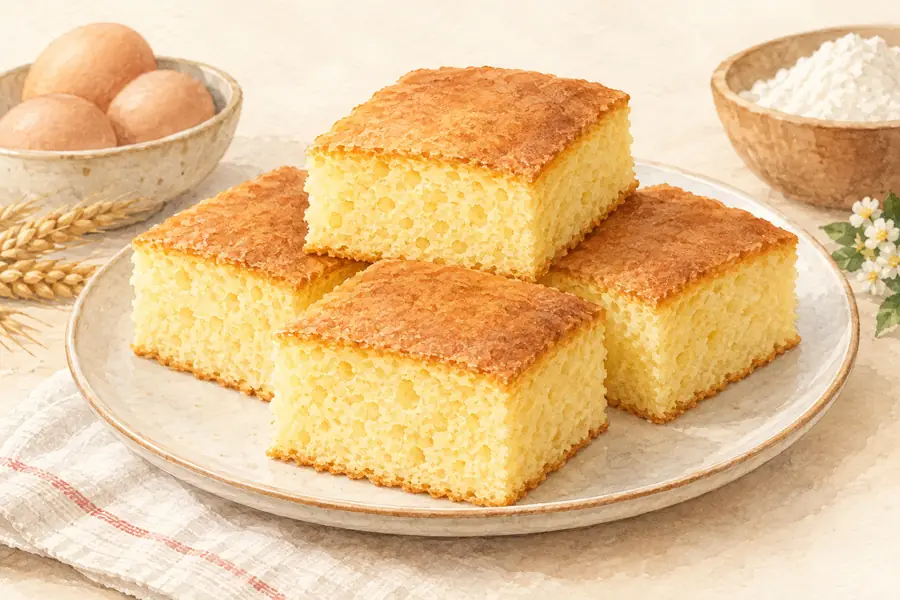
Guang'an Baked Cake (广安烘糕) is a cake-type snack catalogued for Guang'an, Sichuan, and its name describes the method: 烘 is dry heat, 糕 a dense cake in slices.
Dry heat and a firm crumb
Cakes in the 糕 family are made from a batter or a dough that is set with heat, and the character in front of 糕 says how that heat arrives. 烘 means baking or toasting, so the surface dries and colours instead of staying pale as it would under steam. The result is firmer than a sponge: the crumb is close, the outside slightly toasted, and the cake slices without crumbling. Denser mixtures also keep longer, which is why this kind of snack travels well.
What it tastes like
Expect a restrained sweetness and a texture closer to a firm slice than to a soft dessert. The toasted surface carries most of the aroma, so a fresh one smells of roasted grain, while an old one tastes dry and flat. If the cake is plain, the flavour comes from the grain itself; if it is sweetened, from sugar, syrup or a filling. Either way it is eaten in small pieces rather than as a large portion.
The city in the name
广安烘糕 begins with Guang'an, so the label identifies a local version of a widely known snack rather than a unique category. The useful part for a visitor is the second half: 烘糕 tells you to look at the bakery counter, not at the cooked-dish section of a menu. Local style sits in the proportions and the finish, which is exactly what the name does not record.
Ingredients and dietary checks
A cake of this type is built on grain flour, water or milk, sugar, and often a little fat or egg, with leavening if the crumb is meant to be light. Filling, if present, changes the picture completely. If you avoid wheat, dairy, egg or nuts, the questions to ask are 是什么做的 (what is it made from), 有鸡蛋吗 (is there egg) and 有坚果吗 (does it contain nuts). Sweetness is worth asking about too, since 甜 or 咸 is not visible on the outside.
How to buy it
Say or show 广安烘糕 and ask 怎么卖 (how is it sold); these snacks are usually weighed out in slices or blocks rather than plated. Ask 是甜的还是咸的 (sweet or savoury) and 有馅吗 (is there a filling) before choosing an amount. If it is going to be carried, ask 能放几天 (how many days will it keep), and prefer a piece that is packed at the counter over one left open on a tray.
Eating it through the day
This is breakfast or between-meals food rather than a dessert course. It works with plain tea or soy milk, and because the crumb is dense, a small piece is filling. At a table it can be sliced thin and set out with other cold snacks, but it is not something that needs a meal built around it.
More dishes to compare
Explore related local specialties and compare their names, preparation notes and ordering guidance.
Egg-baked filled pancakes 蛋烘糕 →
Egg-baked filled pancakes (蛋烘糕) are the neighbouring entry: small cakes cooked to order and folded around a filling, so they arrive hot and soft with a savoury or sweet centre. A baked cake of the Guang'an type is the opposite in style, firm and dry enough to carry home. One is cooked to be eaten immediately; the other is made to keep. Both are bought from a snack counter rather than ordered as dishes.
Questions before you order
Is 烘糕 a dessert?
It is usually eaten as a snack or breakfast item with tea rather than as a dessert course, and it can be plain or lightly sweet. Ask 是甜的还是咸的 (sweet or savoury) at the counter.
Does it contain wheat?
That depends on the maker, since the base may be rice flour, wheat flour or a blend. Ask 是什么做的 (what is it made from) if you avoid wheat.
Sources & reading
The supplied food list supports this name and regional association. The culinary terms below are explained as menu vocabulary; a local recipe, origin story and venue availability have not been independently verified.