

Leibo Fish with Water Shield 雷波莼菜鱼
Leibo Fish with Water Shield is featured among the local specialties of Sichuan.
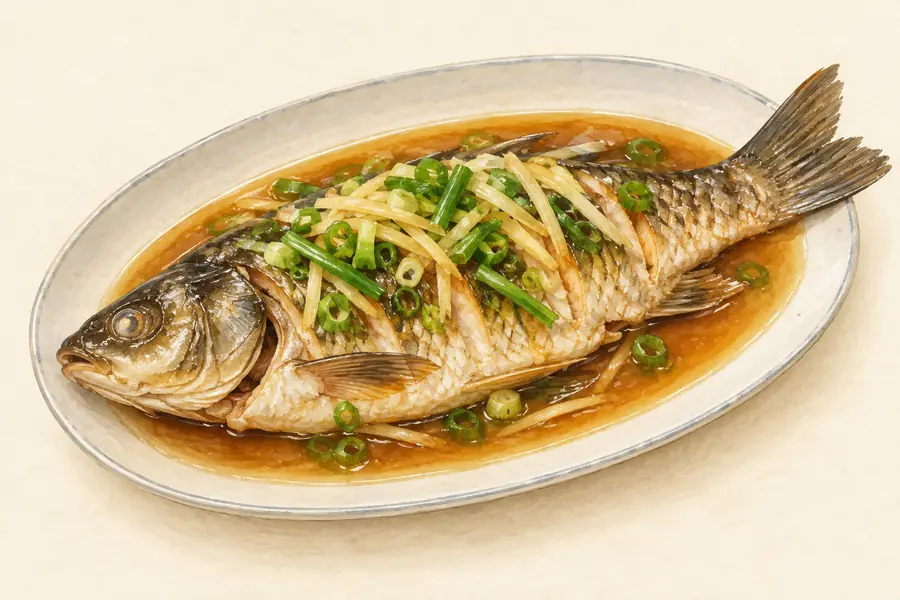
Leibo Fish with Water Shield (雷波莼菜鱼) joins Leibo county with 莼菜, water shield, and 鱼, fish: a dish built from an aquatic vegetable and a river fish together.
Fish in the broth, greens at the end
The fish is cooked in a light broth or braised gently, and the water shield goes in only at the end. That order matters: the shoots are tender and their coating is what makes them interesting, so long cooking turns them to nothing.
Because the greens are delicate, the dish is finished quickly and served straight away. Ask whether the fish is cooked whole or in pieces, since that decides how long it takes and how the bones are handled at the table.
Slippery greens, clean broth
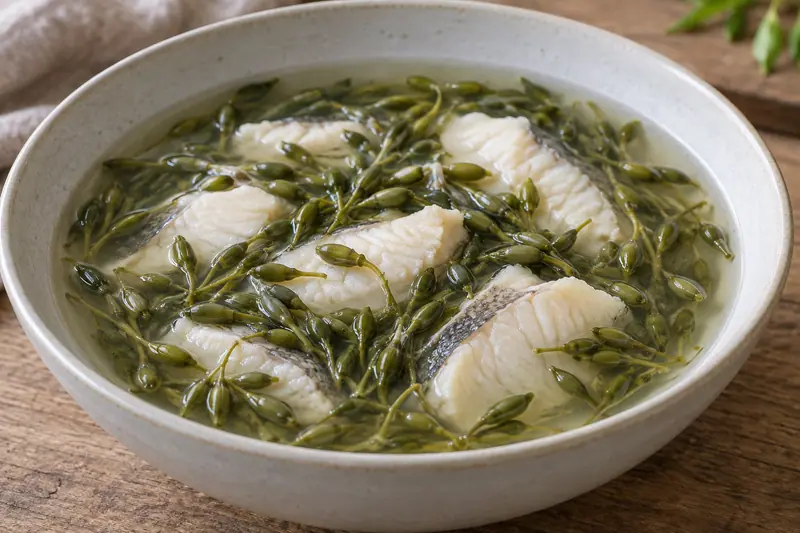
Water shield shoots are soft and faintly gelatinous, and they slip rather than crunch. The broth underneath is usually light and slightly sweet from the fish, which keeps the whole dish mild.
Chilli, if it appears at all, is added sparingly so as not to hide the greens. If the bowl arrives heavily spiced, ask for less next time; the point of the dish is the texture.
Leibo on the Jinsha river
Leibo is a county in southern Sichuan, in the mountains above the Jinsha river, where cool running water and still ponds suit both fish and aquatic vegetables. It is better known for its mountains and rivers than for its kitchens, which is why this is a dish you come across rather than one you read about.
Water shield is a seasonal crop rather than a year-round one, so the dish is at its best when the shoots are in condition rather than whenever it appears on a menu.
Two things and a broth
The name commits to water shield and fish. The broth, the aromatics and any garnish belong to the kitchen, so two versions of the dish can taste quite different while keeping the same name.
If you avoid fish or are unsure about river fish with fine bones, ask which species is being used today. Some are much easier to eat than others.
Asking for it
Ask whether it comes as a soup or as a braised plate, and whether it is served in one bowl for the table or in individual portions. 清汤 asks for a clear broth rather than a spiced one.
If more than two people are eating, order a larger fish rather than two small ones, because two fish mean twice the bones and half the meat per person. Say 不要辣 if you want the broth as it is.
At the table
It is served hot in a bowl or a shallow dish, and the greens are eaten with a spoon because they are too slippery for chopsticks. Work through the fish from one end, lifting the flesh away from the frame. The bones are fine and need attention more than force.
This is not a dish to reheat. Once it has stood, the greens lose their coating and the fish firms up, so order an amount the table will finish.
More dishes to compare
Explore related local specialties and compare their names, preparation notes and ordering guidance.
Xichang Drunken Shrimp 西昌醉虾 →
Xichang Drunken Shrimp (西昌醉虾) is a cold dish of small shrimp served in a seasoned liquid, where 雷波莼菜鱼 arrives hot and broth-based. Both come from southern Sichuan cooking and both rely on freshness, but one is served cool and sharp and the other warm and mild.
Questions before you order
What is 莼菜?
It is water shield, an aquatic vegetable whose shoots are soft and slightly slippery rather than crunchy.
Does the dish come as a soup?
It can. Ask when you order, because some kitchens serve it braised with only a little sauce.
Sources & reading
The supplied food list supports this name and regional association. The culinary terms below are explained as menu vocabulary; a local recipe, origin story and venue availability have not been independently verified.