

Cold Spicy Beef 冷吃牛肉
Cold Spicy Beef is featured among the local specialties of Sichuan.
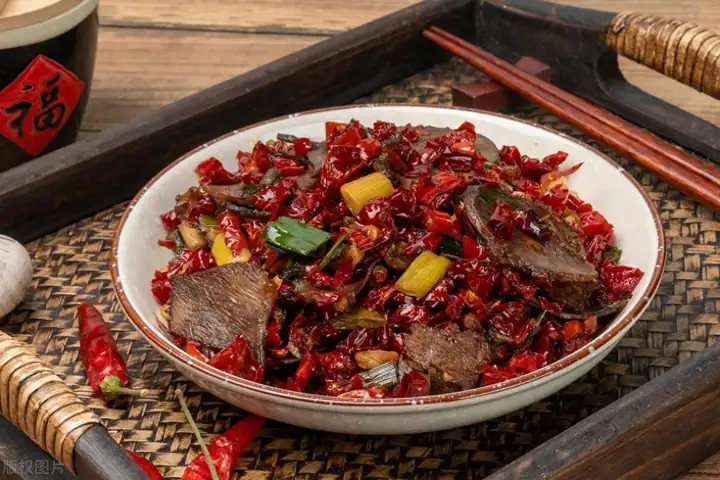
Image notes
Resized for the web; the photo itself has not been edited.
Cold Spicy Beef (冷吃牛肉) is Sichuan’s cold-eaten beef: 冷 means cold and 吃 is to eat, so the name states how the dish is served rather than how it is cooked.
Cooked down, then cooled
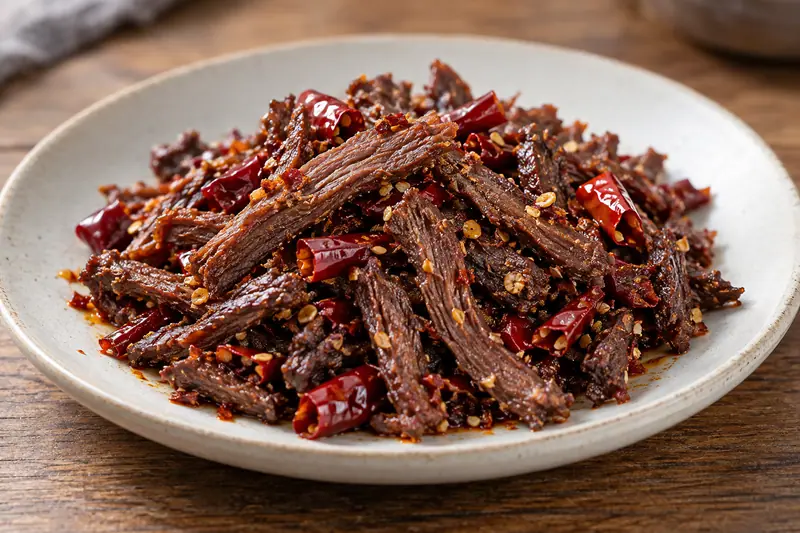
Beef is cut into strips or small pieces and cooked with aromatics, dried chilli and oil until most of the water has gone. What is left is meat suspended in a seasoned oil, and this is exactly what lets it keep without refrigeration for longer than a fresh stew would.
The cooking is slow rather than fast, because the aim is a piece that is firm and chewy rather than tender and juicy. Once the pan comes off the heat the dish is left to cool in its own oil, which is when the seasoning settles into the meat.
Salty, hot and firm
The flavour is savoury and direct, led by chilli and salt with a slight sweetness in the background, and the pieces resist the teeth in a way that hot braised beef does not. Sesame and Sichuan pepper often sit on top of that.
It firms up as it sits, so a batch eaten on the day it is made feels quite different from one opened a week later. Both are correct; it is just worth knowing which one you have.
A Sichuan cold dish with a long shelf life
Cold dishes are a fixed part of Sichuan eating, and this one crosses over from the table to the shop: it is sold packed and by weight, and it travels well.
That portability is the reason it turns up as a gift and a travel snack as often as it does as a plate at dinner, and why the recipe is tied to keeping rather than to showing off.
Beef, chilli and oil
Beef, dried chilli, oil and salt are the working parts, with sesame, Sichuan pepper and a little sugar appearing in many versions. The name promises beef and the cold treatment, nothing more.
If you are avoiding chilli, look for a version without it rather than asking for a batch to be adjusted, since the chilli is cooked into the oil that preserves the meat.
Buying it by weight
It is sold by weight, often vacuum-packed, and priced like a specialty rather than a staple. Ask for a small amount first, because a little goes a long way with rice.
少辣 asks for a milder batch when a shop makes more than one. Ask how recently it was cooked, since the texture keeps changing after it is packed.
How it is eaten
Serve it cold or at room temperature in a small dish, as one of several cold plates, or spoon a little over plain rice. It is not reheated and does not need to be.
A spoon is more useful than chopsticks for getting the oil with the meat. Keep what you do not use covered in the refrigerator, where it will hold for some time.
More dishes to compare
Explore related local specialties and compare their names, preparation notes and ordering guidance.
Sichuan chili-broth beef 水煮牛肉 →
Sichuan chili-broth beef (水煮牛肉) is cooked and served hot, with slices of beef sitting in a spiced broth under a layer of chilli oil, where 冷吃牛肉 is eaten cold and chewy. Same province, same heat, opposite temperature and texture.
Questions before you order
Is 冷吃牛肉 served hot?
No. It is eaten cold or at room temperature, which is what the name says and what gives it its firm texture.
How long does it keep?
The oil and the long cooking make it keep far better than a fresh stew, but once opened it is best kept refrigerated and eaten within a few days.
Sources & reading
The supplied food list supports this name and regional association. The culinary terms below are explained as menu vocabulary; a local recipe, origin story and venue availability have not been independently verified.